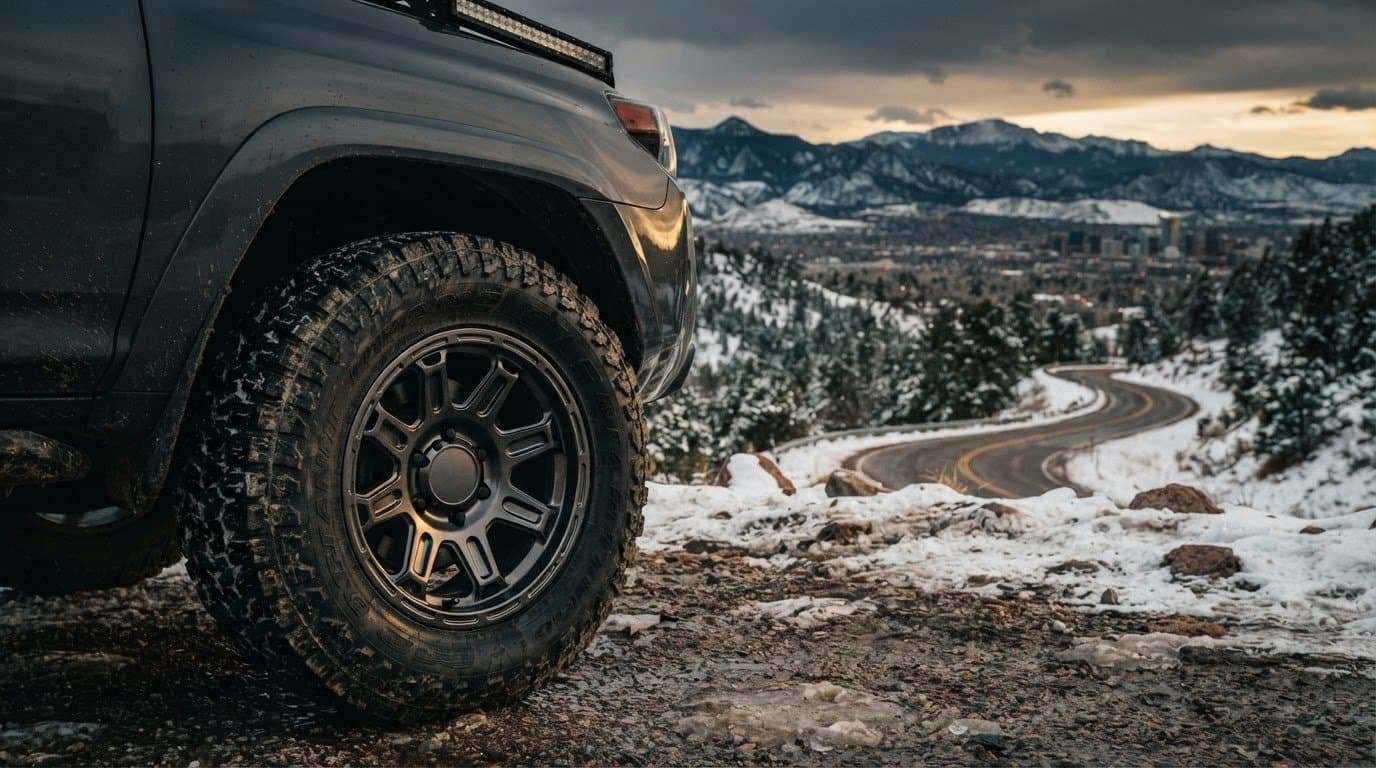
BFGoodrich KO2 Review: Denver's Top All-Terrain Tire
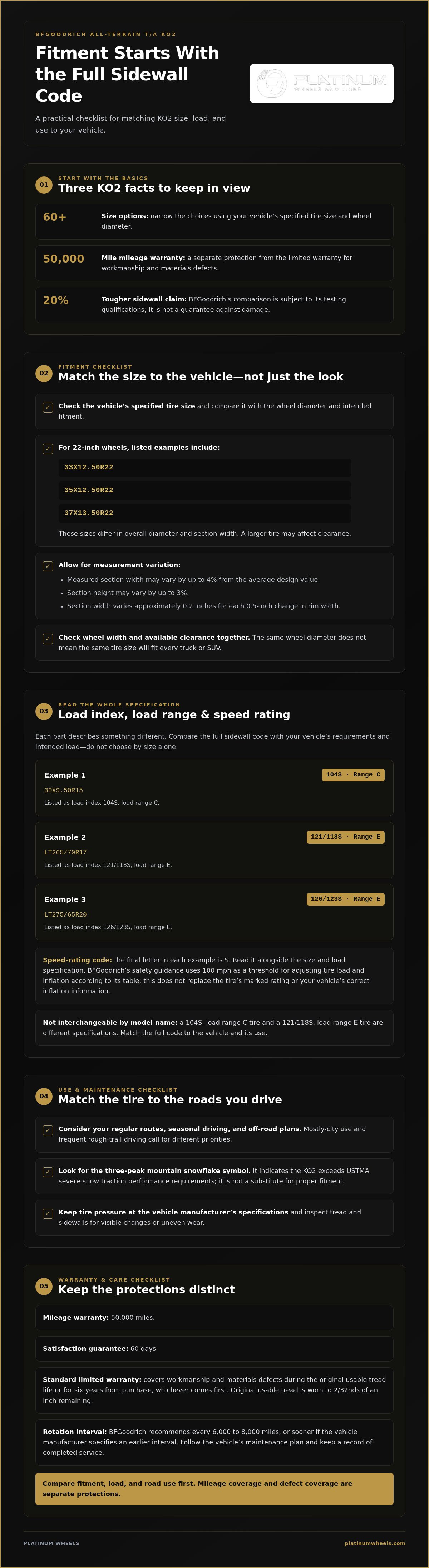
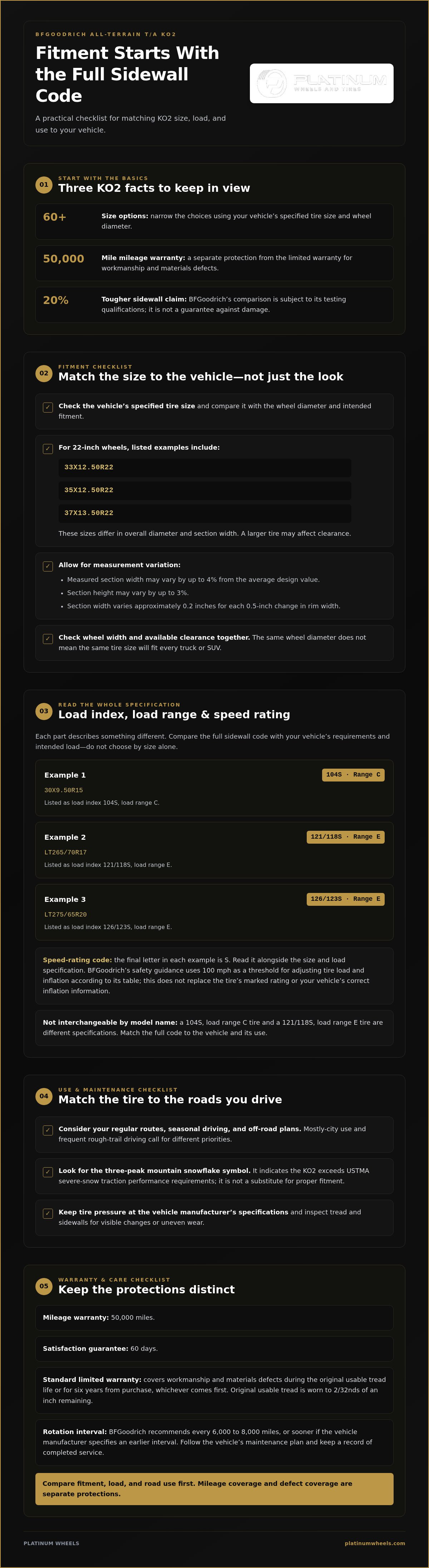
A tire’s value is about more than its tread pattern. The BFGoodrich KO2 is an all-terrain tire available in more than 60 size options, with the three-peak mountain snowflake symbol for severe-snow traction performance. It also carries a 50,000-mile mileage warranty, making fit, load rating, and the kind of driving you do important parts of the decision.
Denver drivers need a tire that suits their vehicle and routine, whether that means daily pavement, snowy roads, or occasional off-road trips. This review breaks down the KO2’s all-terrain features, available sizes, load and speed ratings, and load ranges, then explains what shapes its pricing. You’ll get a clearer sense of how to compare the tire’s capabilities with your vehicle’s requirements and priorities before choosing a setup.
Key Takeaways
- Compare the tire’s tread and construction with your balance of everyday driving and off-road use.
- Use your wheel diameter and vehicle fitment needs to narrow down the available size options.
- Learn how load index, speed rating, and load range affect choosing a tire that suits your vehicle.
- See what influences pricing, then explore wheel and tire options that fit your truck or SUV setup.
All-terrain tire features
The BFGoodrich All-Terrain T/A KO2 combines all-terrain construction with features aimed at varied road conditions. BFGoodrich states its sidewalls are 20% tougher, subject to the company’s comparison and testing qualifications. That figure describes a specific sidewall comparison, not a guarantee against punctures or damage. For Denver drivers, it’s one detail to weigh alongside vehicle fit, driving conditions, and tire care.
The KO2 carries the three-peak mountain snowflake symbol, meaning it exceeds USTMA severe-snow traction performance requirements. The symbol helps identify its tested snow-traction performance, but it doesn’t replace choosing a tire suited to your vehicle and use. Consider your regular routes, seasonal driving, and off-road plans together. A tire used mostly on city streets has a different job from one regularly driven on rough trails.
BFGoodrich lists a 50,000-mile mileage warranty and a 60-day satisfaction guarantee for the KO2. Its standard limited warranty covers workmanship and materials defects during the original usable tread life or for six years from purchase, whichever comes first. The warranty defines original usable tread as worn to 2/32nds of an inch remaining. These terms describe separate protections, so mileage coverage and defect coverage shouldn’t be treated as the same promise.
Maintenance also matters for treadwear warranty coverage. BFGoodrich recommends rotating tires every 6,000 to 8,000 miles, or sooner if the vehicle manufacturer specifies an earlier interval. Keep a rotation schedule tied to your vehicle’s maintenance plan. Regular pressure checks and timely rotations help you monitor the set and catch uneven wear early.
- Compare the 20% sidewall claim with your actual driving conditions.
- Use the snowflake symbol as a severe-snow traction indicator, not a substitute for fitment.
- Read the mileage and limited-warranty terms separately before deciding.
- Follow the applicable rotation interval to support treadwear coverage.
Available tire sizes by wheel diameter
The BFGoodrich KO2 comes in more than 60 size options, giving drivers choices across different wheel diameters. For 22-inch wheels, listed sizes include 33X12.50R22, 35X12.50R22, and 37X13.50R22. These examples differ in overall diameter and section width, so matching the size code to your vehicle matters more than choosing a size by appearance alone.
Start with the tire size specified for your vehicle, then compare it with the wheel diameter and intended fitment. A larger tire may affect clearance, while a different rim width can change the tire’s measured section width. BFGoodrich notes that measured section width may vary by up to 4% from its average design value; section height may vary by up to 3%. Width also varies approximately 0.2 inches for each 0.5-inch change in rim width.
Those tolerances matter when comparing a listed size with actual vehicle clearance. Check the vehicle’s tire information and wheel specifications, then consider how the selected size fits the intended setup. Custom truck wheels and off-road rims can be part of a coordinated fitment, while a wheel-and-tire package brings both choices together. wheel and tire packages can help streamline that decision.
Fitment is only one part of tire care. Inspect the tread and sidewalls for visible changes, keep tire pressure at the vehicle manufacturer’s specifications, and watch for uneven wear. Tire rotation supports even tread use, so follow the recommended maintenance schedule and record completed service. These checks can help you spot changes early and make informed replacement decisions.
For safe fitment, compare the tire’s size and specifications with your vehicle’s requirements instead of assuming a larger option will fit. A size that works on one truck may not suit another, even if both use the same wheel diameter. Consider the full tire designation, wheel width, and available clearance together.
Load index, speed rating, and load range
Read the full sidewall code, not just the tire size. Load index, load range, and speed rating each describe a different part of the tire’s specification.
Load Index and Range
Load index identifies a tire’s load capacity within its specified conditions; load range indicates its construction category. For example, 30X9.50R15 is listed as 104S, load range C. The LT265/70R17 carries 121/118S, load range E, while LT275/65R20 is 126/123S, also load range E. Compare the complete designation with your vehicle’s requirements and intended load. Don’t choose by size alone.
Speed Rating
The final letter in each example is the speed-rating code: S. Read it alongside the load index and tire size, then compare the full specification with the vehicle’s requirements. BFGoodrich’s tire safety guidance uses 100 mph as a threshold for adjusting tire load and inflation according to its table. That threshold does not replace the tire’s marked rating or the correct inflation information for your vehicle.
The KO2 also carries the three-peak mountain snowflake symbol for exceeding USTMA severe-snow traction performance requirements. This symbol addresses severe-snow traction, while the load index and range help distinguish the listed tire specifications. Consider each mark for its specific purpose rather than treating one rating as a substitute for another.
Customer feedback offers another perspective, separate from those technical markings. The All-Terrain T/A KO2 has a 4.7-out-of-5 rating based on 8,156 customer reviews, and 69% of reviewers recommend it. These figures summarize ratings and recommendations; use them alongside the size and service details for the exact tire you’re considering.
Compare the complete sidewall code against your vehicle’s tire requirements before choosing. A 104S, load range C tire and a 121/118S, load range E tire are not interchangeable simply because both belong to the same all-terrain model. Match the specification to the vehicle and its use.
BFGoodrich All Terrain T/A KO2 pricing
KO2 pricing is best compared by exact tire size, not by model name alone. The range includes more than 60 size options, from different wheel diameters to varied tire dimensions. A 22-inch fitment, for example, is a distinct product listing from a smaller-diameter option. Start with your vehicle’s required size, then compare listings that match it exactly.
Read the full sidewall designation before comparing prices. Size, load index, and load range identify different specifications within the All-Terrain T/A KO2 line. For instance, the 30X9.50R15 is listed with load range C, while LT265/70R17 is listed with load range E. Those examples aren’t interchangeable; comparing unlike specifications can make a price comparison misleading. Match the tire to your vehicle before weighing the cost.
When planning a complete purchase, distinguish the tire listing from installation. Installation is a separate service, so the tire price alone does not represent the cost of a complete setup. A wheel-and-tire package also requires compatible wheel selection, so compare complete options rather than tire listings alone. For Denver drivers, start by deciding whether you need tires only or a coordinated wheel-and-tire setup.
Use this checklist to make a fair comparison:
- Match the exact tire size to your vehicle’s requirements.
- Compare the load index and load range alongside the size.
- Note whether the listing covers tires alone or installation as well.
- Keep wheel selection separate unless comparing a complete package.
The takeaway: compare like-for-like KO2 specifications, then account for installation separately. That approach clarifies what each listing covers without treating a different size or load range as an equivalent option. Once the required fitment is clear, you can judge whether a tire-only purchase or a complete wheel-and-tire setup better suits your vehicle.
Platinum Wheels: Custom Truck Wheels & Off-Road Rims
Platinum Wheels helps Denver drivers connect tire research with a complete truck or SUV setup. Once you’ve chosen an all-terrain tire, match its size and load specifications to wheels that suit your vehicle. Custom truck wheels and off-road rims, all-terrain and mud-terrain tires, and wheel-and-tire packages bring these related choices together.
For a broader setup, Platinum Wheels also installs lift kits and leveling kits to enhance a truck or SUV’s stance and off-road capability. Consider these upgrades alongside tire and wheel fitment so the overall setup suits how you drive and the look you want.
Contact Platinum Wheels to discuss your tire, wheel, or fitment plans.
Choose a Setup That Fits Your Driving
The best next step is to match your tire choice to how you use your vehicle. Look beyond the tread: daily commuting, winter roads, and off-road travel all affect what matters in a complete setup. Keep your vehicle’s specifications central, then weigh the trade-offs that fit your routine before choosing a configuration.
If the BFGoodrich KO2 is on your shortlist, use the details you’ve reviewed to guide a practical conversation about fitment and your overall setup. A clear picture of your driving priorities helps turn product research into a choice that feels considered, not rushed.
Plan your next truck or SUV setup with Platinum Wheels. Take the next step with confidence and build around the way you drive.
Frequently Asked Questions
What sizes and specifications are available for the BFGoodrich KO2?
The BFGoodrich KO2 comes in more than 60 size options, including three 22-inch fitments: 33X12.50R22, 35X12.50R22, and 37X13.50R22. These sizes differ in width and diameter, so wheel diameter alone won’t identify the right fit. Compare the full size code with your vehicle’s requirements, especially when selecting a larger off-road setup.
How much does a BFGoodrich KO2 tire cost in the United States?
Price depends on the exact size and specification. A different diameter or load range means a different tire listing, so compare options that meet your vehicle’s requirements. Also distinguish the tire itself from installation and a wheel-and-tire package, since these are separate purchase arrangements. Start with the required fitment to make a useful comparison.
How well does this tire perform in snow and winter conditions?
The tire carries the Three-Peak Mountain Snowflake symbol, indicating that it meets severe-snow traction performance requirements. The symbol helps when comparing winter traction, but it does not describe every road condition, such as packed snow versus slush. For Denver-area trips, consider changing road surfaces and your vehicle’s needs alongside the tire’s severe-snow designation.
How capable is it for off-road driving, mud, rocks, and gravel?
The KO2 is an all-terrain tire, and a three-day Baja evaluation included sand, silt, rock, rain, and mud. Those conditions show the range of terrain involved in that evaluation, rather than guaranteeing identical results on every vehicle or trail. For off-road use, match the tire’s size and load specification to your vehicle and the surfaces you regularly encounter.
What are common problems, complaints, and drawbacks?
A practical consideration is choosing the right specification: this tire model comes in different sizes and load ranges. A mismatch may make it unsuitable for your vehicle. Treadwear coverage also depends on following the manufacturer’s rotation recommendation or the vehicle manufacturer’s earlier interval. Treat fitment and upkeep as part of tire ownership, not as isolated product defects.
Does the BFGoodrich KO2 have the Three-Peak Mountain Snowflake rating, and is it legal for winter use?
Yes, the BFGoodrich KO2 carries the Three-Peak Mountain Snowflake symbol, indicating that it exceeds severe-snow traction performance requirements. The symbol describes tire performance testing; it doesn’t, by itself, establish legal approval for every place or circumstance. Winter-use requirements depend on applicable local rules, so distinguish the tire’s rating from regulations governing a particular trip.