Best Tires Near Me: Denver & Aurora’s Top Rated Shop
The closest tire shop isn’t always the best fit for your vehicle. If you’re searching for tires near me in Denver or Aurora, look beyond distance: your truck or SUV, current wheel setup, and the roads you drive across Colorado all affect which tires make sense.
All-season, all-terrain, and mud-terrain tires are designed for different driving priorities. Choosing a category without considering your routes, tire size, and wheel setup can lead to a poor fit for your needs. Colorado’s changing road conditions add another consideration, so think about how and where you drive, not just your vehicle’s drivetrain.
This guide explains how to narrow down tire categories, why fitment matters, and how tires, wheels, TPMS sensors, mounting, and balancing can come together in one coordinated setup. Platinum Wheels is a locally owned independent retailer and installer serving the Colorado Front Range. We focus on truck and SUV fitment, with professional installation to complete the job. Use the steps below to compare options for your Colorado routes.
Key Takeaways
- Match tire type to your usual routes and intended use instead of choosing by category name alone.
- Compare all-season, all-terrain, and mud-terrain tires by their strengths and trade-offs for your driving.
- When searching for tires near me, consider vehicle fitment alongside installation details such as mounting, balancing, and compatible TPMS sensors.
- Bring your current tire-size information and be ready to describe your regular routes and seasonal driving.
- Explore tire options for trucks and SUVs from Platinum Wheels, serving communities across the Colorado Front Range.
Looking for Tires Near Me in Colorado? Start With Your Driving Needs
The right tire depends on more than the vehicle parked in your driveway. Your routes, the seasons you drive through, and whether you stick to pavement or regularly explore trails all shape what makes sense. A Front Range week might include commuting in Denver or Aurora, highway miles, wet or snowy weather, and a mountain trip. A tire suited to one part of that routine may not be the best match for all of it.
Before searching for tires near me, consider how you use your vehicle. A broad overview of tire construction and categories is available in the Wikipedia article on tires, but the practical starting point is your vehicle and driving priorities. The more clearly you can describe those, the easier it is to compare options and plan a setup that fits.
What to know before searching for tires near you
Gather a few details before comparing tire categories. Note your vehicle’s year, make, and model, along with the full size of the tires currently installed. You can find the size on the tire sidewall or in the vehicle’s owner information. If you’re considering different wheels or a suspension upgrade, include that in your plan because those choices can affect the overall fitment.
- Vehicle: Identify whether you drive a truck or SUV.
- Current tire size: Record the full size shown on the sidewall.
- Typical roads: Describe your usual commuting and highway driving, as well as mountain routes.
- Off-road use: Note how often you drive on trails or unpaved roads and what you expect the tires to handle.
Next, rank your priorities. Do most of your miles happen on paved streets, or do you need tires for regular trail use? Are you looking for one tire category for everyday driving across changing seasons, or are off-road routes a regular part of your routine? Your answers help narrow the categories before you compare specific options.
Which Colorado Front Range drivers does a local tire shop serve?
Drivers from Denver, Aurora, Lakewood, and other Front Range communities can have very different needs, even when they travel on the same regional roads. One SUV might spend most of its time on city streets and highways, while a truck splits its miles between commuting, mountain travel, and trail access. A useful tire conversation starts with the driver’s routine, not a one-size-fits-all recommendation.
For truck and SUV owners, tire decisions can also connect with custom wheels, wheel-and-tire packages, or lift and leveling kits. Fitment means matching tire and wheel dimensions to a vehicle so the setup is appropriate for that vehicle. Selection, fitment, and professional installation work best as parts of one plan. Platinum Wheels serves drivers across Denver, Aurora, Lakewood, Englewood, Wheat Ridge, Commerce City, Westminster, Thorton, Broomfield, Arvada, Golden, Littleton, Parker, Highlands Ranch, Castle Rock, Boulder, Fort Collins, and Colorado Springs, with a focus on truck and SUV wheels, tires, and suspension upgrades.
How to Choose Tires Near Me for Colorado Roads and Trails
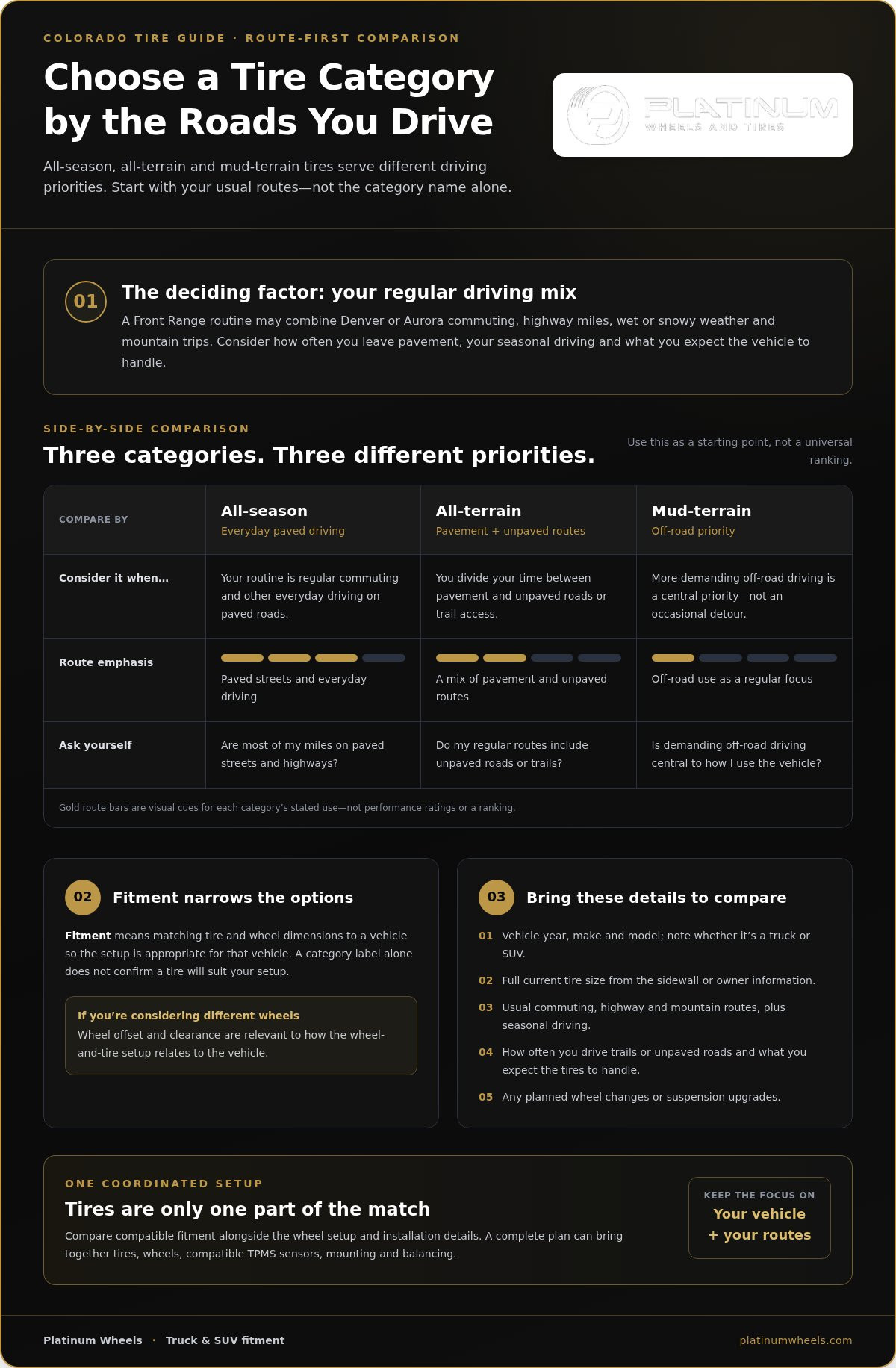
There’s no universal winner among all-season, all-terrain, and mud-terrain tires. Each category reflects a different balance of paved-road use and off-road priorities. Start with the routes you actually drive, then narrow the options to tires that suit both your vehicle and its compatible fitment. A search for tires near me is more useful when it leads to a practical comparison, rather than a category chosen by name alone.
All-season, all-terrain, or mud-terrain: which category fits?
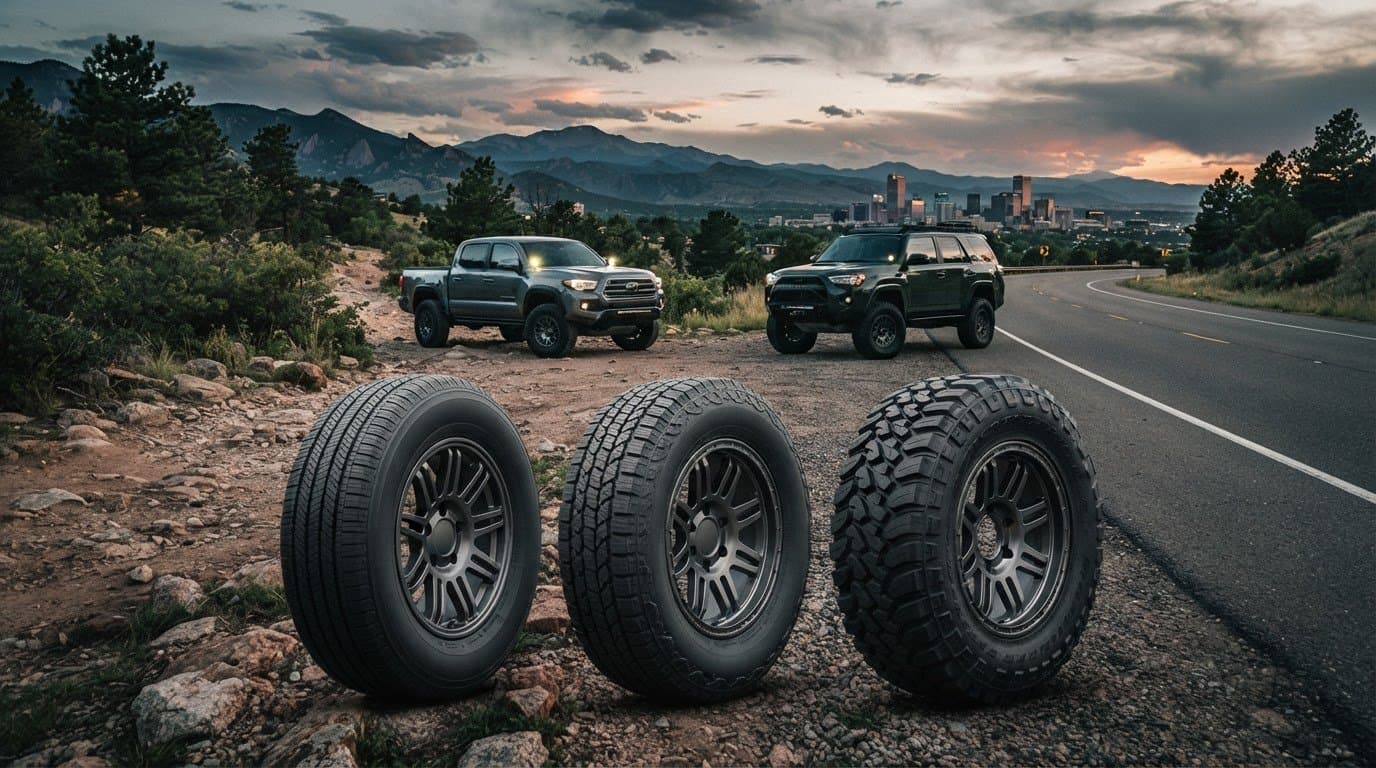
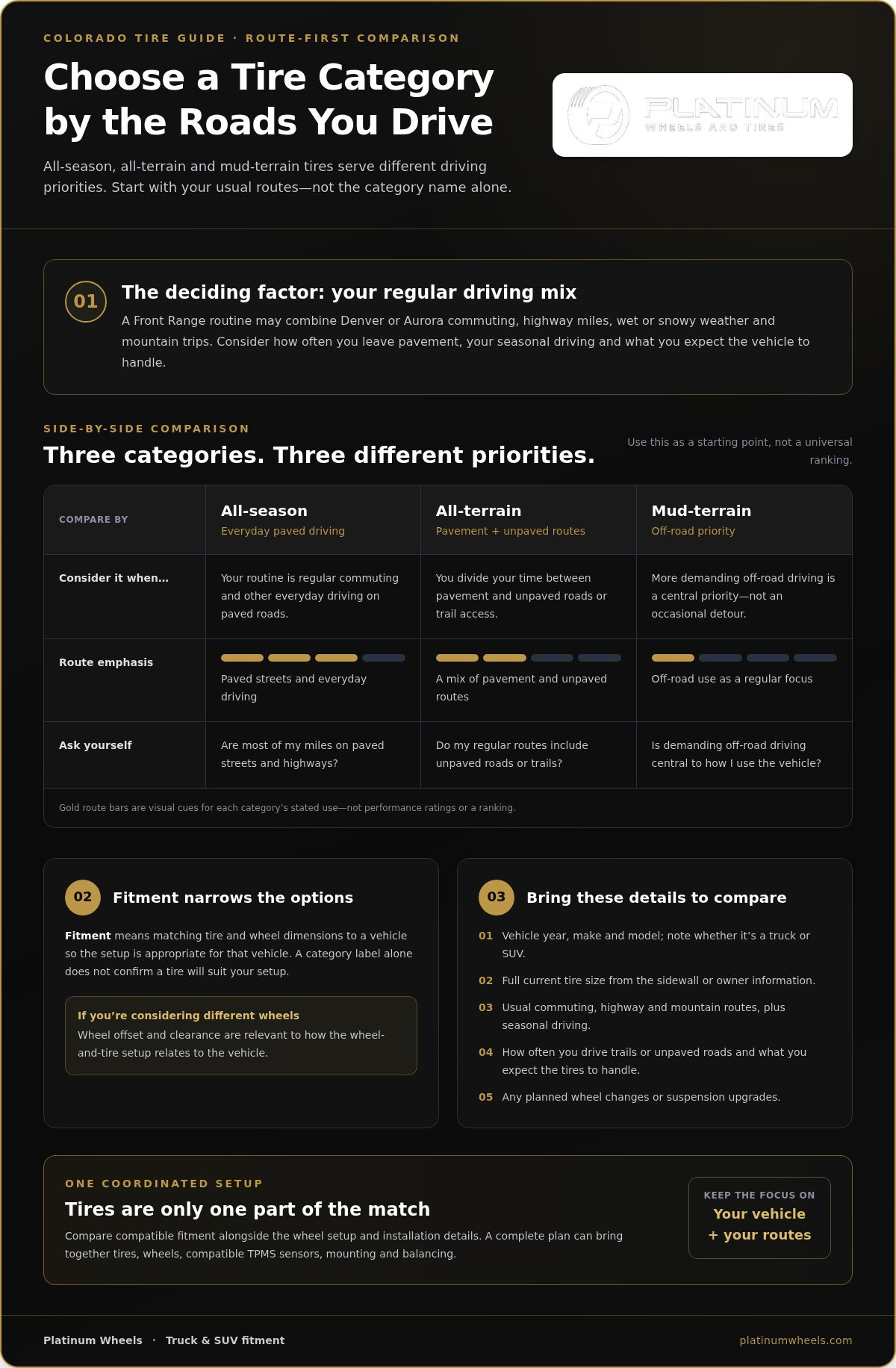
Think about what you need your tires to do most often. All-season tires are worth evaluating for everyday mixed driving. All-terrain tires suit drivers who divide their time between pavement and unpaved routes. Mud-terrain tires are an option when more demanding off-road use is a priority. None is automatically the right choice for every Front Range driver.
- All-season: Consider these for regular commuting and other everyday driving on paved roads. Compare options against your usual routes and seasonal needs.
- All-terrain: Consider these when your routine combines pavement with unpaved roads or trail access. For more Colorado mountain-driving context, see this Colorado all-terrain tire guide.
- Mud-terrain: Consider these when off-road driving is a central priority, rather than an occasional detour from paved routes.
Use this comparison as a starting point, not a ranking. Your typical roads, how often you leave pavement, and what you expect from the vehicle should guide the decision. A tire selected for frequent trail use may not be the same fit for someone whose routine is mostly city streets and highways.
Match tire size and wheel setup to your vehicle
Category is only one part of the decision. Your vehicle’s fitment and current tire size narrow the options, so don’t assume a tire will suit your setup just because it’s labeled all-terrain or mud-terrain. If you’re considering different wheels, wheel offset and clearance are also relevant. These affect how the wheel-and-tire setup relates to the vehicle, so changing one element can influence the overall match.
For a deeper look at wheel choices, including custom options for trucks, explore this custom wheels and rims guide. Keeping your vehicle’s tire-size information handy helps focus the comparison on compatible options. For additional general guidance on tire safety, buying, and maintenance, consult the NHTSA tire safety guidelines.
Platinum Wheels brings tire and wheel options together for truck and SUV setups, with professional mounting and balancing. If you’re weighing tire categories alongside a wheel change, explore Platinum Wheels’ tire and wheel options as you plan a coordinated fit.
What to Compare When You Find a Tire Shop Near You
A useful tire-shop comparison goes beyond the tire itself. Consider whether the shop works with vehicles like yours, how it approaches fitment, what installation involves, and which components are included if you’re considering a package. These details matter especially for truck and SUV owners, where a tire change may be part of a larger wheel or suspension setup.
Correct fitment depends on your vehicle’s specifications and the tire-and-wheel setup you choose. Tire selection, wheel compatibility, and installation are connected decisions. As you compare options after searching for tires near me, keep your vehicle information and intended use central to the plan.
Does the shop understand truck and SUV tire fitment?
For a truck or SUV, fitment guidance should account for the vehicle, tire dimensions, compatible wheels, and how you plan to drive. A larger tire plan may also bring wheel clearance or suspension changes into the picture. If you’re considering a lift or leveling kit as part of the change, the lift kit versus leveling kit guide can help you understand how those choices differ.
Installation is another part of the setup. Mounting means fitting the tires onto the wheels; balancing helps distribute weight around the assembly. Both matter when completing a tire installation, so account for them while choosing a tire category. If your setup uses a tire pressure monitoring system, compatible TPMS sensors are also part of the overall fit. The USTMA tire care and safety information provides additional general guidance on tire care and replacement.
What should a tire-and-wheel package include?
A tire-only purchase and a coordinated wheel-and-tire package address different needs. If your existing wheels suit the replacement tires, you may simply need to select tires and have them mounted and balanced. If you’re changing wheels too, a package can bring together tires, wheels, compatible TPMS sensors, mounting, and balancing as one planned setup.
Package contents and suitability depend on the vehicle and your goals. Clarify what the selected setup includes and how it matches your vehicle’s specifications. Platinum Wheels offers wheel-and-tire packages for truck and SUV fitment that bring these elements together, including TPMS sensors, mounting, and balancing.
- Vehicle specialization: Consider how the vehicle type and intended use shape the setup.
- Fitment: Compare tire dimensions alongside wheel compatibility and clearance.
- Installation: Include mounting and balancing in your plan.
- Package contents: Decide whether you need tires alone or a package that includes wheels and TPMS sensors.
For a setup that brings tire selection and installation together, explore Platinum Wheels’ tire and wheel options.
From Tire Search to Installation: Prepare for a Better-Fitting Setup
A little preparation can make a tire decision more straightforward. Before you search for tires near me, gather the information that connects your vehicle, regular routes, tire choice, and installation plan. This gives you a practical starting point, especially if you’re considering new wheels or suspension components along with tires.
Four steps to narrow down your tire options
- Identify your vehicle and current tire size. Write down the vehicle’s year, make, and model. Note the full tire-size information from the sidewall or owner’s materials, and mention whether the wheels are original or have been changed.
- Describe your usual driving. Be specific about how often you drive on pavement, travel mountain routes, or use unpaved roads and trails. Include seasonal patterns, such as whether you take regular winter trips or mainly commute around town.
- Compare categories and wheel fitment. Use your driving priorities to weigh all-season, all-terrain, or mud-terrain tires. Then consider compatible tire and wheel dimensions together, rather than choosing a tire category without regard to the setup.
- Plan the installation details. Decide whether you’re replacing tires on existing wheels or considering a wheel-and-tire setup. Include professional mounting and balancing in the plan, and account for compatible TPMS sensors as part of the complete fit.
These steps turn broad preferences into useful details. For example, “I drive trails sometimes” leaves more questions than explaining whether trail use is occasional or a regular part of your routine. Clear information helps Platinum Wheels tailor tire, wheel, and installation choices to your truck or SUV and how you use it.
When tires are part of a larger truck upgrade
New tires can be a standalone replacement, but some truck and SUV owners are also planning a wheel change or a leveling or lift kit. Treat those parts as a connected setup: changing wheel dimensions or suspension can affect which tire-and-wheel combinations suit the vehicle. Share the whole plan, not only the tire size you hope to run. Keep the vehicle specifications and intended use at the center of the decision.
A wheel-and-tire package can bring tires and wheels together with TPMS sensors, mounting, and balancing, depending on the selected package. Components and fit depend on your vehicle and goals, so consider whether you’re replacing tires alone or coordinating a broader upgrade. The wheel and tire package guide offers more detail to help you compare that approach.
Platinum Wheels specializes in truck and SUV tires, wheels, TPMS sensors, and lift and leveling kits, with professional mounting and balancing. Bring your current tire-size details and a clear description of your routes to plan your tire and wheel setup.
Find Tires Near You Across the Colorado Front Range with Platinum Wheels
For drivers searching for tires near me in Denver, Aurora, Lakewood, Arvada, and nearby communities, a useful next step is finding tire options and installation expertise that work together. Platinum Wheels is a locally owned independent retailer and installer serving communities across the Colorado Front Range, with a specialty in truck and SUV wheels, tires, and suspension upgrades.
Start with your vehicle and intended driving, not a brand name or the assumption that one tire type suits everyone. The right direction for a truck used mainly for commuting may differ from a setup for regular unpaved routes. Sharing your vehicle details, current tire size, and typical driving priorities helps focus the discussion on compatible choices.
Tire and wheel options for Colorado drivers
Platinum Wheels offers new tires, including all-season, all-terrain, and mud-terrain categories for trucks and SUVs. Compare these options against your regular roads and intended use while keeping vehicle fitment in view. If your plans include changing wheels as well as tires, custom truck wheels and wheel-and-tire packages can bring the components together as a coordinated setup.
TPMS sensors are another consideration when planning a wheel-and-tire package. Packages can include TPMS sensors, mounting, and balancing, depending on the selected setup. The important question is how the components fit your vehicle and goals. Platinum Wheels can bring tire, wheel, and installation choices together around the setup you’re considering.
Local tire installation for trucks and SUVs
Choosing tires is only part of completing the job. Platinum Wheels provides professional mounting and balancing as part of its installation offering, connecting tire selection to the wheel assembly. For drivers across the Front Range, including Denver, Aurora, Lakewood, and Arvada, this makes it possible to consider tire selection, compatible wheels, TPMS sensors, and installation as parts of one plan.
If new tires are part of a broader truck upgrade, Platinum Wheels also installs lift and leveling kits for trucks and SUVs. Consider those suspension options alongside your wheel and tire plans so the overall setup reflects your vehicle and intended use. The goal is a considered fit, not simply a change in appearance or tire category.
Whether you’re replacing tires or planning a wheel-and-tire setup, Platinum Wheels offers a focused place to explore options for trucks and SUVs across the Colorado Front Range. Bring your vehicle details and current tire-size information to guide the discussion. Explore Platinum Wheels’ tire and wheel options and plan your next step.
Make Your Next Tire Choice With Confidence
The next time you search for tires near me, focus on a setup that supports the way you use your vehicle, not just a quick replacement. A clear plan can connect tire selection with compatible wheels and any suspension upgrades, so your next step feels considered rather than rushed.
Platinum Wheels is a locally owned independent shop specializing in truck and SUV tires, wheels, and suspension upgrades. For a coordinated purchase, professional mounting and balancing bring wheel-and-tire package solutions together. Start with the vehicle and driving needs that matter most to you.
Explore tires and wheel options at Platinum Wheels and take the next step toward a setup that fits your plans.
Frequently Asked Questions
Can I get all-terrain tires near me for a truck in Colorado?
Yes, all-terrain tires are an option for Colorado truck drivers who split time between paved roads and unpaved routes. Whether they suit your truck depends on compatible fitment and your driving priorities, including how often you leave pavement. Compare your typical use, current tire size, and any wheel plans before choosing. For more detail on mountain driving, read the Colorado all-terrain tire guide.
Do tires near me come with installation?
Tire purchase and installation are separate details to consider when comparing options. Platinum Wheels offers professional mounting and balancing with wheel-and-tire package solutions. The specific setup depends on the vehicle and package, so consider installation alongside tire selection rather than assuming a category alone determines what you need. This is especially useful if you’re replacing wheels as well as tires.
How do I know what tire size my truck needs?
Start with your truck’s year, make, and model, then read the size information printed on its current tire. If the truck has been modified or its wheels have changed, the existing setup may not tell the whole story. Tire dimensions need to suit both the vehicle and its wheel configuration. A dedicated tire-size guide can help you understand the markings before discussing fitment.
Can I buy tires and wheels together near me?
Yes. Platinum Wheels offers wheel-and-tire packages that can bring tires, wheels, compatible TPMS sensors, mounting, and balancing together. The right combination depends on your vehicle and what you want from the setup, so a package isn’t one-size-fits-all. If you’re changing your current wheels, bring your vehicle details and describe your driving plans to guide the fitment discussion.
What happens if I choose a tire that does not fit my truck?
Tire and wheel compatibility is essential to planning a suitable setup, so don’t choose dimensions based on appearance alone. A larger tire plan can also involve wheel-clearance or suspension considerations. Before settling on a size, use your truck’s information and explain how you drive it. Platinum Wheels can connect those details to tire, wheel, and suspension options for your intended setup.
Are all-season tires enough for Colorado driving?
That depends on your routes, seasonal driving, and expectations. All-season tires may suit some everyday routines, while all-terrain or mud-terrain options address different priorities. A driver commuting mainly on paved roads may have different needs from someone who regularly travels mountain routes or goes off-road. Compare those uses before narrowing your choices; no single tire category is the right answer for every Colorado driver.
Can I add TPMS sensors when replacing tires?
Yes, TPMS sensors can be part of planning a tire or wheel replacement, and should be considered alongside your vehicle and wheel setup. Platinum Wheels offers TPMS sensors as part of its wheel-and-tire offerings. Include sensor needs in the fitment discussion, especially when planning a wheel change.
Should I replace my tires before a Colorado mountain trip?
Assess your tires’ condition and suitability before a trip, especially if your route crosses changing elevations and weather. Look for visible damage or unusual wear, and consider whether the tires’ current condition suits the drive you’re planning. Use your vehicle’s tire information and route to guide a timely tire-selection conversation. No tire category alone guarantees safety in changing road conditions.