
Best Ram 2500 Tires for Denver Roads & Off-Road Trails
Your Cummins-powered rig is a beast on the job site, but the wrong set of ram 2500 tires will turn a weekend trip over Loveland Pass into a stressful ordeal. Between the massive front-end weight of the diesel engine and the unpredictable ice on the Front Range, standard tires often wear out prematurely or fail when you need grip most. You shouldn't have to choose between a truck that can pull a heavy trailer and one that stays composed during a sudden October snowstorm.
We understand the frustration of dealing with the stiff, jarring ride of high-pressure HD tires or the headache of finding the right fitment after installing a leveling kit. You want a stance that looks aggressive without sacrificing the towing stability your 3/4-ton was built for. This guide helps you discover the perfect balance of load capacity, off-road traction, and highway comfort tailored specifically for Colorado drivers. We'll break down the best all-terrain and mud-terrain options, explore how to upsize to 35-inch tires safely, and ensure your setup remains compliant with state traction laws through every mountain pass.
Key Takeaways
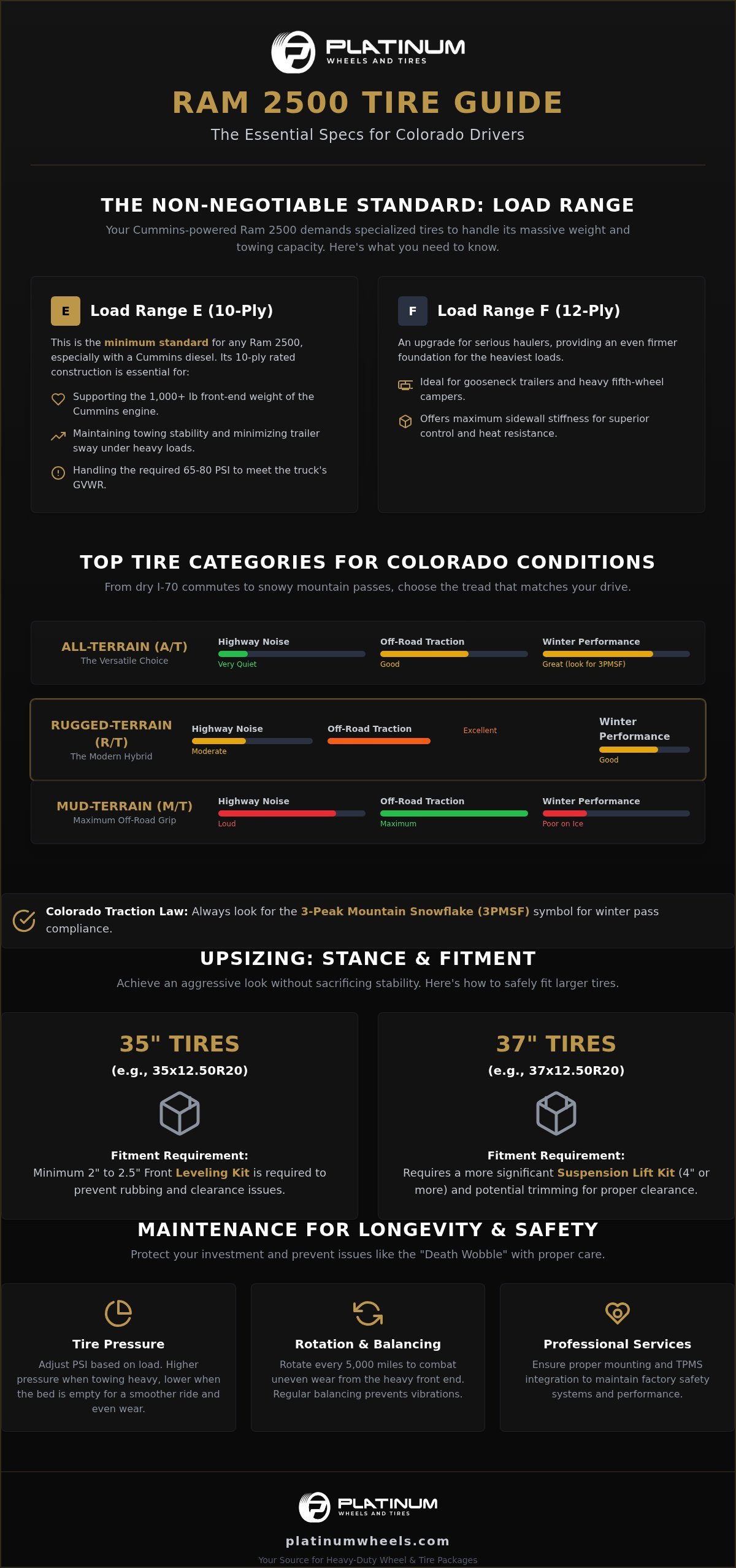
- Learn why Load Range E (10-ply) is the non-negotiable standard for supporting the heavy Cummins diesel engine and maintaining towing stability.
- Navigate the trade-offs between All-Terrain and Mud-Terrain ram 2500 tires to find the right balance for I-70 winter commutes and rugged Colorado trails.
- Master the fitment requirements for 35-inch and 37-inch upgrades, including how a leveling kit impacts clearance and your truck's overall stance.
- Discover essential maintenance tips to prevent the "Death Wobble" and how to adjust your tire pressure for maximum longevity when switching from empty beds to heavy trailers.
- Understand the benefits of professional mounting, balancing, and TPMS integration when choosing a complete wheel and tire package for your heavy-duty rig.
Understanding Ram 2500 Tire Specifications: Load Range and Sizing
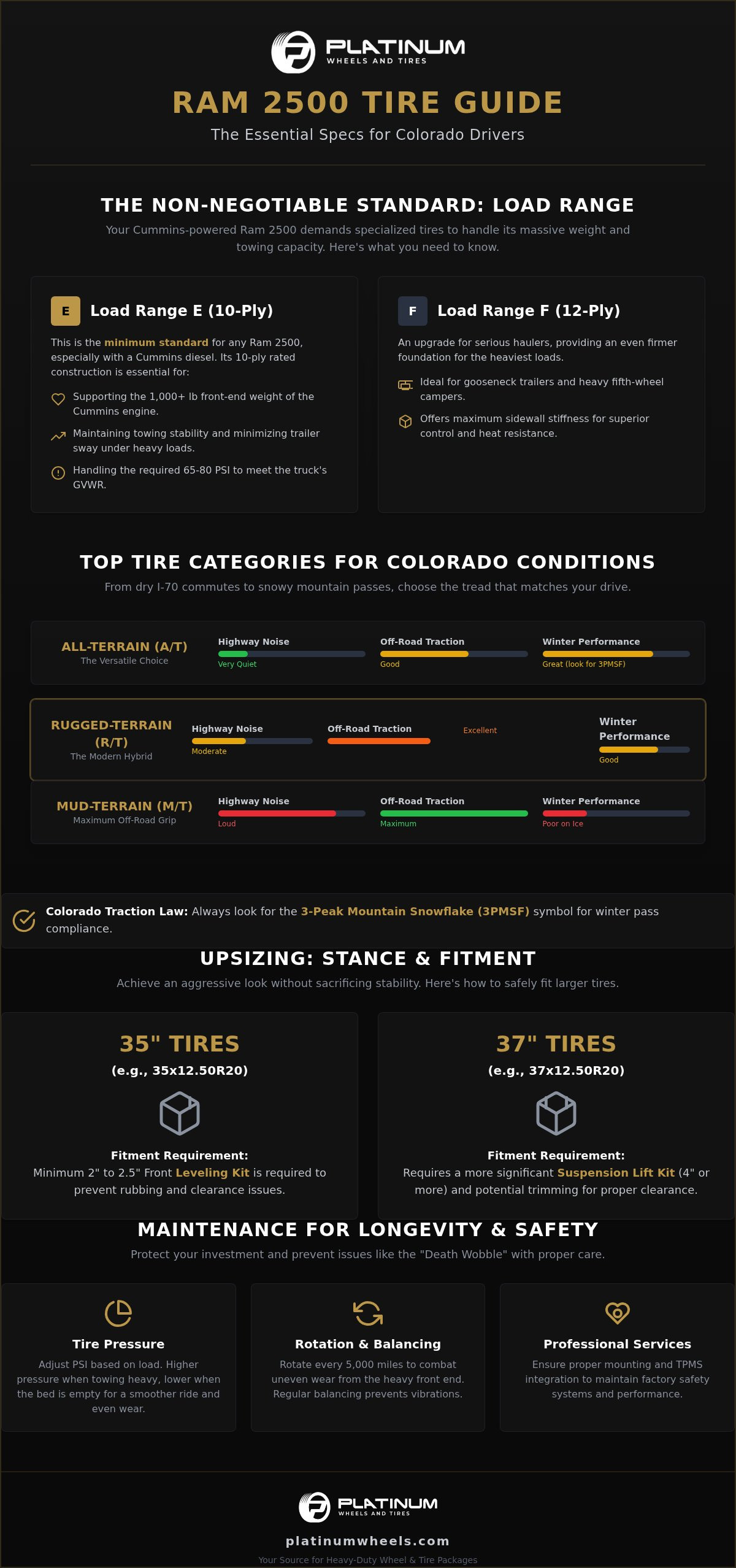
The Ram 2500 isn't your average pickup truck; it's a high-performance tool built for heavy-duty labor. Choosing the right ram 2500 tires starts with acknowledging that this vehicle weighs between 6,000 and 6,500 pounds before you even hook up a trailer. If your rig has the 6.7L Cummins Turbo Diesel, you're carrying a significant weight bias on the front axle. That engine alone adds over 1,000 pounds compared to gas alternatives, creating a "diesel tax" that demands specialized front tire durability to prevent premature tread wear.
Every tire carries specific Tire code specifications on the sidewall that dictate its physical limits. For a 3/4-ton truck, Load Range E is the non-negotiable minimum standard. These tires are designed to handle the 65 to 80 PSI required to support your truck's maximum Gross Vehicle Weight Rating (GVWR). Beyond the load range, pay close attention to the Load Index, a numerical code that represents the maximum weight a tire can carry at its top speed rating. Selecting a tire with an insufficient index isn't just a maintenance risk; it's a safety hazard on Colorado highways.
Why Load Range E and F Matter for Towing
Sidewall stiffness is your primary defense against trailer sway when pulling 15,000 pounds over a mountain pass. Load Range E tires utilize a 10-ply rated construction to minimize lateral movement and "squish" under heavy loads. Without this internal rigidity, your truck will feel loose and unpredictable during high-speed lane changes or mountain descents. We're seeing more Denver owners transition to Load Range F for their ram 2500 tires. These 12-ply rated options offer even higher pressure capacities, providing a firmer foundation for those who frequently haul heavy campers or gooseneck trailers. Never attempt to save money by installing P-metric or standard light-duty tires. They lack the internal structure to survive the heat generated by heavy-duty hauling, which often leads to catastrophic failure.
Common Ram 2500 Factory Tire Sizes
Most Ram 2500 models leave the factory with one of two primary setups. The LT275/70R18 is the standard workhorse size, offering a taller sidewall that helps absorb road chatter on unpaved Front Range roads. If you've opted for a premium trim like the Laramie or Limited, you likely have LT285/60R20 tires. These 20-inch setups look sharp but offer less rubber between the rim and the road, resulting in a slightly firmer ride. In modern 2026 tire technology, the ply rating serves as a strength indicator for the tire's internal casing, representing its load-carrying capacity rather than the actual number of physical rubber layers. Whether you stay with OEM sizes or upgrade, ensure your new tires meet or exceed these factory load capacities to maintain your truck's performance.
Top Tire Categories for Colorado Ram 2500 Owners
Selecting the right ram 2500 tires requires a deep understanding of how different tread patterns react to Colorado's extreme elevation changes. Your daily commute might start on the dry pavement of Denver and end in a whiteout at the Eisenhower Tunnel. This volatility makes your tire category choice the most critical decision for both safety and performance. Following NHTSA tire safety guidelines ensures you stay within legal and safety limits while hauling heavy loads through these varying environments.
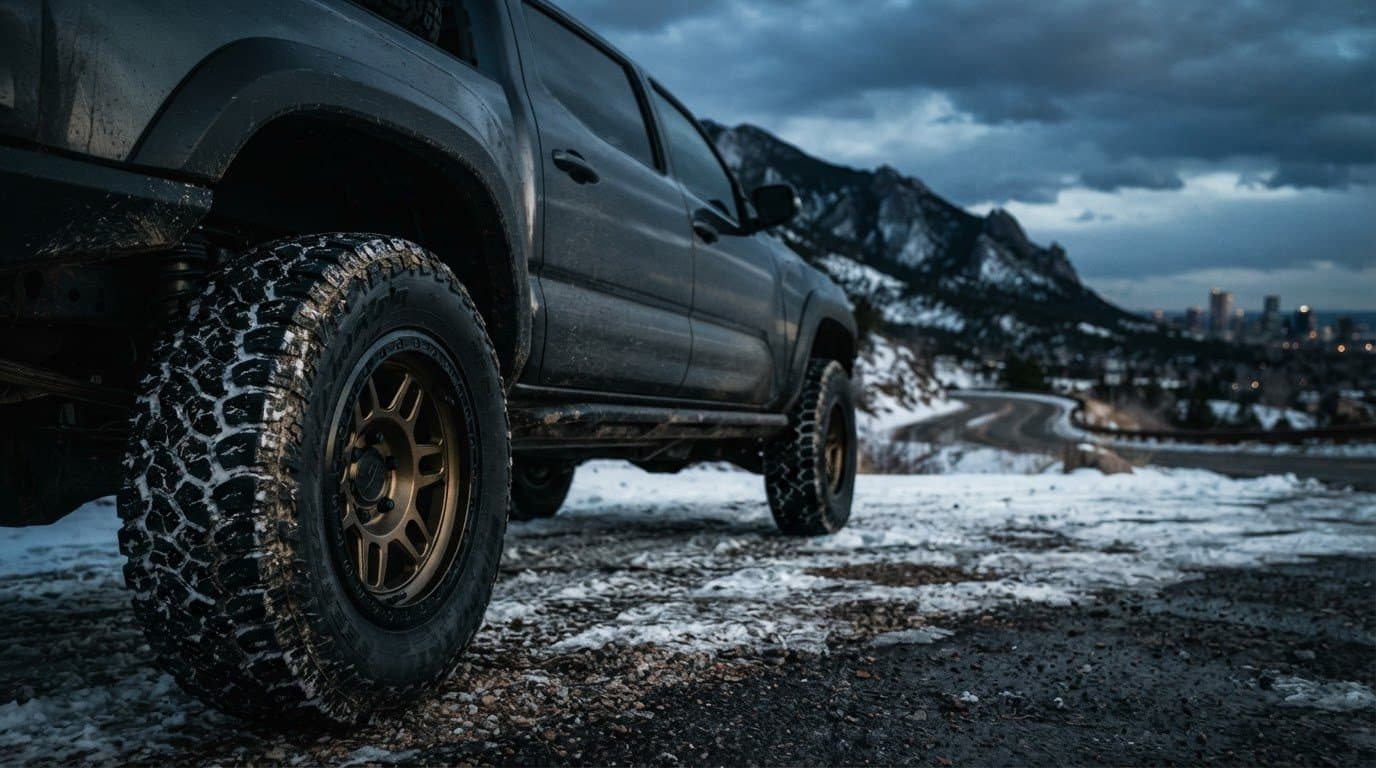
- All-Terrain (A/T) Tires: These are the standard for Front Range drivers. They offer a refined ride on I-70 while providing enough biting edges for light off-road trails and ranch roads.
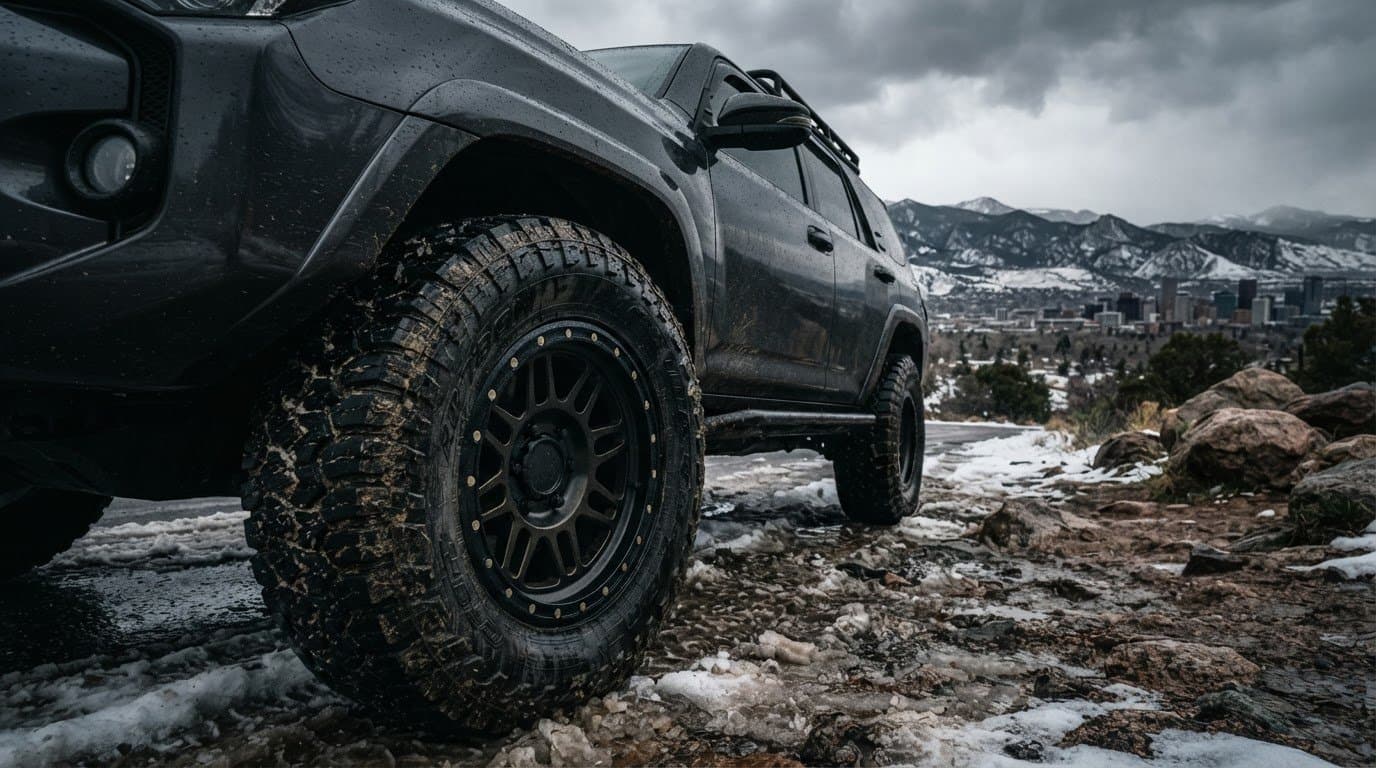
- Mud-Terrain (M/T) Tires: If your Ram spends more time in the dirt than on the highway, M/T tires are essential. They feature massive tread blocks and deep cleaning channels to prevent mud from "slicking over" your tires.
- Rugged-Terrain (R/T) Tires: A major trend for 2026, these hybrids bridge the gap between A/T and M/T. They provide an aggressive, wide-shouldered look without the excessive humming of a traditional mud tire.
- Winter-Specific Tires: For maximum safety, look for the 3-Peak Mountain Snowflake (3PMSF) symbol. This rating is vital for meeting Colorado Traction Law (Code 15) requirements on mountain passes during the winter months.
All-Terrain vs. Rugged-Terrain: Which is Right for Denver?
Highway noise is a major factor for drivers spending hours on I-25. All-terrain tires typically feature a variable-pitch tread design that cancels out road hum, making them the quieter choice. Rugged-terrain tires are slightly louder but offer superior traction in deep slush and loose dirt. If you prioritize longevity, A/T compounds often come with 50,000 to 60,000-mile warranties, whereas R/T tires trade some mileage for enhanced sidewall protection. If you're still weighing your options, check out our guide on Choosing the Best All-Terrain Tires for Colorado for a deeper dive into these specific compounds.
Towing Performance and Heat Dissipation
Pulling a heavy gooseneck trailer through narrow canyons generates immense heat within the tire's structure. Specialized ram 2500 tires include cooling fins and high-silica compounds to manage these temperatures during summer hauling. For residents in Douglas County or Elbert County, stone ejectors are a mandatory feature. These small ridges within the tread grooves prevent gravel from drilling into the tire casing, which is a common cause of slow leaks on rural roads. You might find that a custom wheel and tire package tailored to these specific regional needs offers the best long-term value for your rig.
Ram 2500 Tire Fitment: Leveling Kits and Upsizing
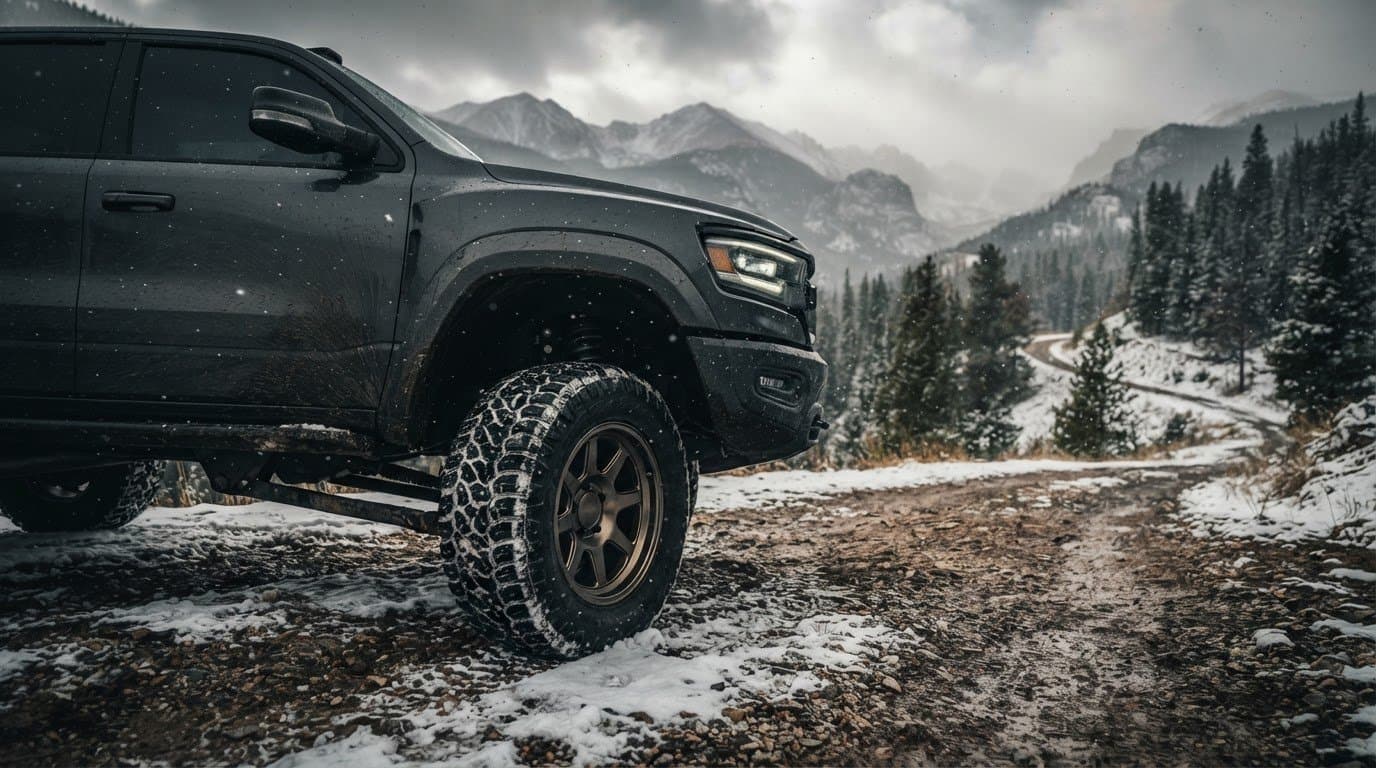
Achieving the perfect stance for your truck involves more than just picking a tread pattern. For most owners in the Denver area, fitting 35-inch ram 2500 tires is the primary goal. While some claim these fit on a stock suspension, the reality depends heavily on your wheel's offset and backspacing. Stock Ram wheels have a high positive offset, which tucks the tire inward. When you move to a wider 35-inch tire, you risk rubbing against the radius arms at full steering lock. Selecting an aftermarket wheel with a lower offset pushes the tire out, clearing the suspension but potentially requiring minor trimming of the plastic wheel well liners to avoid rubbing the fender during articulation.
Stepping up to 37-inch tires is a much larger challenge that requires precision. A simple leveling kit is rarely enough to clear 37s without significant rubbing during off-road use or when navigating steep driveways. This setup often demands aftermarket radius arms or high-clearance control arms to maintain a full turning radius. When selecting your specific tread, consulting lists like Forbes' Best All-Terrain Tires can provide a solid baseline for performance expectations before you commit to a larger size.
The Impact of a Leveling Kit on Tire Choice
A 2-inch or 2.5-inch leveling kit is the most effective way to open up tire options for the Front Range. By raising the heavy front end of the Cummins-equipped Ram, you create the necessary vertical clearance for taller tires without the complexity of a full suspension lift. This modification allows you to maintain a factory-like ride quality while gaining the ground clearance needed for deep Colorado snow. For a detailed breakdown of which suspension path fits your lifestyle, see our Leveling Kit vs. Lift Kit guide.
Step-by-Step: Determining Your Max Tire Size
Before buying new ram 2500 tires, you must measure your actual clearance. Don't rely on internet forums alone; every truck settles differently. Follow these steps to ensure a rub-free fitment:
- Turn your steering wheel to full lock in both directions and measure the distance between the current tire and the radius arms.
- Check the clearance at the back of the front fender well, as this is the most common rub point when upsizing.
- Use a wheel tire size calculator to see how much your speedometer will change with a larger diameter.
- Factor in suspension compression. If you haul heavy trailers, the rear will squat, and the front will rise, changing your clearance angles under load.
Accounting for these variables ensures your truck stays functional on the job site while looking aggressive on the weekend.
Maintenance and Longevity for Heavy-Duty Tires
Solid-axle trucks like the Ram 2500 are uniquely sensitive to tire health. Neglecting your maintenance schedule doesn't just shorten the life of your rubber; it can lead to the infamous "Death Wobble." This violent steering wheel oscillation often stems from a combination of worn steering components and poorly balanced ram 2500 tires. Because these trucks carry so much weight over the front axle, even a minor imbalance is amplified through the suspension. Regular rotation every 6,000 miles is the best way to combat the "cupping" and "chopping" wear patterns that plague heavy-duty 4x4 systems.
- Forward Cross Rotation: Move the front tires straight back and cross the rear tires to the front to ensure even tread wear across all four corners.
- Precision Balancing: Request road-force balancing to identify hidden flat spots or internal tire defects that standard balancers often miss.
- TPMS Calibration: Ensure your sensors are programmed for the specific high-pressure thresholds required for Load Range E and F tires to avoid constant dash alerts.
Managing Tire Pressure (PSI) for Performance
Finding the right air pressure is a balancing act between ride quality and load capacity. While the sidewall might list an 80 PSI maximum, running that pressure with an empty bed will result in a harsh, bouncing ride on Denver’s concrete highways. For daily driving without a trailer, many owners find a "sweet spot" around 60 to 65 PSI. However, you must reinflate to the full 80 PSI before hooking up a heavy trailer to maintain sidewall integrity and safety. Denver’s dramatic temperature swings are another factor; a 30-degree drop can easily trigger a low-pressure warning overnight. Refer to our TPMS Sensor Guide to learn how to manage these electronic alerts during the changing seasons.
Alignment and Suspension Component Wear
A fresh set of premium tires is a major investment, but worn suspension parts can ruin them in a single season. The heavy Cummins engine puts immense stress on ball joints, tie rods, and track bar bushings. If these components are loose, your alignment will shift every time you hit a pothole. Always request a "thrust angle" alignment for your Ram. This technical process ensures the rear axle is perfectly squared with the front, preventing the truck from pulling or "dog-tracking" down the road. If you notice uneven wear on the inner or outer edges of your front tread, it’s time to have your suspension inspected. For a setup that’s professionally mounted, balanced, and ready for the Rockies, explore our custom wheel and tire packages today.
Why Get Your Ram 2500 Tire Package at Platinum Wheels?
Choosing the right ram 2500 tires is only half the battle. The other half is ensuring they are installed with the technical precision a heavy-duty rig demands. At Platinum Wheels, we don't just sell rubber; we engineer the perfect fitment for your specific driving needs. We understand that a Cummins-equipped truck requires a different approach than a light-duty pickup. From managing the extreme front-end weight to ensuring your 35-inch or 37-inch upgrades don't rub against the radius arms, our team provides the specialized expertise you won't find at a national chain.
We take a consultative approach to every build. We'll help you navigate the complex relationship between wheel offset, backspacing, and suspension clearance. Whether you're looking for the aggressive bite of a mud-terrain or the highway manners of a rugged-terrain, we ensure your setup is balanced for the long haul. Our shop utilizes high-performance mounting and balancing equipment specifically designed for oversized, heavy-duty wheel and tire combinations, preventing the vibrations that often lead to front-end wear.
The Advantage of a Specialized Truck Shop
General mechanics often struggle with 35-inch+ fitment because they lack the experience with solid-axle suspension geometry. We specialize in these setups every day. We know exactly how a 2-inch leveling kit changes your clearance and which offset will keep your tires tucked or give you that wide, aggressive stance you desire. By choosing our aftermarket wheel and tire packages, you get a turnkey solution that includes professional TPMS sensor integration and precision balancing. We carry the industry's most trusted brands for the Colorado climate, including Nitto and Toyo, ensuring your ram 2500 tires are ready for the unpredictable weather of the Front Range.
Ready for Your Upgrade? Visit Our Denver Area Shop
Our location is perfectly situated to serve the entire Front Range, including Aurora, Lakewood, and the surrounding mountain communities. We respect your time and your investment, providing fast and professional installation that gets you back on the road or the trail without delay. We aren't just technicians; we're enthusiasts who drive the same mountain passes and trails that you do. We know what it takes to keep a Ram 2500 stable while towing a trailer over Vail Pass or navigating a muddy ranch road in Douglas County. Trust the local experts who understand the synergy between your suspension and your tires. Build your custom Ram 2500 wheel and tire package today!
Ready to Dominate the Front Range?
Your Ram 2500 is a high-performance tool that deserves specialized equipment to handle the unique demands of the Rockies. We've detailed why Load Range E or F is a non-negotiable standard for the heavy Cummins diesel engine and how the right tread pattern ensures stability on icy mountain passes. Choosing the correct ram 2500 tires is about more than just an aggressive stance; it's about maintaining the load capacity and highway comfort your truck was built for. From professional leveling kit installations to precision mounting and balancing, the right setup prevents common headaches like rubbing or steering instability.
Our team is here to guide you through every technical specification to ensure your truck performs as well as it looks. We specialize in Colorado truck fitment and provide expert lift and leveling kit installation alongside premium TPMS sensor integration. Don't settle for generic advice when you can have a package engineered for your specific lifestyle. Browse Our Ram 2500 Wheel and Tire Packages and get your rig ready for your next mountain adventure. We look forward to helping you build the perfect setup.
Frequently Asked Questions
What is the best tire size for a Ram 2500 with a leveling kit?
A 35-inch tire, such as a 35x12.50 or LT315/70R17, is the most popular choice for a leveled Ram 2500 in the Denver area. This size provides a significant boost in ground clearance for snowy mountain passes while maintaining a balanced look. You'll need to consider wheel offset; a +18mm to +25mm offset usually prevents rubbing on the radius arms. Our team can help you select the perfect wheel and tire package for a rub-free fitment.
Do I really need Load Range E tires for my Ram 2500?
Yes, Load Range E tires are a non-negotiable requirement for the Ram 2500. These tires feature a 10-ply rated construction designed to handle the high pressures and heavy weight of a 3/4-ton truck. Using a lower load rating compromises your safety, especially when towing heavy trailers through the Front Range. Standard passenger tires lack the sidewall stiffness needed to prevent dangerous trailer sway and can fail under the stress of the Cummins diesel engine.
How long do all-terrain tires last on a Cummins diesel truck?
On a front-heavy Cummins diesel truck, you can expect all-terrain ram 2500 tires to last between 40,000 and 50,000 miles. The massive weight of the diesel engine accelerates tread wear on the front axle significantly. To maximize your investment, perform a tire rotation every 6,000 miles and maintain proper alignment. Denver’s abrasive road surfaces and extreme temperature shifts also play a role, so monthly pressure checks are vital for ensuring your tires reach their full mileage potential.
Will 35-inch tires rub on a stock Ram 2500?
On a completely stock Ram 2500, 35-inch tires will likely rub against the radius arms or the inner fender liner at full steering lock. This is especially true if you use factory wheels with a high positive offset. While some owners tolerate minor rubbing, we recommend a 2-inch leveling kit to ensure proper clearance. This modification provides the necessary vertical room for the tires to articulate without damaging your wheel well liners or compromising your turning radius.
What tire pressure should I run in my Ram 2500 when not towing?
When your bed is empty and you aren't towing, running 60 to 65 PSI in the front and 45 to 60 PSI in the rear provides a much smoother ride on Colorado highways. The factory door placard lists pressures for maximum load, which can feel incredibly harsh when the truck is light. Just remember to reinflate your tires to the full 80 PSI before hooking up a trailer. This adjustment prevents uneven tread wear and improves overall ride quality.
Are mud-terrain tires too loud for daily driving in Colorado?
Modern mud-terrain tires have improved significantly, but they still produce a noticeable hum on long stretches of I-25 or I-70. For a daily driver in Denver, the noise can become fatiguing over time. If you want the aggressive look of a mud-terrain without the excessive volume, consider a rugged-terrain (R/T) tire. These hybrid designs offer a quieter highway experience while maintaining excellent traction for weekend trips to the ranch or off-road trails in the Rockies.
Can I use my factory TPMS sensors with new aftermarket wheels?
You can often reuse your factory TPMS sensors with new aftermarket wheels, provided they are in good condition and compatible with the new rim's valve stem hole. However, many owners choose to install new TPMS sensors during a wheel upgrade to avoid the labor costs of swapping them later when the batteries eventually fail. We specialize in seamless TPMS integration for all ram 2500 tires and wheel packages, ensuring your dash stays clear of warning lights.
What is the difference between Load Range E and Load Range F?
The primary difference lies in the internal construction and maximum air pressure. Load Range E tires are 10-ply rated with an 80 PSI maximum, while Load Range F tires are 12-ply rated and can handle up to 95 PSI. For most Ram 2500 owners in the Front Range, Load Range E is sufficient. However, if you frequently haul near your truck's maximum payload or pull heavy gooseneck trailers, the extra sidewall stiffness of Load Range F offers superior stability.