Best Jeep Mud Tires for Denver Off-Roading: 2026 Guide
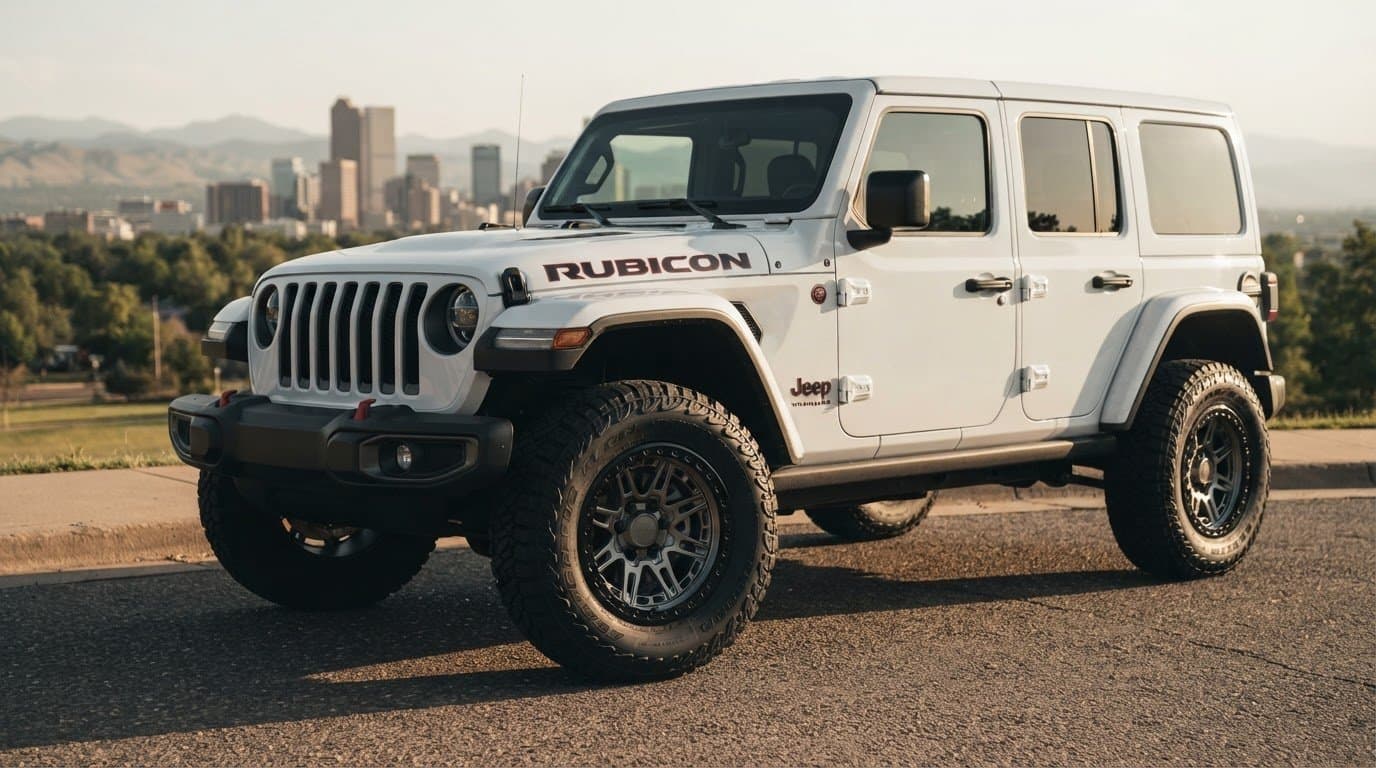
The most aggressive mud tires for a Jeep aren’t automatically the best choice for Denver driving. You can choose tires paired with wheels, but the tire size and wheel setup must fit your Jeep and how you use it. Mud tires for a Jeep can add traction on muddy, rocky trails, but their open tread can mean more road noise and faster pavement wear than all-terrain tires.
Tread appearance is only one factor. Daily mileage, trail conditions, load rating, sidewall construction, warranty terms, and wheel fitment all matter when choosing a setup for both road and trail use.
This guide compares mud-terrain and all-terrain tires, explains load and sidewall specifications, and covers how wheel-and-tire packages fit into the decision. Use these criteria to match your Jeep to your driving, whether you prioritize trail traction, a quieter highway ride, or a balance of both.
Key Takeaways
- Use the load index to compare a tire’s carrying capacity with your Jeep’s requirements, rather than choosing by size or appearance alone.
- Look beyond mileage warranty claims: sidewall construction can influence how a tire handles rough trail conditions.
- Mounted wheel-and-tire packages can simplify the setup, but fitment depends on wheel width, backspacing, suspension and lift.
- Weigh your typical driving and trail use to narrow down whether an all-terrain, mud-terrain or hybrid tread is the better match.
What's the difference between all-terrain and mud-terrain tires?
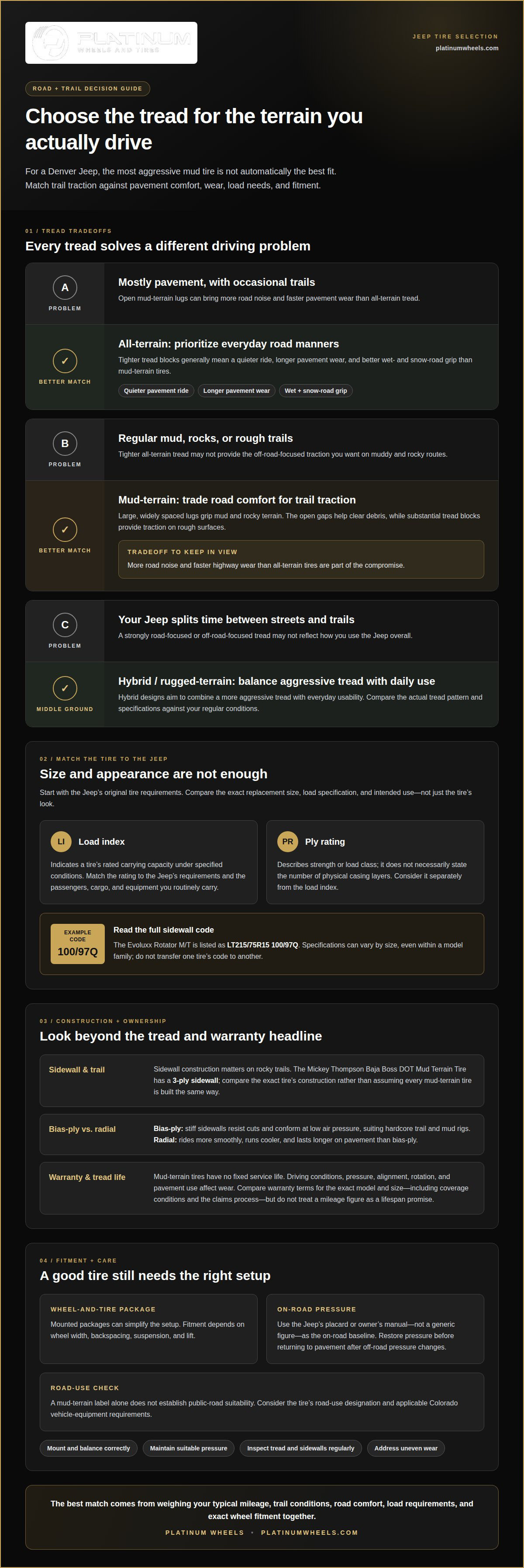
For a Denver Jeep, tread design affects how tires perform on trails and pavement. Compare the terrain you drive most with the level of road comfort you want.
All-Terrain, Mud-Terrain, and Hybrid Comparisons
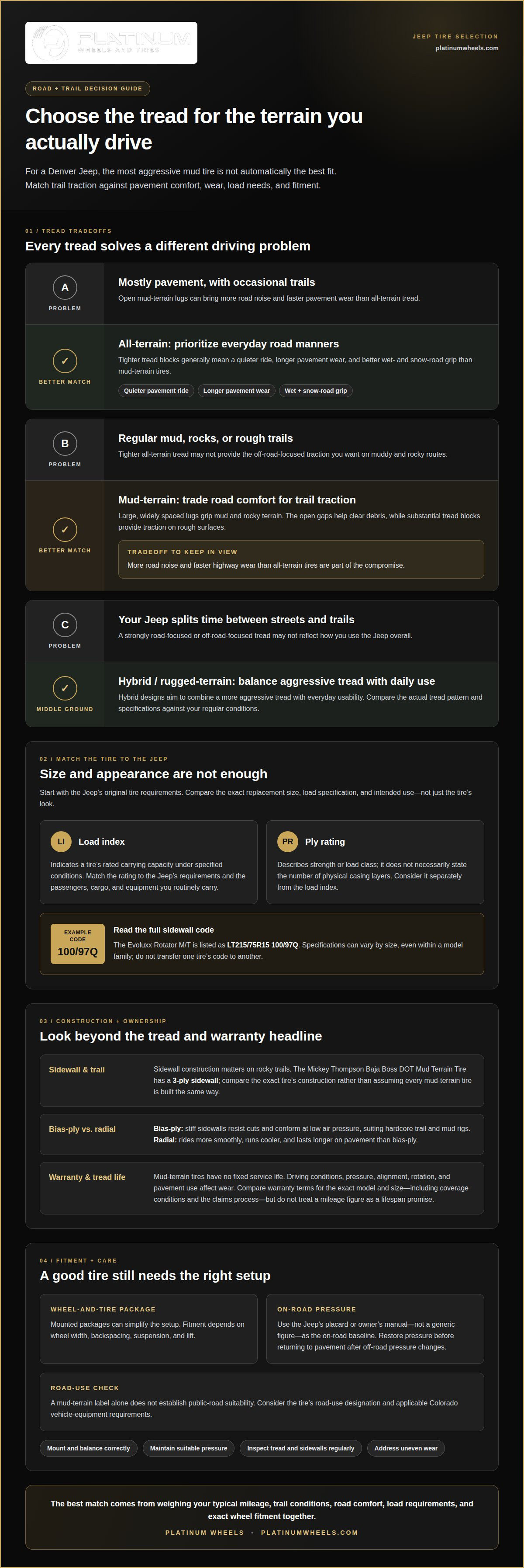
All-terrain tires have tighter tread blocks for quieter pavement driving, longer wear, and better wet- and snow-road grip than mud-terrain tires. Mud-terrain tires trade some of those road manners for stronger off-road traction. Hybrid, or rugged-terrain, designs aim for a middle ground, combining a more aggressive tread with everyday usability. Compare tread design and tire specifications against the conditions you drive in.
For example, the Mickey Thompson Baja Boss DOT Mud Terrain Tire has an asymmetric tread pattern. That model detail can help narrow your shortlist, but your Jeep’s everyday use should guide the final comparison.
Tread, Terrain Suitability, and Off-Road Traction
Mud-terrain tires use large, widely spaced lugs to grip mud and rocky terrain. The open gaps help clear debris as the tire turns, while the substantial blocks provide traction on rough surfaces. This design is better suited to muddy trails and rocky routes than smooth pavement.
If your Jeep regularly encounters gravel, rocks, or mud, compare the tread pattern with those surfaces. The Mickey Thompson Baja Boss DOT Mud Terrain Tire is one option to consider; its three-ply sidewall is another detail to weigh for off-road use.
Street Use and Restrictions
A mud-terrain label alone doesn’t establish whether a specific tire is suitable for public roads. For Denver driving, consider the tire’s road-use designation and applicable Colorado vehicle-equipment requirements. Restrictions may depend on whether the tire and vehicle equipment meet those requirements, not simply on how aggressive the tread looks.
Choose a tire designed for your mix of road and trail use. An off-road-focused tread can still be a poor fit for a Jeep that spends most of its time on pavement.
Noise, Comfort, and Fuel Economy Tradeoffs
Widely spaced mud-terrain lugs tend to create more road noise than tighter all-terrain tread. Mud-terrain tires can also wear faster on highways. All-terrain tires generally offer a quieter ride and longer pavement wear, making them a practical comparison for everyday Denver driving.
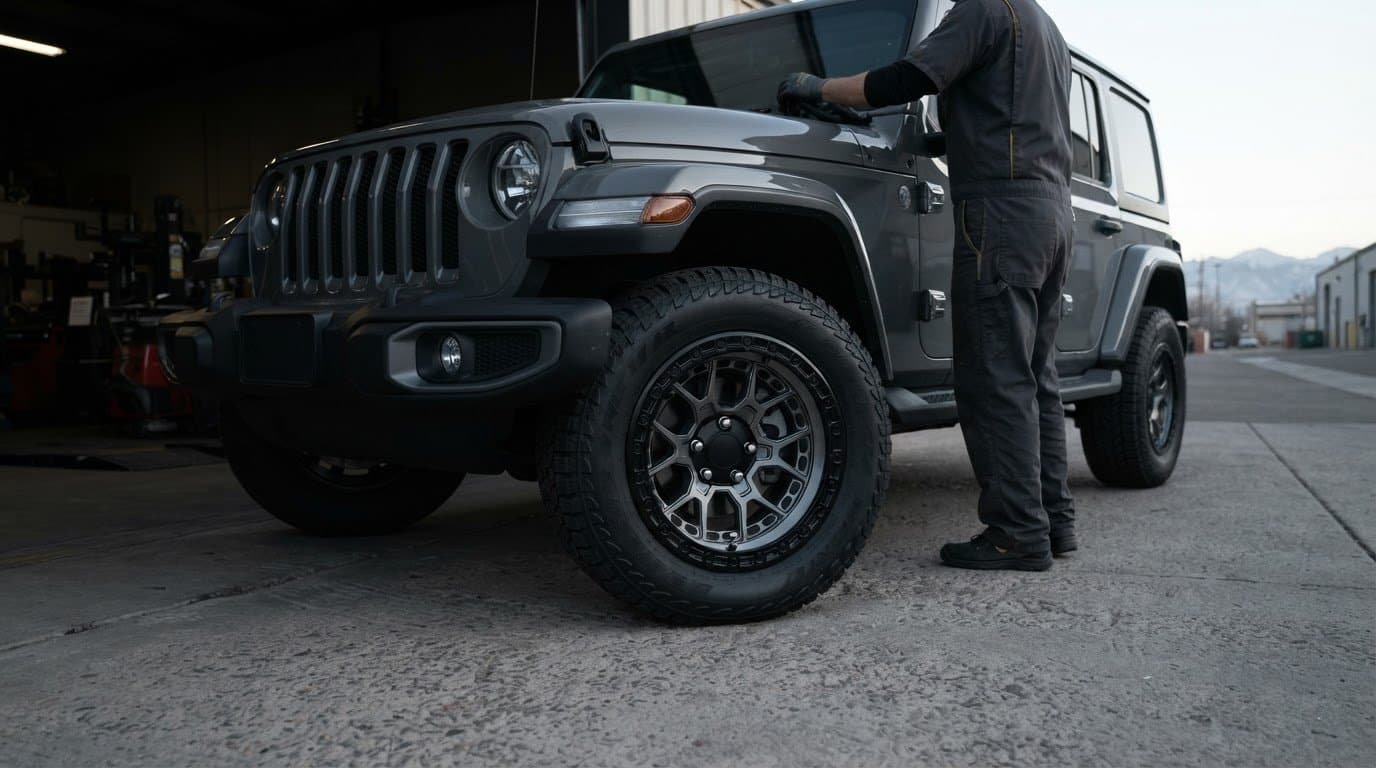
For on-road pressure, follow your Jeep’s placard or owner’s manual rather than a generic figure. Off-road pressure depends on the terrain and tire setup; reinflate before returning to pavement. Have tires mounted and balanced correctly, maintain suitable pressure, and inspect the tread and sidewalls regularly. For motorists seeking professional support with installation or roadside repairs, services like Mobile Tyre Fitting Essex provide an example of how convenient mobile mounting and balancing can be.
Load index and ply rating
Load index indicates a tire’s rated carrying capacity under specified conditions. Ply rating describes its strength or load class, not necessarily the number of physical casing layers. Both matter when a Jeep carries passengers, gear, or recovery equipment. Start with the vehicle’s original tire requirements, then compare replacement specifications. A larger-looking tire isn’t automatically a suitable load match.
Read the full sidewall code, not just the size. For example, the Evoluxx Rotator M/T is listed as LT215/75R15 100/97Q. Tire specifications can vary by size, so check the full sidewall code for the exact tire. These examples show how load and speed symbols accompany tire size. The ratings differ by size, so don’t transfer one tire’s code to another.
Match a replacement tire’s load rating to your Jeep’s requirements and intended load. Account for passengers, cargo, and equipment you routinely carry. A different tire size can have a different rating, even within the same model family. Compare the full specification for the exact size, and consider ply rating separately as a construction and load-class factor.
Load capacity doesn’t tell the whole story. Tire pressure affects how the tire carries weight, so use the Jeep’s recommended on-road pressure as your baseline. Trail pressure changes should reflect the terrain and tire setup, with pressure restored before highway driving. A well-matched tire balances the vehicle’s load needs with its use. Explore mud-terrain tire options alongside each tire’s full size and load code.
Mileage warranties and sidewall options
Mud-terrain tires don’t have a fixed service life. Tread life depends on driving conditions, tire pressure, alignment, rotation, and how often the Jeep travels on pavement. Highway use can wear mud-terrain tread faster than all-terrain tread, so a mileage warranty shouldn’t be treated as a promise of actual lifespan.
Compare warranty terms for the exact tire model and size. Review the stated mileage coverage, applicable conditions, and claims process. A warranty figure helps compare products, but it doesn’t predict how quickly your tires will wear. Inspect the tread regularly and maintain proper alignment and recommended pressure.
Sidewall construction matters on rocky trails. The Mickey Thompson Baja Boss DOT Mud Terrain Tire has a 3-ply sidewall construction. That’s a specific feature to compare against other tires, rather than assuming every mud-terrain tire uses the same build. Match the sidewall choice to your driving: sharp rocks and rough trails place different demands on a tire than routine pavement miles.
Construction type also affects tire behavior. Bias-ply tires have stiff sidewalls that resist cuts and conform at low air pressure, making them suitable for hardcore trail and mud rigs. Radial tires ride more smoothly, run cooler, and last longer on pavement than bias-ply tires. If your Jeep travels between trailheads and city streets, weigh those road characteristics against the terrain you expect to tackle.
Use a practical comparison process: identify the tire’s warranty terms, note its construction, then consider your regular route and trail conditions. Check pressure and tread condition consistently, and address uneven wear rather than waiting for it to worsen. A sidewall feature such as the Baja Boss’s 3-ply construction is one selection detail, not a substitute for matching the tire to the Jeep and its use.
Mud tires for trucks, Jeeps, and SUVs
Truck, Jeep, and SUV fitment starts with the vehicle, not its appearance. A tire size that suits one model may not clear another. Before choosing an aggressive tread, account for wheel width, backspacing, suspension, and lift. These factors affect tire position and clearance through suspension travel.
For a Jeep used on trails and around Denver, match tire choice to its actual setup. A lifted SUV and a stock-height Jeep don’t share the same fitment assumptions. Larger tires can change clearance needs, while wheel dimensions affect tire placement. Treat a listed tire size as a starting point, not a universal recommendation for every truck or SUV.
Some mud-terrain options are built for extreme applications. The Mickey Thompson Baja Pro XS Extreme Mud Terrain Tire is listed at 40 inches. That example illustrates why product size alone doesn’t establish a sensible fit. Match the tire to the vehicle’s wheel, suspension, and intended terrain instead of selecting the largest size available.
A wheel-and-tire package brings the components together as one setup. The key is matching the tire size and wheel specifications to the vehicle. For a truck, Jeep, or SUV, consider wheel width and backspacing alongside suspension and lift. With a package, evaluate the wheel and tire combination together rather than treating each choice separately.
Use this sequence to narrow your options: identify the vehicle and current suspension setup, define the terrain you drive, then compare compatible tire and wheel dimensions. A mud-terrain tread may suit frequent trail use, while a different tread can better balance pavement travel. Explore wheel-and-tire package options to bring the fitment choices together.
Platinum Wheels: Wheel & Tire Packages
Platinum Wheels offers Wheel & Tire Packages to bring tire and wheel choices together. This is a practical next step if you’ve narrowed down your tread preference but still need to consider fitment for your Jeep, truck, or SUV.
Choose between All-Terrain & Mud-Terrain Tires, then pair your selection with Custom Truck Wheels & Off-Road Rims. If your setup includes a suspension change, Lift Kits & Leveling Kits are also available. The goal is a combination that suits your driving needs and vehicle setup, rather than choosing tire size or wheel appearance in isolation.
For help discussing a tire and wheel setup, contact Platinum Wheels.
Plan Your Jeep’s Next Tire Setup
Before choosing mud tires for a Jeep, decide what you need the setup to do: support regular trail use, handle a mix of pavement and dirt, or complete a wheel-and-tire refresh. That priority gives the decision a clear starting point and helps keep appearance from overshadowing function.
Bring your vehicle details and intended use into the decision. Platinum Wheels offers All-Terrain & Mud-Terrain Tires, Custom Truck Wheels & Off-Road Rims, and Wheel & Tire Packages. These options can help create a coordinated setup for your Jeep and off-road plans, with the tire and wheel considered together.
Choose the direction that fits your driving, then take the next step at your pace. Contact Platinum Wheels about tire options to discuss a setup for your Jeep. A thoughtful choice now can make your next trip feel more purposeful, whether the route leads across town or onto the trail.
Frequently Asked Questions
Can I buy tires already mounted on wheels?
Yes, wheel-and-tire packages pair tires with wheels and include mounting and balancing. They’re useful if you’re replacing both components or want a coordinated setup for your Jeep. Platinum Wheels offers packages and a free Wheel & Tire Fitment Consultation. Bring your vehicle details and intended use to the consultation so the package suits your setup.
How do I know a tire will fit my truck?
Fitment depends on the exact vehicle, tire size, wheel dimensions, and suspension setup. Share the vehicle’s year, make, and model, along with any existing lift or leveling changes. Wheel width and backspacing also affect placement and clearance. Platinum Wheels offers free Wheel Test Fitment to help assess a proposed combination before you choose a setup.
Should I run bias-ply or radial tires off-road?
Choose based on how much pavement and demanding trail use your vehicle sees. Radial tires generally offer a smoother ride, run cooler, and last longer on pavement. Bias-ply tires have stiff sidewalls that resist cuts and conform at low air pressure, which can suit hardcore trail and mud rigs. If your Jeep regularly travels between trails, consider the road tradeoffs too.
What are the best mud tires for a Jeep Wrangler?
The best mud tires for a Jeep Wrangler depend on its fitment and how you use it. Compare load rating, sidewall construction, warranty terms, and tread design for the specific tire size. For example, the Mickey Thompson Baja Boss DOT Mud Terrain Tire has a 3-ply sidewall. Treat that as one model feature to weigh, not a universal recommendation for every Wrangler.
What tire sizes are compatible with stock Jeep Wrangler wheels and suspension?
There isn’t one compatible size for every stock Jeep Wrangler. The right fit depends on the model year and configuration, factory wheel dimensions, and available clearance. Consider the suspension setup as well. A tire that fits one Wrangler may not suit another. Assessing fitment against the exact vehicle and wheel details is the practical way to narrow your choices.
How do mud-terrain tires compare with all-terrain tires for off-road traction and daily driving?
Mud-terrain tires favor aggressive off-road use, while all-terrain tires offer a more balanced option for mixed driving. If your Wrangler spends most days on pavement and visits trails occasionally, an all-terrain design may suit your routine better. For frequent muddy or rocky routes, mud-terrain tread may be the better match. Choose based on the surfaces you actually drive, not looks alone.