
Top-Rated Toyota Sequoia Tires for Denver Drivers
Imagine you're heading up to Silverthorne on a Friday evening when the slush starts piling up on I-70, and suddenly, your 6,000-pound SUV feels less like a tank and more like a sled. It's a common frustration for many local owners who realize that the factory-spec toyota sequoia tires often struggle with Colorado's extreme shifts between dry pavement and deep powder. You want a rig that looks aggressive and handles the trails, but you shouldn't have to tolerate deafening road noise or replace your tread every year just because the Sequoia is a heavy-duty machine.
We understand that Denver driving demands more from your rubber than a standard commute. This expert guide helps you discover the perfect balance of off-road capability and highway comfort for your Toyota Sequoia. We'll break down the top-rated options for our unique climate; we also explain how to navigate the latest Colorado Traction Law requirements to ensure you stay compliant and safe on the mountain corridor. From severe-snow certified all-terrains to high-mileage highway treads, you're about to find the confidence you need for every mountain pass and city street. If you'd rather leave the driving to the experts, you can explore Private Chauffeur and Executive Transportation Services for a stress-free journey through the Rockies.
Key Takeaways
- Learn why choosing toyota sequoia tires with a specific load index is critical for safety and longevity given the vehicle's heavy curb weight.
- Compare the benefits of all-terrain and highway-terrain options to find the ideal match for your Denver commute and weekend mountain adventures.
- Explore trim-specific fitment strategies to enhance your TRD Pro suspension or improve the off-road capability of your Platinum or Limited model.
- Discover why high-precision road-force balancing and professional TPMS sensor calibration are essential for maintaining a smooth, vibration-free ride.
- Find out how complete wheel and tire packages provide a streamlined solution for achieving a custom, high-performance look and feel.
Understanding Toyota Sequoia Tire Requirements
Selecting the right toyota sequoia tires requires more than just finding a tread pattern that looks aggressive. Because this SUV tips the scales at nearly three tons, the physical demands placed on the rubber are significantly higher than your average crossover. You need a tire that handles the high-torque output of the i-FORCE MAX powertrain while maintaining stability on wind-swept mountain passes. Choosing a set that doesn't meet these specific mechanical needs can lead to a "squishy" steering feel and increased braking distances.
For those researching specific Toyota Sequoia details, it's clear that requirements have shifted through the generations. While the first-gen models were lighter, the modern third-generation rigs demand high load indices and specific speed ratings to handle long-distance hauls across the Rockies. Temperature grades are equally vital; heat is the primary enemy of your rubber when you're climbing 11,000-foot passes under a full load. High-speed stability on I-25 also requires a speed rating that matches or exceeds the vehicle's capabilities to ensure the tire doesn't deform at highway velocities.
Toyota Sequoia load ratings must meet or exceed the manufacturer's specified Gross Vehicle Weight Rating to safely support the vehicle's maximum payload and towing capacity without compromising sidewall integrity.
Load Index and Weight Capacity
Most Sequoia owners face a choice between Standard Load (SL) and E-Load (10-ply) ratings. While SL tires offer a softer ride for city commuting, they often lack the lateral stability required for heavy towing. If you're pulling a camper or a boat through the Eisenhower Tunnel, an E-Load rating provides the reinforced sidewalls necessary to prevent trailer sway. Exceeding these weight limits doesn't just wear out your tread; it leads to internal heat buildup that can cause sudden tire failure. Always check the load index on the sidewall to ensure it matches the 6,000-pound plus demands of your rig, and if you need professional on-site fitting or repairs, mobiletyreservice.com can assist you at your preferred location.
OEM vs. Plus-Sized Fitment
Standard 18-inch wheels are the preferred choice for drivers who spend weekends on Colorado's forest service roads. The taller sidewall acts as a cushion against jagged rocks and provides a more comfortable ride on potholed Denver streets. Conversely, the 20-inch wheels found on Platinum and Limited trims offer sharper steering response on the highway, though they provide less protection for your rims in deep ruts. If you decide to go with a larger, plus-sized tire, remember that a taller diameter will make your speedometer read slower than your actual speed. Precision fitment ensures your toyota sequoia tires clear the wheel wells without rubbing, especially if you're running a leveling kit.
Best Tire Categories for Colorado Sequoia Owners
Denver drivers don't just use their SUVs for grocery runs; they use them as basecamps for mountain adventures. Choosing the right toyota sequoia tires depends entirely on how you balance your time between the stop-and-go traffic of I-25 and the loose shale of a high-altitude trailhead. While highway-terrain (HT) tires offer the quietest ride and best fuel economy for long hauls to Fort Collins, they often leave Sequoia owners wanting more when the pavement ends. On the other end of the spectrum, mud-terrain (MT) options provide an unmistakable aesthetic and maximum grip in deep mud, though they typically trade off tread life and cabin silence.
Safety remains the foundation of any purchase. Adhering to NHTSA tire safety guidelines means checking your load capacity and maintaining proper inflation, which is especially critical when your vehicle's weight fluctuates with camping gear or a trailer. For those seeking a reliable source for high-quality new or used options, you can discover Partner Tires to explore a wide inventory suitable for large SUVs. Most local owners find their "Goldilocks" solution in the all-terrain category, which bridges the gap between daily drivability and weekend utility.
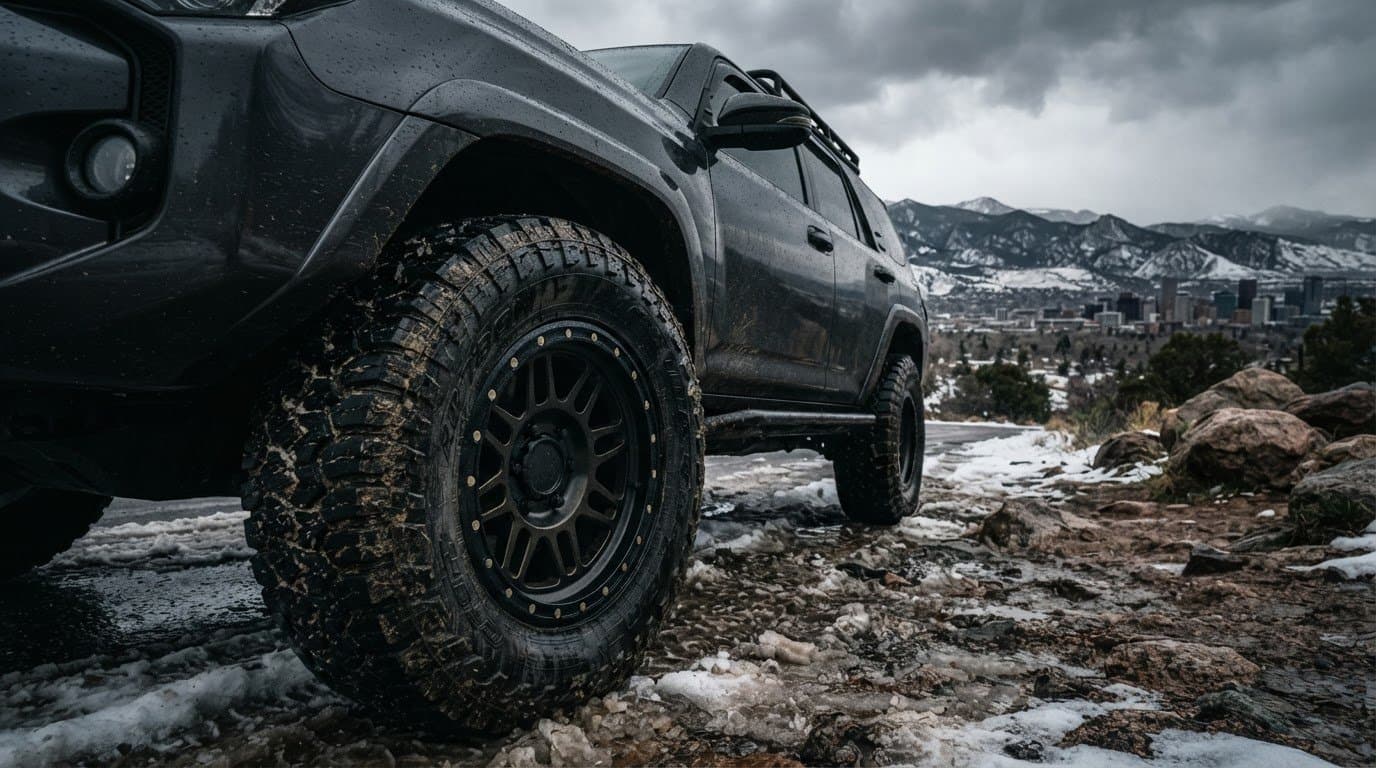
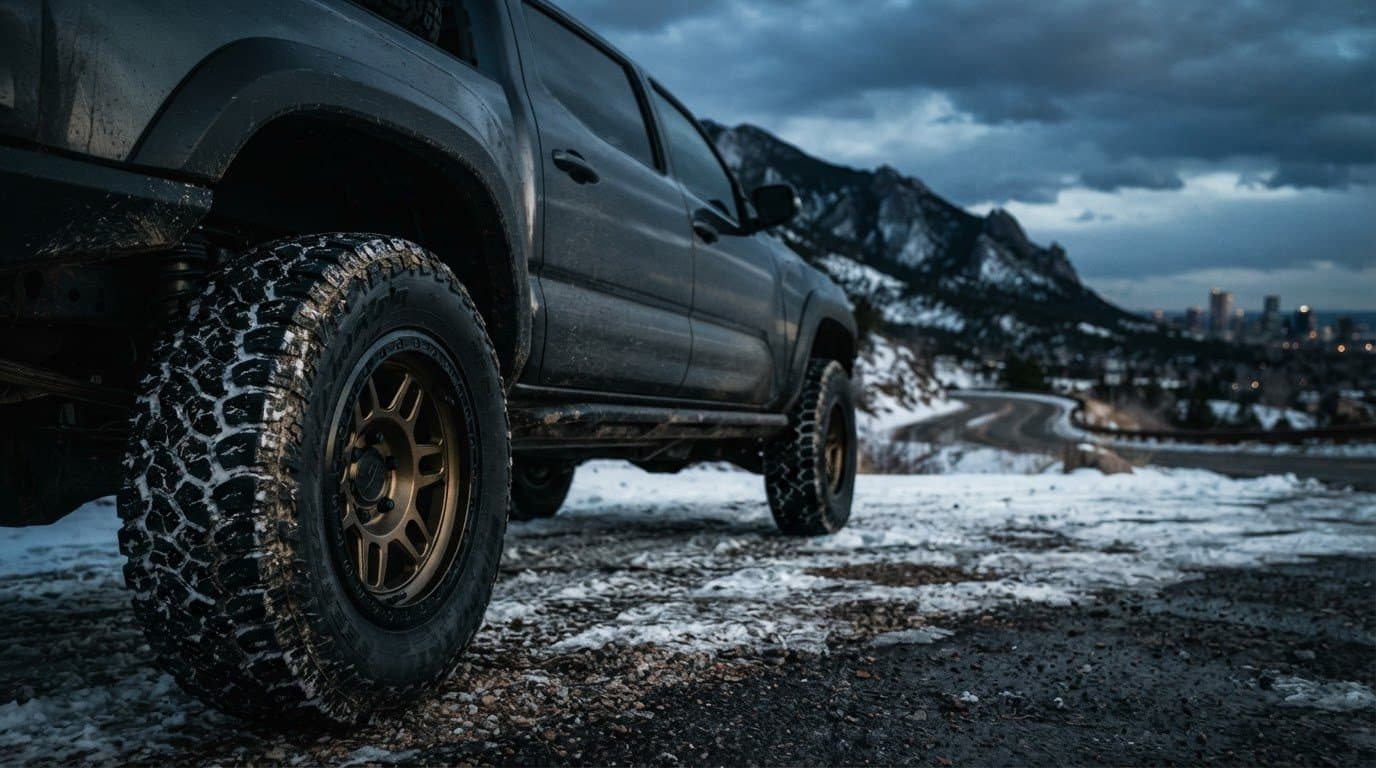
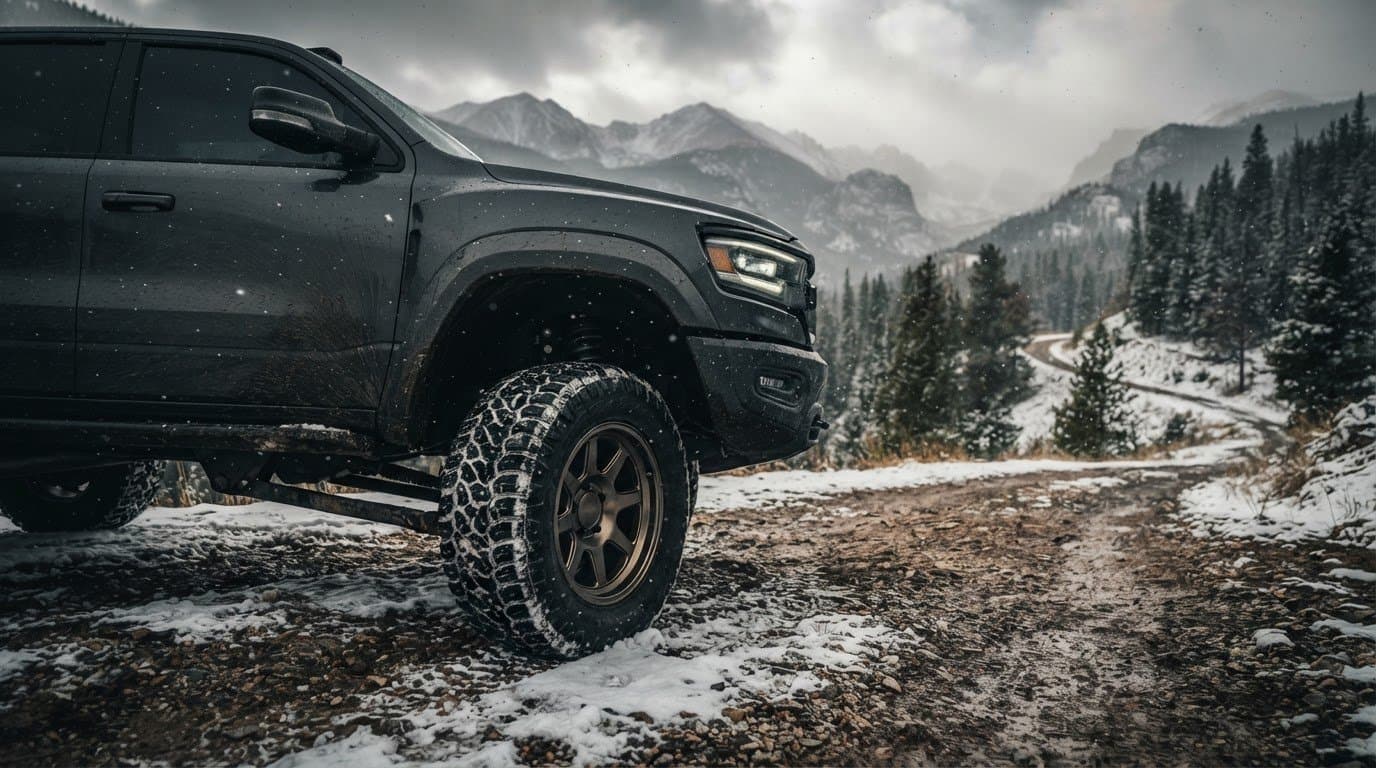
For a 4WD Sequoia, all-terrain (AT) tires are often the superior choice. These tires feature aggressive tread blocks designed to bite into dirt and gravel while utilizing specialized rubber compounds that remain flexible in our freezing winters. Look for designs that include stone ejectors; these small ridges within the tread grooves prevent rocks from drilling into the tire casing. Reinforced sidewalls are another must-have feature for the Front Range, providing extra protection against jagged rocks on trails like Kingston Peak. If you're looking for that perfect balance, browse our selection of all-terrain and mud-terrain tires to find a set that meets these rigorous standards.
Winter Performance and Traction Laws
Navigating the I-70 mountain corridor requires more than just 4WD; it requires legal compliance. The Colorado Passenger Vehicle Traction Law (Code 15) is in effect from Morrison to Dotsero between September 1st and May 31st. During these months, all vehicles must have a minimum tread depth of 3/16 of an inch. While M+S (Mud and Snow) ratings are common, look specifically for the 3-Peak Mountain Snowflake (3PMSF) symbol. This rating indicates the tire is tested for severe snow performance, providing significantly better stopping power on icy grades than a standard all-season tire. Failing to meet these requirements can result in fines starting at $133, or over $600 if your inadequate tires cause a lane closure.
Sequoia Trim-Specific Fitment and Upgrades
Toyota engineered each Sequoia trim with a specific driver in mind, but the factory stance often leaves room for improvement. Whether you're driving a TRD Pro with factory-tuned shocks or a luxury-focused Platinum, your choice of toyota sequoia tires must complement your suspension geometry. Upsizing your rubber is the most effective way to gain ground clearance; however, it requires an understanding of where the tire meets the wheel well. Common rub points include the front fender liner and the body mount, especially when moving to a wider stance or a more aggressive tread. Precision fitment ensures you don't compromise your turning radius when navigating tight Denver parking garages or narrow mountain switchbacks.
Leveling Your Sequoia for Larger Tires
Most Sequoias come from the factory with a noticeable "rake," where the front sits lower than the rear. Installing a 2-inch leveling kit is a popular solution to even out this stance and clear larger rubber for a more commanding presence. This modification typically allows for a 33-inch tire with no modifications, while some 35-inch setups become possible with minor trimming of the plastic liners. Understanding the difference between a leveling kit vs lift kit is essential for deciding how much clearance you truly need for your lifestyle. Wheel offset also plays a massive role here; a negative offset pushes the wheel out for a wider look but increases the "scrub radius," making rub points more prominent during full-lock turns.
TRD Pro and Off-Road Package Considerations
The TRD Pro is a different beast entirely. It features sophisticated internal bypass shocks from Fox or Bilstein that are tuned for both high-speed desert running and technical crawling. You don't want to compromise this engineered performance with a tire that is excessively heavy or a wheel that lacks proper centering. We recommend aftermarket wheel and tire packages that prioritize hub-centric fitment. This design ensures the weight of your SUV is supported by the hub rather than just the lug bolts, which significantly reduces vibration at highway speeds. If you're upgrading a Limited or Platinum trim, consider stepping down from 20-inch wheels to 18-inch variants. This move provides more sidewall "meat" to protect your rims from trail damage and allows the tire to conform better to obstacles when aired down. Protecting your investment means pairing these upgrades with durable sidewalls that can handle the sharp shale found on Colorado's backcountry trails.

Maintenance and Tech for Your Sequoia Setup
Investing in premium toyota sequoia tires is only half the battle; keeping them performing at their peak requires a specialized technical approach. Because the Sequoia is a heavy-duty SUV, it is exceptionally sensitive to minor imbalances that lighter vehicles might not even register. We utilize high-precision road-force balancing to simulate the actual weight of the vehicle on the tire while it spins. This advanced process identifies internal "hard spots" in the rubber or slight rim variations that traditional balancers miss, effectively preventing the steering wheel shimmy that often plagues large rigs at highway speeds.
TPMS and Electronic Integration
Heavy SUVs put immense stress on tire shoulders during cornering, which can lead to premature wear if you aren't diligent. Stick to a rigorous rotation schedule every 5,000 miles to ensure even tread depth across all four corners. For 4WD vehicles like the Sequoia, a rearward cross pattern is generally the most effective way to manage wear. High-torque conditions, such as towing a trailer up a steep grade, generate significant heat that can accelerate rubber breakdown. Perform regular visual checks for "cupping" or feathered edges, as these are early warning signs that your alignment has been knocked out by a Denver pothole or a rough trail. To ensure your suspension and steering are perfectly dialed in, Speedy Roo Motorsports & Repair Inc provides specialized maintenance for Japanese vehicles in the Aurora area. If you want a rig that's professionally mounted, balanced, and ready for the trail, check out our custom wheel and tire packages designed specifically for the Front Range.
Managing your tire pressure is another essential skill for the Colorado lifestyle. While your door placard might suggest a specific PSI for the highway, you should adjust based on your environment. Airing down to 20 or 25 PSI can significantly increase your contact patch and traction on loose Rocky Mountain shale or sandy washouts. Just be sure to bring a portable compressor to air back up before hitting the pavement; driving on under-inflated tires at highway speeds causes rapid sidewall overheating and potential failure.
Selecting the right toyota sequoia tires is only the first step toward transforming your driving experience. At Platinum Wheels, we bridge the gap between technical specifications and real-world performance on the Front Range. General tire shops often overlook the specific load requirements and suspension nuances of a 6,000-pound SUV, but we live and breathe these details every day. We provide a consultative approach that prioritizes your peace of mind, ensuring your rig is as safe on a family road trip as it is capable on a weekend camping excursion.
The Platinum Wheels Advantage
Our specialized focus on custom wheels and rims means we understand fitment better than the big-box retailers. We don't just sell rubber; we engineer a complete aesthetic and functional upgrade for your vehicle. Our team offers transparent advice on which tire widths will clear your wheel wells and which offsets will provide that aggressive stance without causing annoying rub points. You can count on quick turnarounds and precise workmanship because we know your time is valuable. We've built our reputation on delivering high-quality results with the speed and precision that local truck owners expect.
Every setup we install is a comprehensive package. When you choose our wheel and tire packages, we handle the mounting, high-precision road-force balancing, and TPMS sensor integration in-house. This "one-stop" philosophy ensures that every component works in harmony, from the tread blocks on the pavement to the electronic safety systems in your dashboard. If you're looking to correct the factory rake or clear 35-inch tires, our expert installation of leveling kits provides the perfect Sequoia stance while maintaining your factory ride quality.
Visit Our Shop Near Denver
We're proud to be a local, independent business serving the entire Front Range community. Whether you're commuting from Castle Rock, navigating the suburbs of Lakewood, or heading out from Aurora, our shop is conveniently located to help you build the rig of your dreams. We invite you to schedule a consultation where you can see different wheel finishes and tire tread patterns in person. This hands-on experience allows you to make a confident decision before we ever touch a lug nut. Ready to upgrade? Contact us for a custom quote today!
Master the Mountains with the Right Setup
Equipping your SUV for the Front Range is about more than just aesthetics; it's about ensuring your vehicle can handle everything from a sudden blizzard on Vail Pass to a rocky climb in the San Juans. You now know that selecting toyota sequoia tires with the correct load index is the foundation of safety for such a heavy vehicle. Choosing a severe-snow certified all-terrain tread will keep you compliant with Colorado traction laws while providing the grip you need for weekend escapes. Don't forget that precision fitment and expert TPMS calibration are what separate a professional build from a standard tire swap.
As Denver's local experts in truck and SUV fitment, we're here to help you dial in your rig. Whether you need professional leveling kit installation to clear larger rubber or premium TPMS and balancing services to keep your highway ride smooth, our team is ready to assist. We take pride in helping our neighbors build capable, reliable vehicles that look as good as they perform. Upgrade Your Sequoia at Platinum Wheels Today and drive with confidence through every season.
Frequently Asked Questions
What is the largest tire size I can fit on a stock Toyota Sequoia?
On a stock third-generation Sequoia, you can typically fit a 33 inch tire without major modifications. Common sizes include 275/70R18 or 275/60R20. While the TRD Pro comes factory equipped with a 285/65R18, other trims may experience slight rubbing at full steering lock if you go wider. For older generations, a 275/70R18 is generally the safe limit for a stock suspension setup before you need to consider trimming or a leveling kit.
Do I need a leveling kit to run 35-inch tires on my Sequoia?
Yes, running 35 inch tires on a Sequoia almost always requires at least a 2 inch leveling kit and some minor trimming. Even with a level, the increased tire diameter often contacts the front fender liner or the body mount during sharp turns. Wheel offset is a critical factor here; choosing a wheel with a neutral offset helps minimize rubbing, whereas a wide, negative offset pushes the tire into the wheel well plastics.
How does upsizing tires affect my Toyota Sequoia’s fuel economy?
Upsizing your tires usually results in a loss of 1 to 3 miles per gallon. Larger tires are heavier, which increases rotational mass and requires more energy to get the vehicle moving. Aggressive all-terrain treads also have higher rolling resistance than standard highway tires. Additionally, since a larger tire covers more ground per revolution, your odometer will actually record fewer miles than you've traveled unless you recalibrate the vehicle's computer.
What are the best tires for snow driving in a Toyota Sequoia?
The best toyota sequoia tires for Colorado winters are those featuring the 3-Peak Mountain Snowflake (3PMSF) symbol. For year-round use, the BFGoodrich All-Terrain T/A KO3 and Falken Wildpeak A/T4W are top-tier choices that meet state traction laws. If you spend every weekend at a ski resort, dedicated winter tires offer superior braking on ice compared to any all-terrain. These specialized compounds stay soft in sub-zero temperatures, providing much better grip on frozen pavement.
Why is my TPMS light on after getting new tires?
Your TPMS light often stays on after a tire swap because the vehicle's computer needs to be synced with the new sensor IDs. If you reused your old sensors, the seals might have been compromised or the internal batteries could be failing. Heavy SUVs like the Sequoia require specific pressure thresholds; if your new tires require a different PSI than the factory settings, the system must be recalibrated to recognize the new "normal" pressure range.
Are all-terrain tires much louder on the highway than stock tires?
Modern all-terrain tires are engineered with variable-pitch tread blocks to minimize road noise, but they are still slightly louder than factory highway tires. You will likely notice a low-frequency hum at speeds above 60 miles per hour. However, the noise level is significantly lower than it was a decade ago. Most local owners find the slight increase in cabin volume a fair trade for the massive improvement in off-road traction and mountain safety.
How often should I rotate the tires on my 4WD Sequoia?
You should rotate your toyota sequoia tires every 5,000 miles to ensure even wear across all four corners. Because the Sequoia is heavy and has a high center of gravity, the front tires take a lot of abuse during braking and cornering. Regular rotations prevent "cupping" and "feathering," which can cause vibrations and shorten the life of your rubber. A rearward cross rotation pattern is the standard recommendation for 4WD vehicles to maximize tread longevity.
Can I use my factory TPMS sensors with new aftermarket wheels?
While you can often transfer your factory sensors to new wheels, we usually recommend installing new TPMS sensors with a fresh wheel and tire package. Reusing old sensors requires dismounting them from your original wheels, which increases the risk of damage to the delicate electronics. Furthermore, TPMS batteries typically last 7 to 10 years; if your Sequoia is older, it's more efficient to replace them now rather than paying for labor to swap them later.