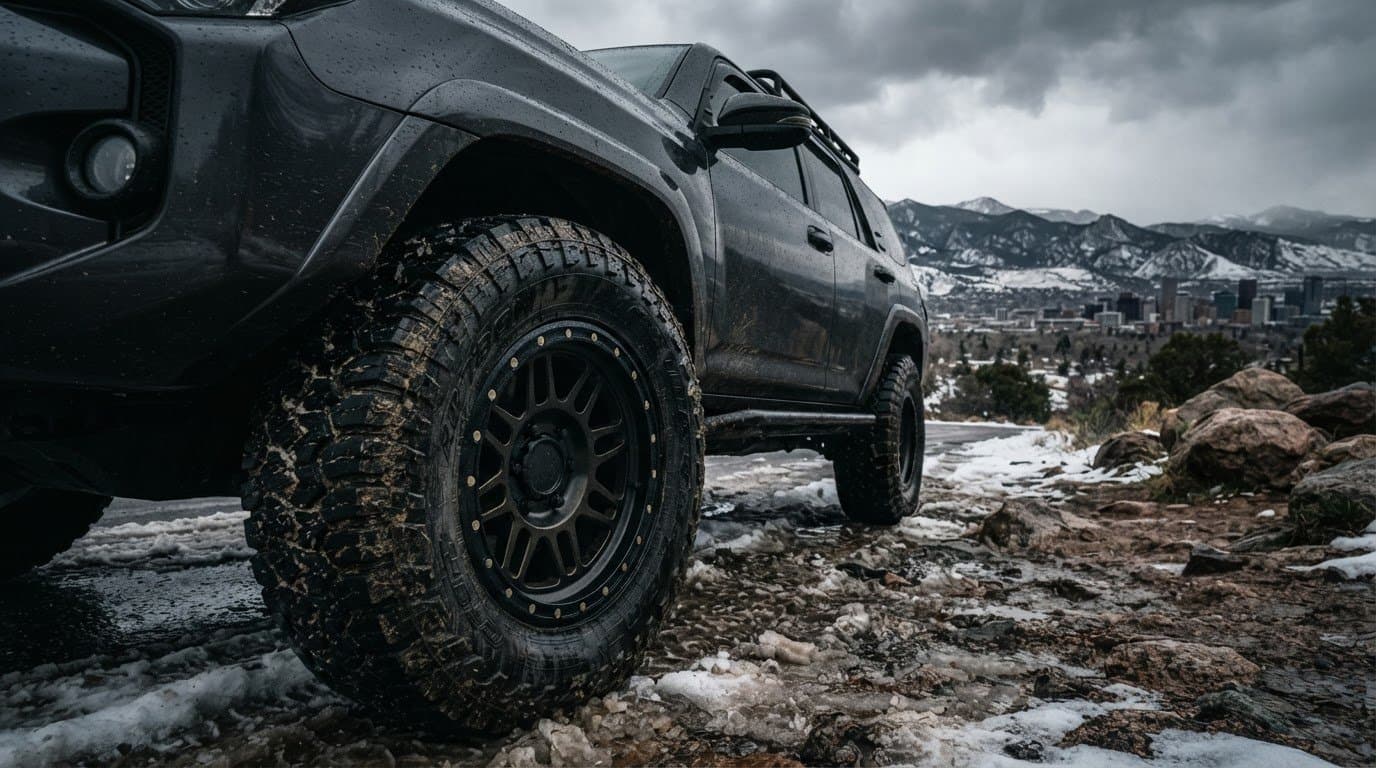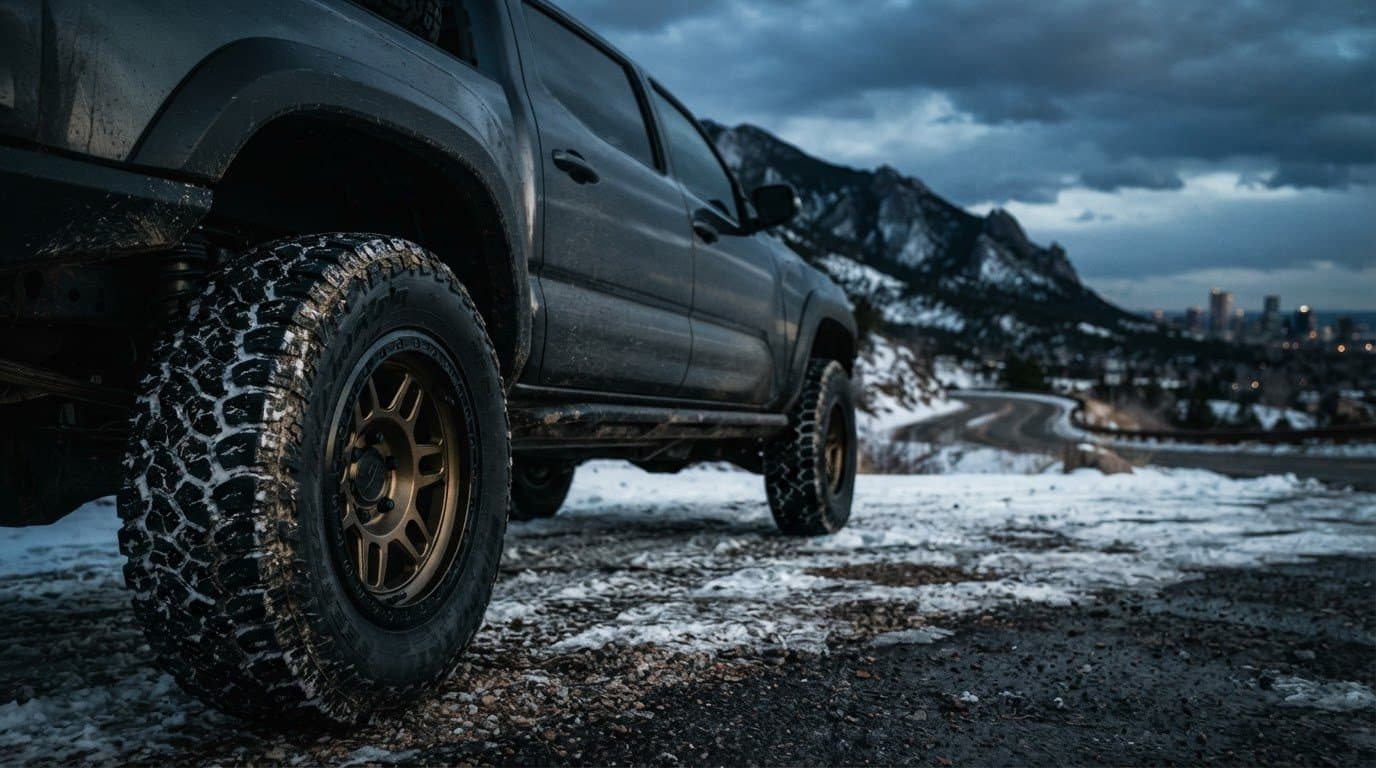

Best Toyota Tacoma Tires for Denver Roads & Off-Road Trails
That white-knuckle drive home from the Eisenhower Tunnel during a sudden October squall is enough to make any driver question their factory rubber. You bought your truck for its mountain-ready reputation, but stock toyota tacoma tires often feel like a liability when the I-70 Traction Law is in full effect from September through May. It's frustrating to own a capable 4WD vehicle and still feel your backend step out on slushy Denver bypasses or struggle for grip on a muddy trailhead.
We're here to help you dial in the perfect setup that balances an aggressive, trail-ready stance with the winter reliability required for Colorado's unpredictable climate. You'll discover how to achieve superior snow and mud traction without the constant fear of your tires rubbing on the UCA or fender liners. We'll break down the best hybrid all-terrain options, explain why Load Range C often beats Load Range E for daily comfort, and provide the fitment confidence you need before you buy. From navigating deep powder to cruising the Front Range, this guide ensures your Tacoma is actually ready for what lies ahead.
Key Takeaways
- Learn how to stay compliant with Colorado’s Traction Law and why factory tires often struggle on icy mountain passes.
- Compare All-Terrain and Mud-Terrain options to find the perfect balance between highway comfort and off-road grip.
- Understand specific fitment nuances, including why 285/70R17 toyota tacoma tires usually require a leveling kit to prevent rubbing.
- Discover why Load Range C provides the ideal ride quality for mid-sized trucks compared to heavy, sluggish E-rated tires.
- See the benefits of complete wheel and tire packages that include professional TPMS installation and local Denver fitment expertise.
Why Stock Toyota Tacoma Tires Struggle in Colorado
Most Tacomas leave the dealership equipped for a quiet commute, not the demanding terrain of the Front Range. While factory rubber helps Toyota achieve impressive fuel economy ratings, these highway-terrain tires often fail when the pavement ends or the snow starts piling up. The primary issue is that stock toyota tacoma tires are built with thin, two-ply sidewalls to keep weight down. This might save you a few cents at the pump, but it leaves you vulnerable to sidewall punctures on the sharp scree fields common in the San Juan Mountains.
Even the "rugged" tires found on TRD models can be misleading. They often feature aggressive-looking tread patterns that lack the deep siping and specialized rubber compounds required for true alpine performance. In Colorado, a tire's look matters far less than its ability to stay pliable at sub-zero temperatures and grip loose, shifting surfaces. Relying on factory equipment during a heavy spring storm or on a technical trail is a gamble that often results in lost traction or a shredded sidewall.
The Colorado Winter Factor
Between September 1st and May 31st, the I-70 Traction Law is in effect on the mountain corridor between Dotsero and Morrison. This law requires all vehicles to have at least 3/16-inch of tread depth. While a standard Mud and Snow (M+S) rating might keep you legal in some conditions, it's rarely enough for a safe climb to the tunnel during a blizzard. You need the Three-Peak Mountain Snowflake (3PMSF) symbol. This rating indicates the tire has passed specific tests for acceleration on packed snow. Without it, you'll struggle with braking and cornering at icy Denver intersections. We recommend tires with heavy siping; these are the tiny slits in the tread blocks that act like thousands of small teeth biting into the ice.
Off-Road Durability on Sharp Rocky Mountain Trails
Colorado trails are notoriously abrasive. When you air down your toyota tacoma tires to gain traction on a technical climb, you're exposing the sidewall to jagged rocks. Stock tires simply aren't designed for this stress. Upgrading to a three-ply sidewall provides the puncture resistance necessary to prevent a ruined weekend. Additionally, our regional temperature swings are brutal on rubber. A tire that feels soft and grippy during a 70-degree afternoon in Denver can turn hard and slick once you hit the 30-degree shadows of a high-altitude trail. High-quality aftermarket tires use advanced silica compounds that remain flexible across these massive temperature gradients, ensuring consistent grip regardless of the altitude.
All-Terrain vs. Mud-Terrain: Which Tacoma Tire is Right?
Selecting the right toyota tacoma tires often feels like a compromise between highway civility and trail-crushing grip. In Colorado, where a single trip can take you from the dry pavement of the Front Range to the muddy depths of a mountain pass, this decision determines your truck's daily personality. Most owners find themselves choosing between the versatile All-Terrain (A/T) or the aggressive Mud-Terrain (M/T), though a new category of "Rugged Terrain" (R/T) hybrids is quickly gaining ground in the local community.
The Case for All-Terrain Tires
All-Terrain tires are the gold standard for Tacomas that serve as daily drivers. If 90% of your miles are spent on I-25 or the daily commute through Aurora, an A/T tire provides the quiet, stable ride you need. These tires excel on slushy Denver roads because their tread patterns include dense siping, which are the small slits that grip wet and icy surfaces. You'll enjoy a significant advantage in fuel economy and a tread life that typically reaches 50,000 miles or more. They are the smart choice for the weekend warrior who wants a capable truck without the constant highway drone.
When to Choose Mud-Terrain Tires
Mud-Terrain tires are built for the dedicated enthusiast who prioritizes maximum traction above all else. If your weekends are spent in deep mud or navigating technical rock crawling sections, the massive tread blocks and wide voids of an M/T are indispensable. They offer an unmatched, aggressive aesthetic that fills the wheel wells and gives your Tacoma a bold stance. However, be prepared for the trade-offs. The softer compounds and open patterns create a noticeable hum at highway speeds and generally wear faster on hot Colorado asphalt, often needing replacement around 35,000 miles. If you're unsure which category fits your lifestyle, you can always visit our Denver shop for a fitment consultation to see these options in person.
For those who want the best of both worlds, R/T tires bridge the gap. They combine the quiet inner tread of an A/T with the beefy sidewalls and shoulder lugs of an M/T. These hybrids are becoming a favorite for Colorado drivers who want the aggressive look of a mud tire but need the wet-weather reliability of an all-terrain. Regardless of your choice, remember that heavier tires can impact your Tacoma’s braking and acceleration. It's vital to match the tire's weight to your specific suspension setup to maintain performance.
Tacoma Tire Sizing: 265/70R17 vs. 285/70R17 Fitment
Choosing the right size for your toyota tacoma tires is a balancing act between aesthetics and clearance. Factory setups vary by trim. An SR5 typically rolls on 245/75R16 rubber, while the TRD Off-Road and TRD Pro models usually feature 265/70R16 or 17-inch variants. For owners looking to improve their truck's stance without a major suspension overhaul, the 265/70R17 is considered the "Standard Upgrade." It measures roughly 31.6 inches and offers a beefier look that usually fits stock suspension with minimal to no trimming. It's the safest bet for maintaining factory-like road manners on your Denver commute.
If you're chasing the iconic 33-inch look, you'll likely step up to a 285/70R17. This size transforms the Tacoma into a trail-ready beast, but it isn't a simple "bolt-on" affair. A 33-inch tire is wider and taller, which means it occupies significantly more space when the suspension compresses or the steering wheel reaches full lock. Without the right wheel offset, these larger tires will press against your Upper Control Arm (UCA), potentially causing damage to the sidewall or the suspension components themselves. Getting the backspacing right is just as critical as the tire width.
The "Rubbing" Points Explained
When you upsize your toyota tacoma tires, the first point of contact is usually the plastic front fender liner or the small air dam. These are easy fixes that involve minor plastic trimming. However, the more serious "rub" occurs at the cab mount. This is a steel bracket behind the front wheel well. For 285-series tires to clear during tight turns on mountain trails, many owners opt for a "Cab Mount Chop" (CMC). This modification involves cutting back the steel bracket and welding on a flat plate to create more clearance. It's a common procedure for dedicated off-roaders who want full range of motion without that annoying grinding sound.
Leveling Kits and Tire Clearance
A 2-inch leveling kit is often the missing piece of the puzzle for a clean fitment. By raising the front end, you create the vertical space needed to accommodate 285/70R17 tires more comfortably. This setup maintains better suspension geometry than a massive lift while still providing the clearance required for weekend adventures in the Rockies. If you're debating between a basic level or a full suspension upgrade, check out our guide on Leveling Kit vs. Lift Kit to see which path fits your goals. Our team focuses on ensuring your larger setup doesn't compromise your truck's long-term reliability or your peace of mind on the highway.

Technical Specs: Load Ratings and TPMS for Tacomas
Technical specifications are the difference between a truck that handles like a dream and one that feels like a tractor. When you're shopping for toyota tacoma tires, you'll encounter various load ratings that drastically alter your daily driving experience. Selecting the wrong one can lead to a harsh ride that rattles your interior every time you hit a pothole in downtown Denver. For the mid-size Tacoma, finding the balance between sidewall strength and weight is the key to maintaining performance.
Choosing the Right Load Range
Load Range C is often the "Goldilocks" choice for mid-size trucks. It provides enough sidewall strength for aired-down trail runs without the punishing stiffness of a heavy-duty tire. In contrast, Load Range E tires are designed for much heavier 3/4-ton and 1-ton trucks. While they offer extreme puncture resistance, they also add significant unsprung weight. This extra mass forces your engine to work harder during acceleration and increases your braking distances on I-25. Unless your truck is constantly loaded with a heavy slide-in camper or a permanent bed rack system, E-rated tires will likely make your Tacoma feel sluggish and unresponsive. Load Range indicates the tire's maximum weight-carrying capacity and internal ply construction relative to the Tacoma's mid-size payload limits.
TPMS and Balancing for Off-Road Setups
Modern Tacomas utilize sophisticated monitoring systems to keep you safe. The 2026 Toyota Tacoma uses a specific TPMS sensor, part number 42607-0E090, operating at a 315mhz frequency. When you upgrade to a complete wheel and tire package, you have the choice to transfer your OEM sensors or install a new set. We recommend new sensors to ensure long-term battery life and avoid the labor costs of dismounting your old set later. To avoid the dreaded steering wheel shimmy at highway speeds, insist on road force balancing. This process simulates the weight of the vehicle on the tire to identify and correct uniformities that standard balancing misses; this is crucial for larger 33-inch setups. You can dive deeper into managing these systems in our TPMS Sensor Guide.
Don't forget the impact of Colorado’s geography on your tire pressure. As you climb from Denver’s 5,280 feet toward the 11,000-foot summits of the mountain passes, the atmospheric pressure drops. This change causes your tire's internal pressure to increase relative to the outside air. Always check your levels when the tires are cold to ensure you aren't over-inflated before hitting the trails. If you're ready to optimize your setup for the Front Range, explore our wheel and tire packages to find the perfect technical fit for your driving style.
Expert Installation: Toyota Tacoma Tire Packages in Denver
Buying toyota tacoma tires shouldn't be a guessing game. While big-box retailers might ship tires to your door, they often leave you to figure out the complexities of fitment on your own. Opting for a complete wheel and tire package at a local specialist ensures that every component works in harmony. You'll save time and money by having your tires mounted, balanced, and equipped with the correct TPMS sensors before they ever touch your truck. This approach eliminates the risk of ordering the wrong offset or realizing too late that your new rubber doesn't clear the brake calipers. We focus on getting it right the first time so you don't have to deal with returns or vibration issues later.
The Platinum Wheels Advantage
We aren't a high-volume tire warehouse; we're a specialized shop dedicated to the truck and SUV lifestyle. Our team understands that the perfect tire setup often requires more than just a fresh set of rubber. Whether you're in Denver, Littleton, or Golden, our local roots mean we know exactly which trails you’re planning to conquer. We focus on the synergy between your suspension and your tires. If you’ve decided on a larger 33-inch setup, we can install the necessary leveling kits in-house to ensure you drive away with zero rubbing and maximum performance. This level of technical precision is something you simply won't find at a generic shop that doesn't live and breathe off-road fitment.
Ready to Upgrade Your Tacoma?
Transforming your truck starts with a conversation about how you actually use it. Browse our current inventory of all-terrain and mud-terrain options to find the tread pattern that fits your aesthetic and performance needs. Every package we sell comes with the peace of mind of professional mounting and road-force balancing. This ensures your highway drive to the mountains is as smooth as your weekend trail run. We take the guesswork out of backspacing and load ratings so you can focus on the adventure ahead. If you're ready for a setup that’s built specifically for the Front Range, Contact Platinum Wheels for a Tacoma Fitment Quote today. We’ll help you navigate the nuances of Aurora and Lakewood roads with a truck that’s truly mountain-ready.
Build Your Ultimate Colorado Tacoma Setup
Finding the ideal balance for your toyota tacoma tires means preparing for everything from dry highway stretches to deep mountain snow. You now understand how selecting a Load Range C tire can preserve your ride quality and why a leveling kit is the key to clearing those aggressive 33-inch upgrades without compromise. Making these choices correctly ensures your truck remains a versatile tool for both the daily commute and the most demanding high-altitude trails.
Platinum Wheels is here to turn that technical knowledge into a high-performance reality. As expert Denver-based fitment specialists and authorized installers of premium lift and leveling kits, we take the stress out of the upgrade process. Our custom wheel and tire packages arrive with TPMS sensors included, ensuring your truck is street-legal and trail-ready the second you pull out of our shop. We don't just sell parts; we provide the local expertise required to handle the unique demands of the Front Range.
Get a Custom Tacoma Wheel & Tire Quote from Platinum Wheels and start your next Colorado adventure with total peace of mind. We're excited to help you build a truck that looks as bold as it performs.
Frequently Asked Questions
What is the largest tire size I can fit on a stock Toyota Tacoma?
A 265/70R17 is the largest tire size most stock Tacomas can accommodate without significant rubbing issues. This size measures approximately 31.6 inches in diameter and provides a fuller look in the wheel well while maintaining factory clearance for the Upper Control Arms. Going any larger on a factory suspension setup usually results in contact with the front fender liners or the cab mount during tight turns or off-road articulation.
Will 285/70R17 tires fit a Tacoma without a lift kit?
No, 285/70R17 tires won't fit a stock Tacoma without causing significant interference. These 33-inch tires are both taller and wider than factory rubber, requiring at least a 2-inch leveling kit or lift for basic clearance. Even with a lift, you'll likely need to trim the plastic fender liners and perform a cab mount chop to prevent the tires from grinding against the frame when the steering wheel is at full lock.
Do I need to recalibrate my speedometer after getting larger tires?
Recalibrating your speedometer is highly recommended when upgrading to larger toyota tacoma tires. Because a larger tire has a greater circumference, it covers more distance per revolution, causing your speedometer to read slower than your actual speed. This discrepancy can also throw off your odometer and impact the transmission's shift logic. Using an electronic calibration tool ensures your dashboard remains accurate and your truck's computer calculates fuel economy correctly.
What is the best tire for Colorado snow and off-roading?
The best choice for our region is a hybrid all-terrain tire that carries the Three-Peak Mountain Snowflake (3PMSF) rating. These tires use advanced rubber compounds that stay pliable in freezing temperatures, which is essential for gripping icy Denver intersections. They combine the deep tread blocks needed for loose mountain trails with heavy siping for winter traction. This setup keeps you safe on I-70 and ensures you stay compliant with Colorado’s Traction Law requirements.
How much does a Toyota Tacoma leveling kit cost to install in Denver?
Installation costs for a Tacoma leveling kit in the Denver metro area vary based on the specific hardware and the complexity of the alignment required afterward. High-quality kits range from simple spacers to full adjustable coilovers, and labor typically involves several hours of dedicated technician time. For an accurate quote tailored to your specific truck and tire goals, we recommend visiting our shop for a personalized fitment consultation with our suspension experts.
What is the difference between Load Range C and E for a Tacoma?
Load Range C is the preferred choice for most Tacomas because it provides a more comfortable, compliant ride that matches the truck's mid-size weight. Load Range E tires are designed for heavy-duty 1-ton trucks; they feature stiffer sidewalls and weigh significantly more. This extra mass can make a Tacoma feel sluggish and result in a harsh ride on bumpy city streets. Unless you're hauling a heavy camper, C-rated tires offer better trail flexibility and highway manners.
Will aftermarket tires void my Toyota warranty?
Installing aftermarket toyota tacoma tires does not automatically void your vehicle warranty. Federal law protects consumers by requiring dealers to prove that an aftermarket part specifically caused a failure before they can deny a warranty claim. While a lift kit might affect claims related to specific suspension components, it won't impact your engine, transmission, or electronics coverage. We always recommend professional installation and high-quality parts to ensure your truck remains reliable and your coverage stays intact.
How do I know if my Tacoma tires are rubbing?
You’ll typically hear a distinct "zipper" or grinding noise when your tires make contact with the wheel well or cab mount. This sound is most common when you're reversing at full steering lock or when the suspension compresses while navigating an obstacle. To confirm, inspect your front fender liners and the steel cab mount for shiny metal spots or scuffed plastic. These marks are clear indicators that your tire size or wheel offset needs adjustment.