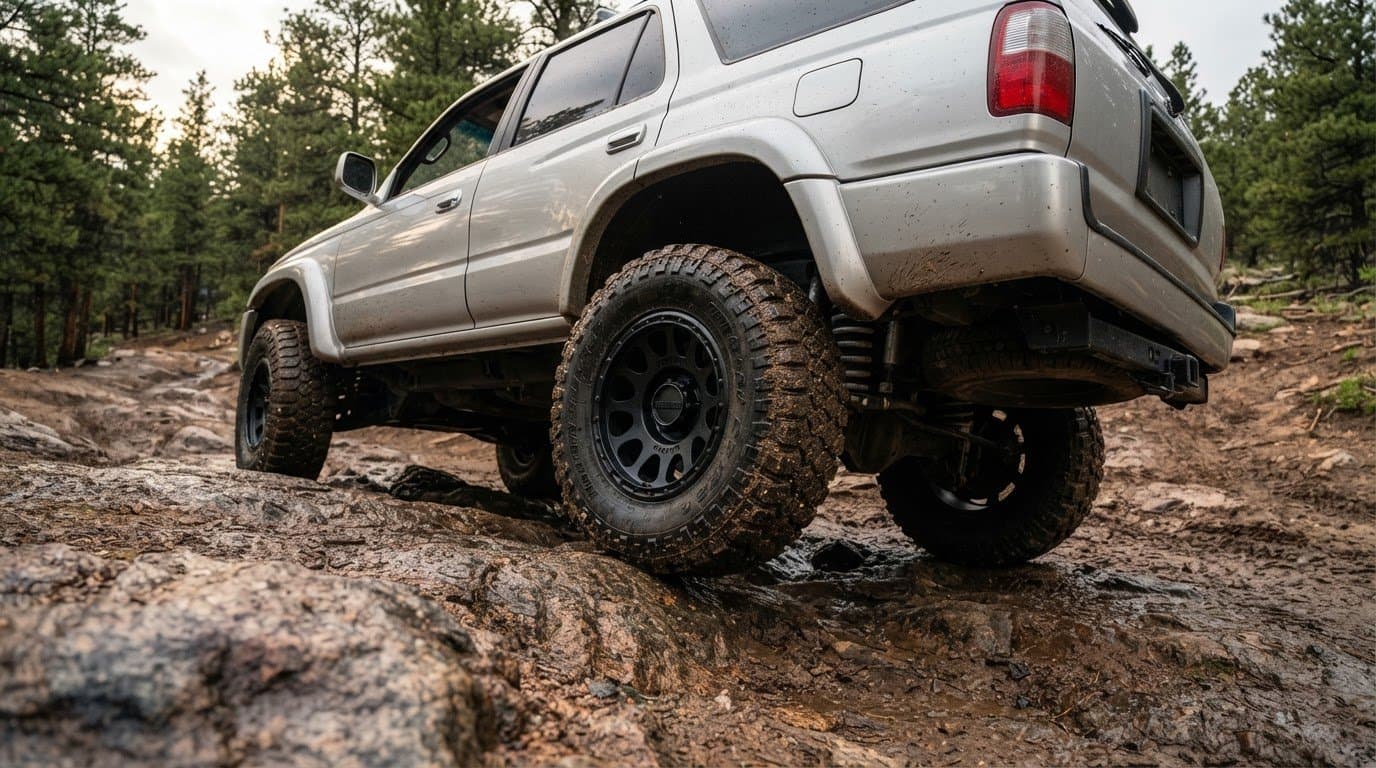
Best Mud Tires for Colorado Trails: Denver Expert Guide
The best mud tires use aggressive tread patterns to improve traction on rugged terrain. But bigger, more open lugs aren’t automatically right for a truck that spends most of its time on pavement. The best choice depends on how you balance trail grip with everyday driving comfort.
It’s easy to focus on a tire’s tough appearance, especially when Colorado trails bring changing surfaces and rough sections. This guide explains how mud-terrain, rugged-terrain, and all-terrain tires differ, and how tread design, lug shape, and sidewall construction affect performance. You’ll also find a practical way to compare options for a daily-driven trail rig, so you can choose tires suited to the terrain you tackle and the miles you drive between adventures.
Key Takeaways
- Match tire type to your real mix of pavement and trail use: mud-terrain prioritizes rugged-terrain traction, while all-terrain designs suit a broader range of driving.
- Compare tread layout and lug size with the surfaces you tackle; aggressive patterns can help on rough ground but may be less suited to pavement-focused driving.
- For a daily-driven rig, weigh trail grip against road manners and tread life instead of choosing by appearance alone.
- Consider sidewall construction alongside tread when rocky routes are part of your plans, then pair tire fitment with wheels that suit your truck.
Mud-terrain, rugged-terrain, and all-terrain tire differences
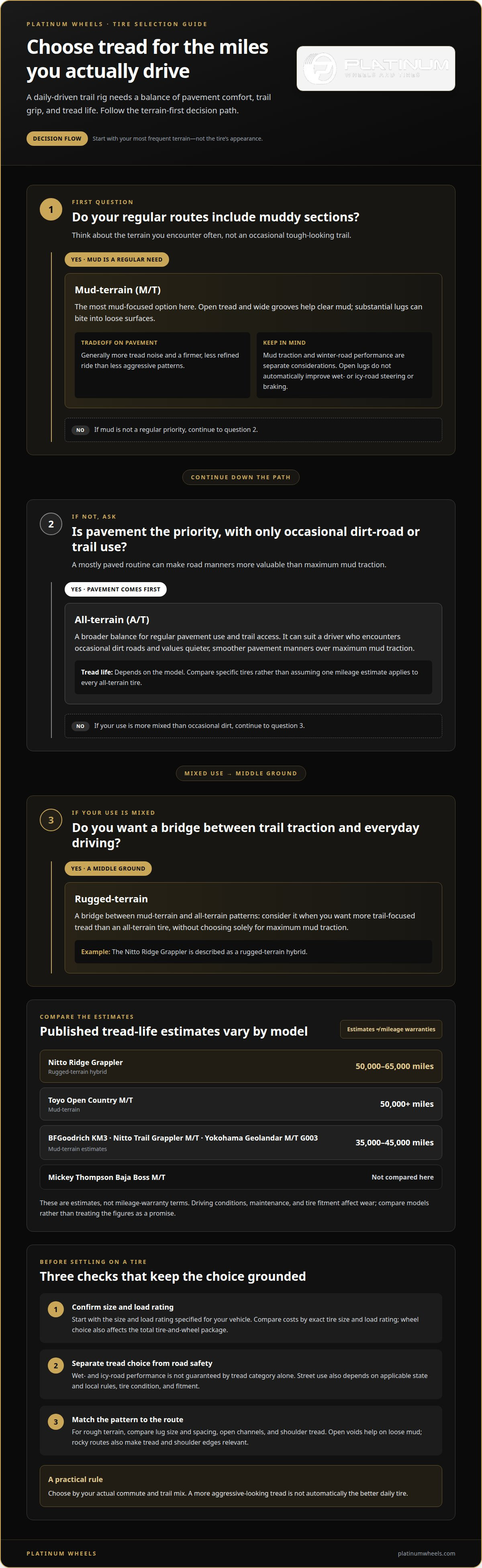
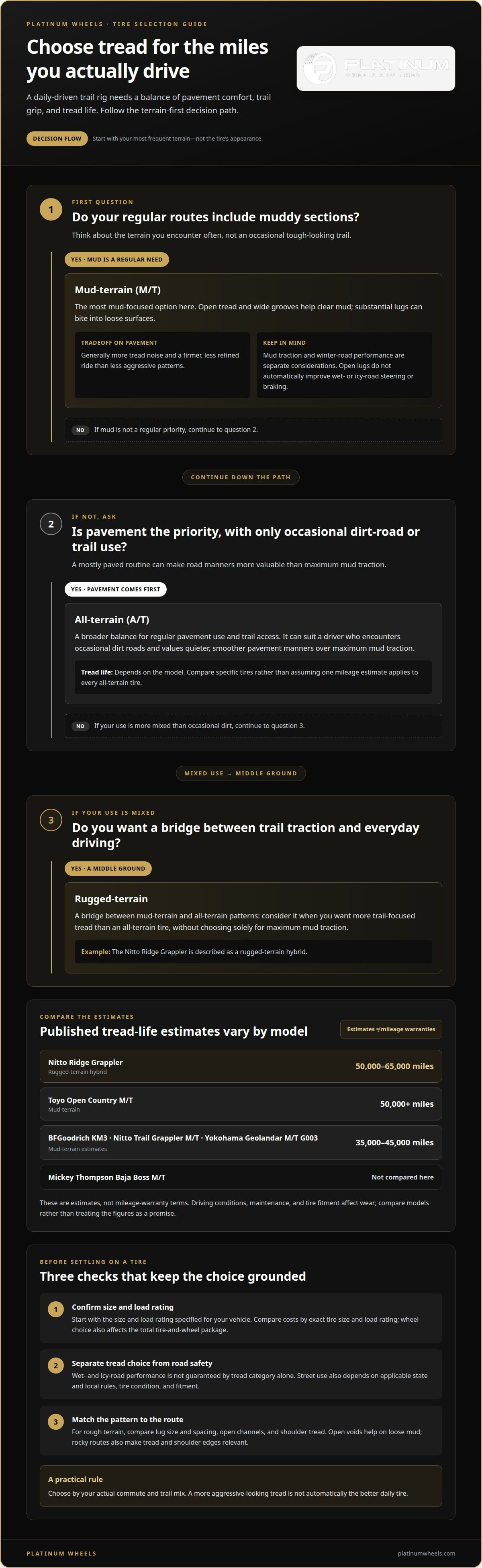
Mud-terrain tires use aggressive, open tread patterns to improve traction on rugged ground. Wide grooves help clear mud, while substantial lugs can bite into loose surfaces. In sand, tire pressure and driving technique also affect flotation; on rocky trails, tread grip and sidewall construction matter. Rugged-terrain designs bridge the gap between mud-terrain and all-terrain patterns, while all-terrain tires balance trail capability with regular pavement use.
On pavement, mud tires generally produce more tread noise and a firmer, less refined ride than less aggressive patterns. Handling depends on tire design, road conditions, and fitment; open lugs don’t automatically improve steering or braking on wet or icy surfaces. Consider mud traction and winter-road performance separately.
Tread life estimates help compare models, but they aren’t mileage-warranty terms. The Nitto Ridge Grappler is typically estimated at 50,000-65,000 miles; the Toyo Open Country M/T at 50,000 or more. BFGoodrich KM3, Nitto Trail Grappler M/T, and Yokohama Geolandar M/T G003 estimates are 35,000-45,000 miles.
| Option | Terrain character | Typical tread-life estimate |
|---|---|---|
| BFGoodrich KM3 | Aggressive mud focus | 35,000-45,000 miles |
| Yokohama Geolandar M/T G003 | Mud-terrain | 35,000-45,000 miles |
| Toyo Open Country M/T | Mud-terrain | 50,000+ miles |
| Nitto Trail Grappler M/T | Mud-terrain | 35,000-45,000 miles |
| Nitto Ridge Grappler | Rugged-terrain hybrid | 50,000-65,000 miles |
| Mickey Thompson Baja Boss M/T | Mud-terrain | Not compared here |
| All-terrain tires | Balanced road and trail use | Depends on model |
For common sizes, compare costs by exact tire size and load rating; wheel choice also affects the total for a tire-and-wheel package. Start with your vehicle’s specified size and load rating, then use a tire size calculator to explore potential alternatives. Choose a tread category based on your most frequent terrain, then weigh road comfort against trail traction.
Choosing tires for daily-driven trail rigs
A daily-driven rig needs tires suited to weekday pavement and the trails you actually drive. Compare road comfort, tread life, and off-road grip before choosing a tread style.
Daily-Driven Trail Rig Needs
A daily-driven trail rig splits its time between paved commutes and uneven routes. Mud-terrain tires suit frequent muddy sections, while all-terrain designs offer a better balance for pavement and trail access. Rugged-terrain patterns fall between those priorities. For example, a driver who encounters occasional dirt roads may value quieter, smoother pavement manners more than maximum mud traction.
Compare expected mileage as well as traction. The Nitto Ridge Grappler is typically estimated at 50,000-65,000 miles, while BFGoodrich KM3 and Nitto Trail Grappler M/T estimates are 35,000-45,000 miles. These figures help frame the tradeoff, but driving conditions, maintenance, and tire fitment affect wear. Choose based on your actual commute and trail mix, not appearance alone.
Street-Use Legality
Mud tires aren’t automatically legal or illegal nationwide based only on their tread pattern. Street use depends on applicable state and local vehicle rules, as well as tire condition and fitment. A tire suited to a trail can still be a poor daily choice if its condition or installation compromises safe road use.
Before choosing, match the tire size and load rating to your vehicle’s requirements, then consider how often you encounter mud versus pavement. A daily commute with occasional trail trips may favor a less aggressive pattern; regular muddy routes make mud-terrain tread more relevant. Neither tread category alone guarantees performance on wet or icy roads.
Compare all-terrain and mud-terrain tires against your driving routine, then prioritize the tradeoff you’re willing to live with each day.
Deep tread patterns and large lugs
A mud tire’s open tread uses wide channels and prominent lugs to find grip on soft, uneven ground. The channels leave room for packed mud to move away from the tread, while lug edges press into loose surfaces. A tightly packed pattern has less open space for clearing material. On Colorado routes, the right design depends on whether your rig encounters deep mud, loose dirt, or rock more often.
Lug shape matters as much as appearance. Broad blocks provide larger contact edges, while the spaces between them help keep mud from filling the tread. Side lugs extend the pattern toward the shoulder, adding bite when a tire meets uneven ground at an angle. These features differ from a road-focused tread, where a more continuous pattern prioritizes pavement contact. Mud tires trade some of that balance for a layout focused on challenging terrain.
Air pressure also changes the tire’s footprint during rock crawling. Rock crawlers may run tires at 8-12 PSI to increase the footprint, while the Mickey Thompson Baja Boss M/T is designed for crawlers running as low as 8-10 PSI. Those examples describe specialized off-road use, not a universal setting for a daily-driven truck. A forum member also reported running 33-inch Swamper TSL tires at about 6 psi in very muddy conditions. That anecdote illustrates how specialized some setups can be.
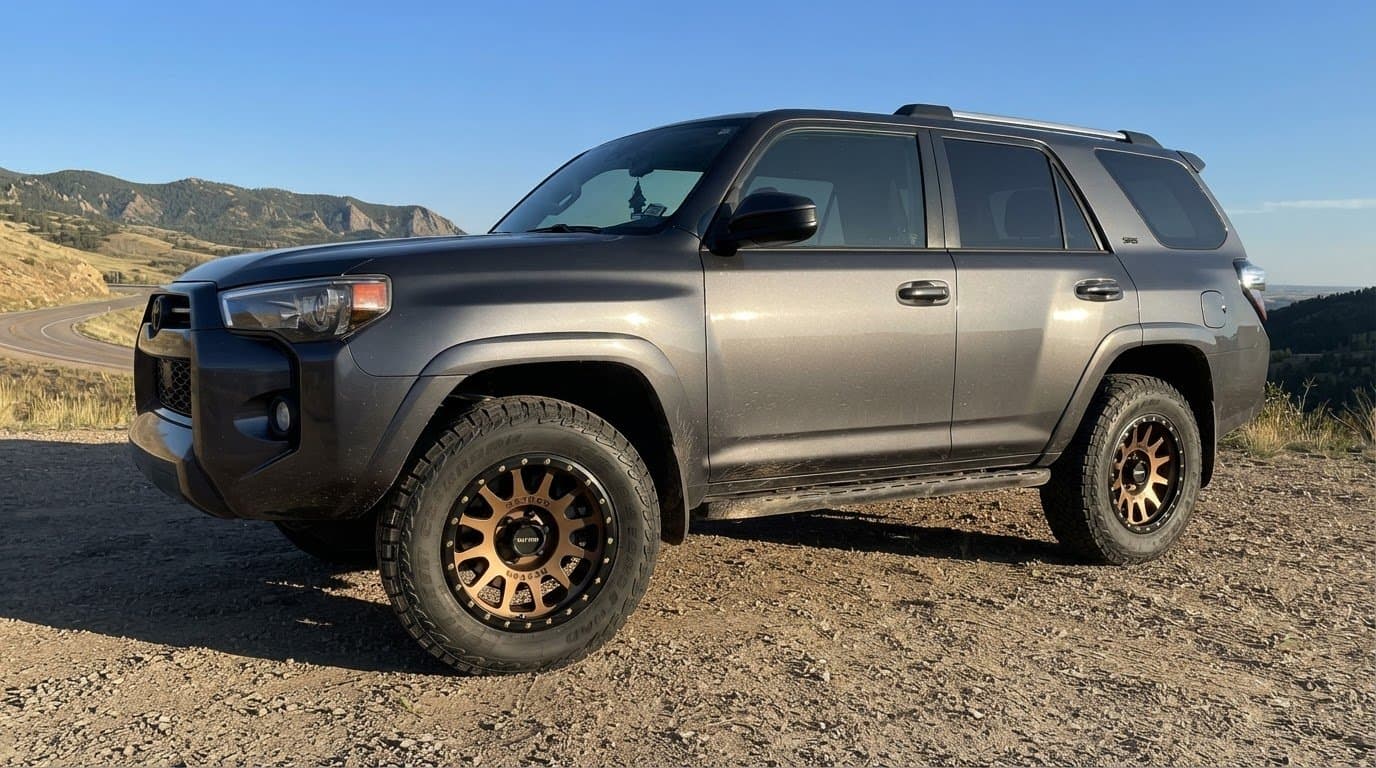
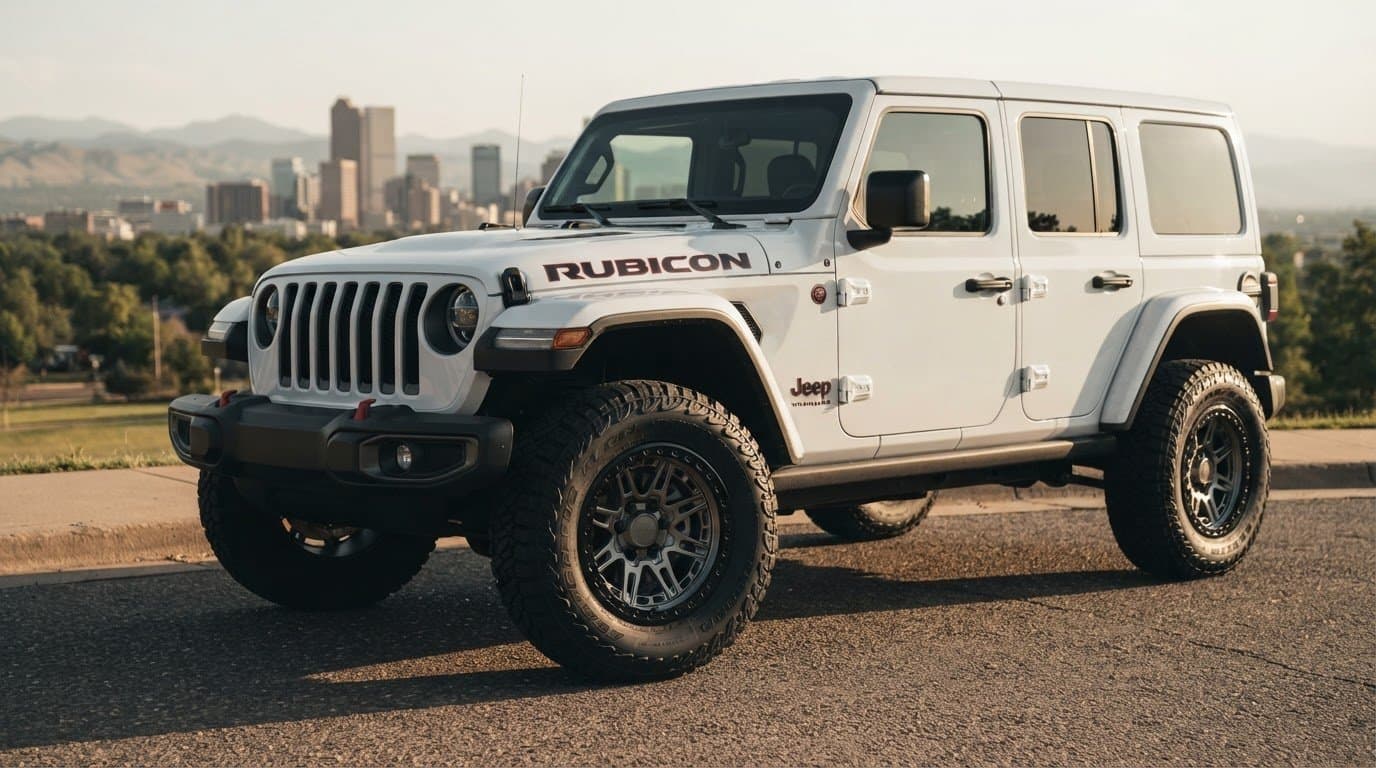
Compare tread designs with your usual routes before choosing. Look at lug size and spacing, how open the channels are, and how much shoulder tread the pattern has. A rig that encounters loose mud benefits from open voids; one that regularly crosses rocky ground also needs useful edges across the tread and shoulder. Match the pattern to the terrain you actually drive instead of assuming the deepest-looking tread suits every trail rig.
Sidewall ply construction and puncture protection
Sidewall plies are layers of reinforcing cord built into a tire’s sidewall. Mud-terrain tires commonly use three plies of polyester or nylon cord, compared with two plies in typical all-terrain tires. That added reinforcement matters on rocky routes, where the sidewall may contact sharp edges or uneven obstacles. Ply count describes part of a tire’s construction, but it doesn’t make it immune to cuts or punctures.
Three-ply construction is also used in specific models. The Mickey Thompson Baja Legend MTZ has a three-ply PowerPly sidewall. Treat this as a construction detail, not a guarantee against damage. Trail conditions, tire pressure, vehicle load, and how the tire meets an obstacle all affect the demands on its sidewall.
Consider construction as one part of your comparison. First, identify whether your regular routes include rocky sections that bring sidewalls close to obstacles. Next, compare the tire’s stated ply construction and load rating with your vehicle’s requirements. Finally, weigh that reinforcement against your usual pavement driving and the tire’s other characteristics. A three-ply sidewall may suit a trail-focused setup, while a driver with lighter trail use may prioritize other tire features.
Sidewall strength and tread design address different demands. The tread contacts the driving surface; the sidewall forms the tire’s outer structure beside it. Aggressive lugs, for example, can provide bite on loose terrain, but they don’t replace sidewall reinforcement when rocks threaten the tire’s flank. Consider both features when comparing mud-terrain tires for a truck that also sees pavement.
Choose for the routes you drive, not ply count alone. Compare mud-terrain tire options by construction and intended use, then match the selection to your rig’s requirements and trail conditions.
Platinum Wheels: Custom Truck Wheels & Off-Road Rims
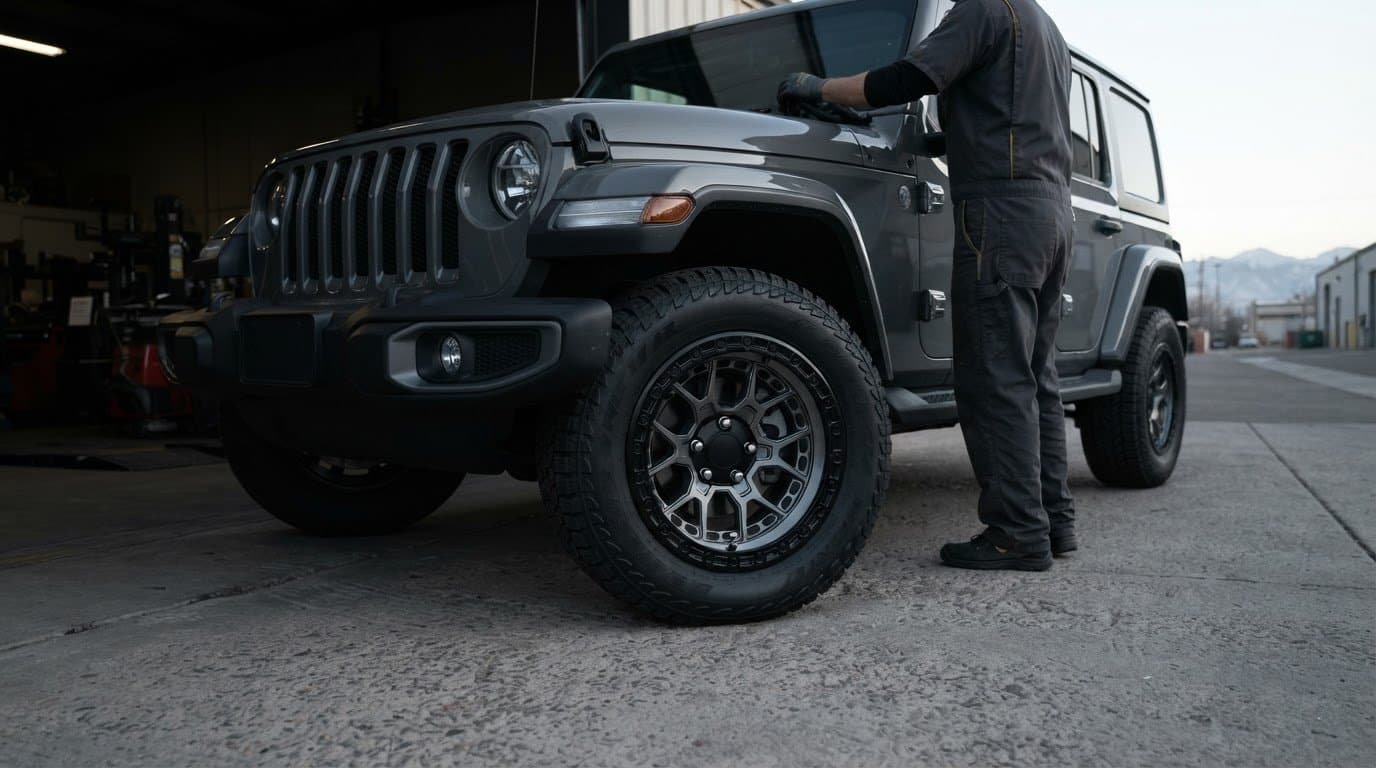
Platinum Wheels helps Colorado truck and SUV owners match tire and wheel choices to their daily driving and trail plans. Choose from all-terrain and mud-terrain tires, custom truck wheels and off-road rims, or wheel and tire packages when you want a coordinated setup. Lift kits and leveling kits can also complement a build focused on stance and off-road capability.
Turn to Platinum Wheels when you’ve narrowed down your terrain needs and want to bring tire, wheel, and fitment choices together. The right combination depends on your vehicle and how you use it, so start with your priorities: pavement comfort, trail traction, or a balance of both.
Contact Platinum Wheels or visit platinumwheels.com to discuss your setup.
Set Up Your Rig for the Trails Ahead
Your next step is to turn your driving priorities into a tire choice that fits your whole rig. Think about the routes you take most, the pavement miles between trail days, and whether your current wheel setup suits the tire you want. That practical shortlist makes it easier to narrow down the best mud tires for your truck or SUV without choosing on appearance alone.
Platinum Wheels offers all-terrain and mud-terrain tires, custom truck wheels and off-road rims, and wheel and tire packages. If you’re ready to bring those choices together for your vehicle, contact Platinum Wheels for tire advice. Share how you drive and what terrain you’re preparing for, then take the next step toward a setup that fits your plans. Your next trail adventure starts with a thoughtful choice.
Frequently Asked Questions
What Makes Mud Tires Special?
Mud tires are built for drivers who regularly encounter soft, challenging trail surfaces, not just occasional gravel roads. Their main advantage is specialized off-road traction; the tradeoff is that road noise and ride feel can become more noticeable during a daily commute. For a Denver-area rig, compare the mud you expect to encounter with your normal pavement use before choosing an aggressive tread.
What are the best mud tires for trucks and SUVs in 2026?
There isn’t one best fit for every truck or SUV. Compare the BFGoodrich KM3 and Nitto Trail Grappler M/T for mud-focused use, the Toyo Open Country M/T when tread-life estimates matter, or the Nitto Ridge Grappler for a more mixed-use direction. Before settling on a model, narrow the choice by your vehicle’s fitment requirements and how often you drive trails versus pavement.
Which mud-terrain tires perform best in deep mud, rocks, and wet conditions?
The BFGoodrich KM3 is the strongest mud-focused pick in the terrain comparison, receiving a 10/10 mud capability score. That score doesn’t establish performance on wet pavement or every rocky route. For mixed conditions, consider the actual surfaces you encounter and your daily-road needs separately; mud capability alone can’t tell you how a tire will handle every wet or uneven situation.
What are the best mud tires for the money?
Judge value by how well a tire suits your needs, not just its purchase cost. Compare its expected service life with the driving it will see, then consider whether its mud capability matches your regular routes. For example, a longer-life estimate may matter more to a daily commuter, while a trail-focused driver may prioritize mud performance over maximum mileage.
How do popular mud tires compare for road noise, ride comfort, and handling?
Mud-terrain tires generally produce more tread noise and a firmer, less refined ride than less aggressive patterns. Handling varies with tire design, road conditions, and fitment; aggressive lugs don’t automatically improve steering or braking on wet or icy roads.
How much do popular mud-terrain tires cost in common sizes?