Falken Wildpeak AT3W Guide: Top Denver All-Terrain Tires
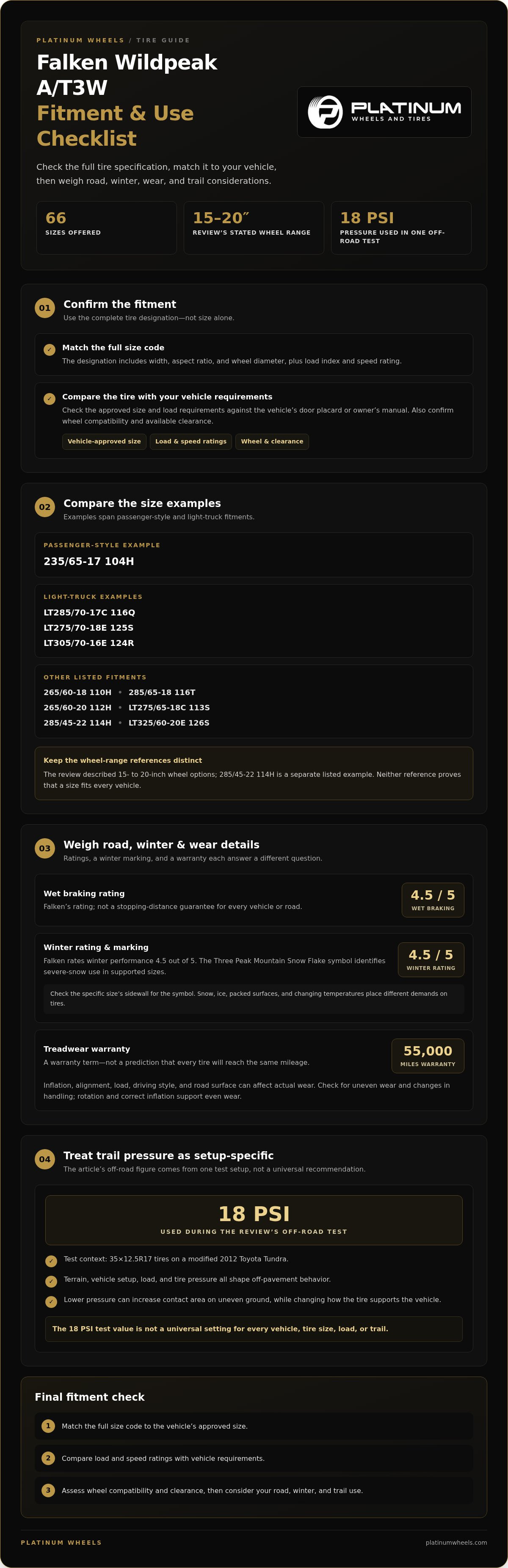
The Falken Wildpeak A/T3W was offered in 66 sizes, including 235/65-17 104H and LT285/70-17C 116Q. Its appeal isn’t just a broader fitment range: it’s an all-terrain tire built for drivers who want pavement manners alongside the option to head onto trails. The right size still depends on your vehicle and how you use it.
That balance matters around Denver, where a daily commute and a rougher route can be part of the same drive. You’ll find practical guidance on size and fitment, wet-road and winter performance, treadwear, and what to consider before taking these tires off pavement. We’ll also look closely at all-terrain use, including how tire pressure and vehicle setup affect trail driving, so you can weigh the trade-offs for your own truck or SUV.
Key Takeaways
- Compare the tire’s available sizes and load ratings with your vehicle’s requirements before choosing a fitment.
- Consider its wet-road and winter capabilities alongside your typical Denver driving conditions, not as a substitute for matching tires to the season and use.
- For trail driving, account for vehicle setup and tire pressure; a test used 18 PSI off-road, but that test value isn’t a universal setting.
- Weigh treadwear expectations against pavement comfort, since an all-terrain tire involves trade-offs across road and trail use.
- Use your vehicle, load needs, and driving mix to decide whether this tire’s fitment and characteristics suit your plans.
Available tire sizes and fitments
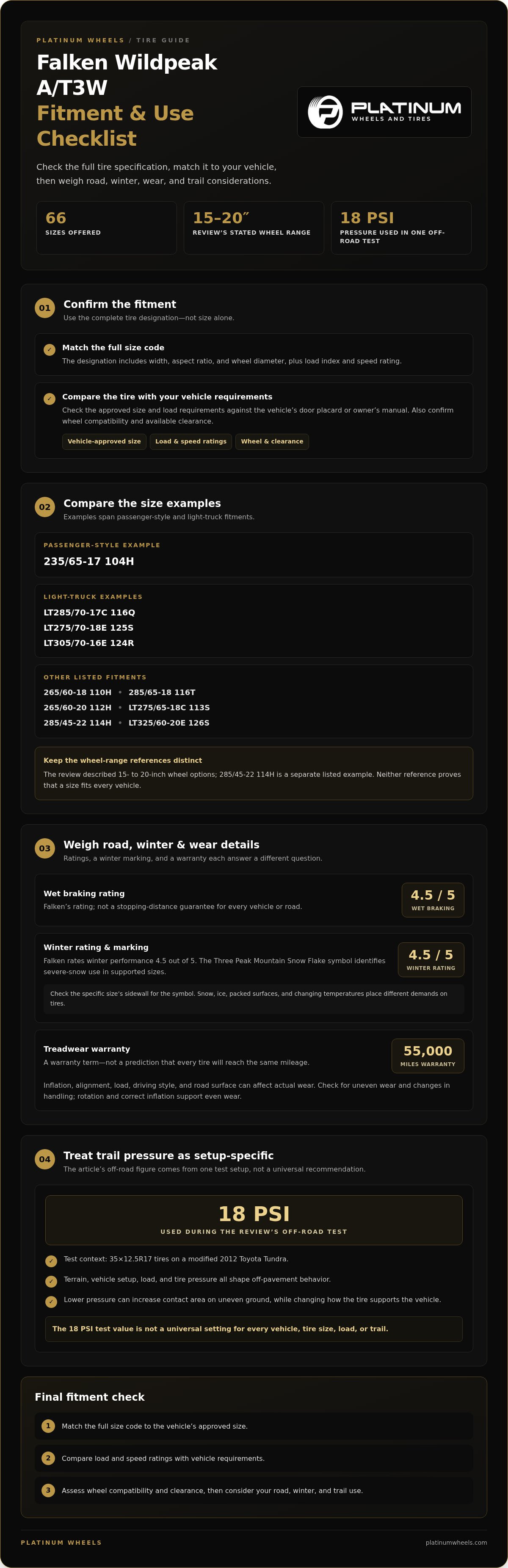
The Falken Wildpeak A/T3W was offered in 66 sizes when a review was written, covering wheel diameters from 15 to 20 inches. Listed examples show how the range spans everyday and light-truck fitments: 235/65-17 104H, LT285/70-17C 116Q, and LT275/70-18E 125S. Size alone doesn’t establish fitment. Match the tire’s specifications to the vehicle’s approved size, load requirements, wheel, and available clearance.
Other listed sizes include 265/60-18 110H, 285/65-18 116T, and 265/60-20 112H. The designation combines several useful details: the width, aspect ratio, and wheel diameter identify dimensions, while the load index and speed rating describe rated capacity and speed category. Tire designations can differ in load index, speed rating, and wheel diameter, so compare the full specifications carefully.
- Passenger-style fitment: 235/65-17 104H.
- Light-truck examples: LT285/70-17C 116Q and LT275/70-18E 125S.
- Larger listed fitments: 285/45-22 114H and LT325/60-20E 126S.
- Additional options: LT275/65-18C 113S and LT305/70-16E 124R.
There’s a distinction between the review’s stated wheel range and individual listed sizes. The review described options for 15- to 20-inch wheels, while a separate listed example is 285/45-22 114H. Treat those as separate fitment references, not as proof that every size suits every vehicle. Confirm the exact tire designation against the vehicle’s door placard or owner’s manual before selecting a replacement.
Tread depth and mass also vary by size. The 35×12.50R17LT size has a listed tread depth of 20/32 inches and weighs 75.4 lbs. A listed 37×12.50R17LT weighs 82.5 lbs, while the 37×12.50R20LT weighs 77.8 lbs. Those test figures differ from the size-chart entry, so keep each tied to its stated context.
Use a three-step fitment check: match the full size code, compare load and speed ratings with vehicle requirements, then assess wheel and clearance compatibility. That process matters especially when moving from a standard size to a larger light-truck fitment, such as 35×12.50R17LT.
Wet, winter, and wear performance
Falken’s ratings and the tire’s winter designation are useful comparison points, but they don’t tell the whole story. Consider them alongside your road conditions, driving habits, and expected tread life.
Wet Performance
Falken rates the Wildpeak A/T3W’s wet braking at 4.5 out of 5. That score gives shoppers a manufacturer performance rating, but it isn’t a measured stopping distance for every vehicle or road. Wet traction also depends on the tire’s condition, vehicle setup, speed, and pavement. Compare the rating with your priorities, then keep tread condition in mind as the tire wears.
For a practical assessment, focus on wet braking rather than treating a rating as a guarantee of performance. Grip can feel different on standing water, damp pavement, and slick surfaces. The rating is one useful data point; your driving conditions determine how relevant it is.
Winter Performance
Falken rates winter performance at 4.5 out of 5, and the tire carries the Three Peak Mountain Snow Flake symbol. In supported sizes, that emblem identifies the tire for severe-snow use. Confirm that the specific size you’re considering carries the symbol, because the designation applies to supported sizes rather than automatically covering every fitment.
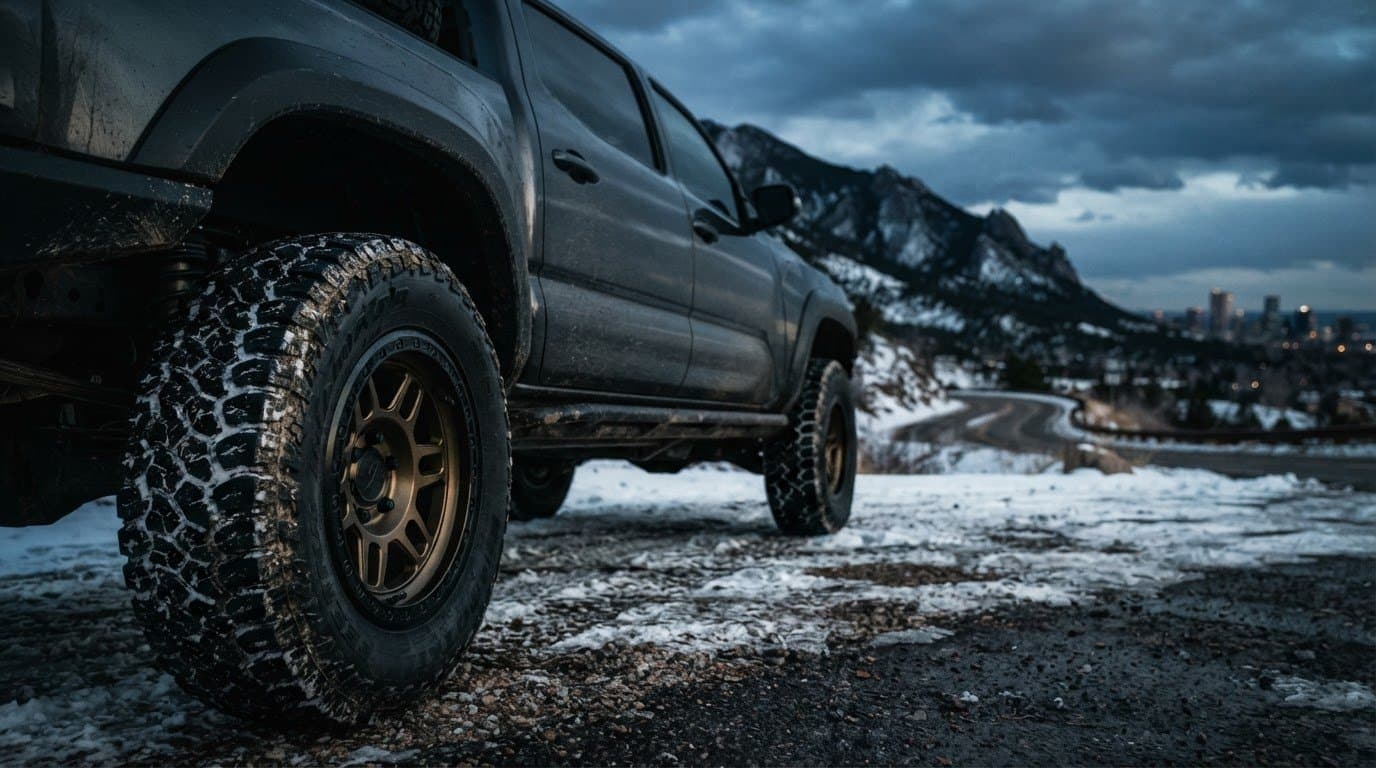
For Denver-area winter driving, distinguish severe-snow capability from a promise of identical traction in every condition. Snow, ice, packed surfaces, and changing temperatures place different demands on tires. The emblem and rating can help narrow your options, while your route and winter driving conditions should guide how you use the tire.
Check the sidewall marking on the specific size you’re considering, especially if your regular routes include snow-covered roads. The Three Peak Mountain Snow Flake symbol identifies the tire’s severe-snow designation, but you’ll still need to adjust your driving to winter conditions.
Wear Performance
Falken offers a treadwear warranty of 55,000 miles for the Wildpeak A/T3W. Treat that figure as a warranty term, not a prediction that every tire will reach the same mileage. Actual wear depends on factors such as inflation, alignment, load, driving style, and road surface.
Check tread wear consistently. Look for uneven wear across each tire, compare tread condition from one position to another, and pay attention to changes in handling. Rotation and correct inflation support even wear, while frequent heavy loads or rough use can affect tread life.
To compare the ratings fairly, separate manufacturer scores, winter markings, and warranty coverage. Falken’s 4.5 out of 5 wet-braking and winter ratings describe its assessment; the Three Peak Mountain Snow Flake symbol identifies severe-snow use in supported sizes; the 55,000-mile treadwear warranty sets a warranty term. Each answers a different question.
Choose based on the conditions you face most often, then match the tire size to your vehicle. Drivers weighing tread type and fitment can explore tire fitment options as part of that decision.
All-terrain driving use
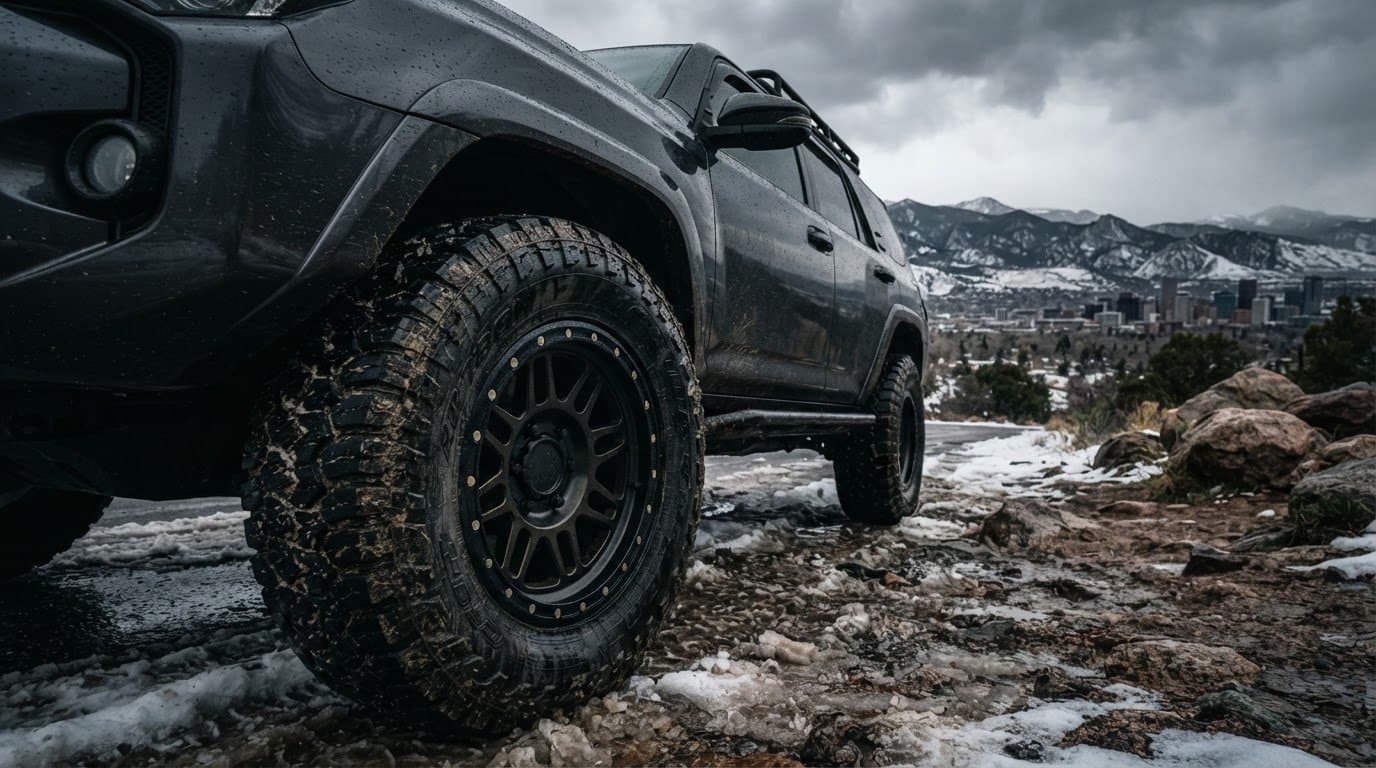
Trail performance depends on more than a tire’s tread pattern. Terrain, vehicle setup, load, and tire pressure all shape how an all-terrain tire behaves away from pavement. In one off-road test, 35×12.5R17 Falken Wildpeak A/T3W tires were fitted to a modified 2012 Toyota Tundra. That example offers a useful real-world reference, but it describes one vehicle and setup.
During that review’s off-road testing, the tires were aired down to 18 PSI. Lower pressure can increase the tire’s contact area on uneven ground, but it also changes how the tire supports the vehicle. The 18 PSI figure is the test condition, not a universal setting for every vehicle, tire size, load, or trail.
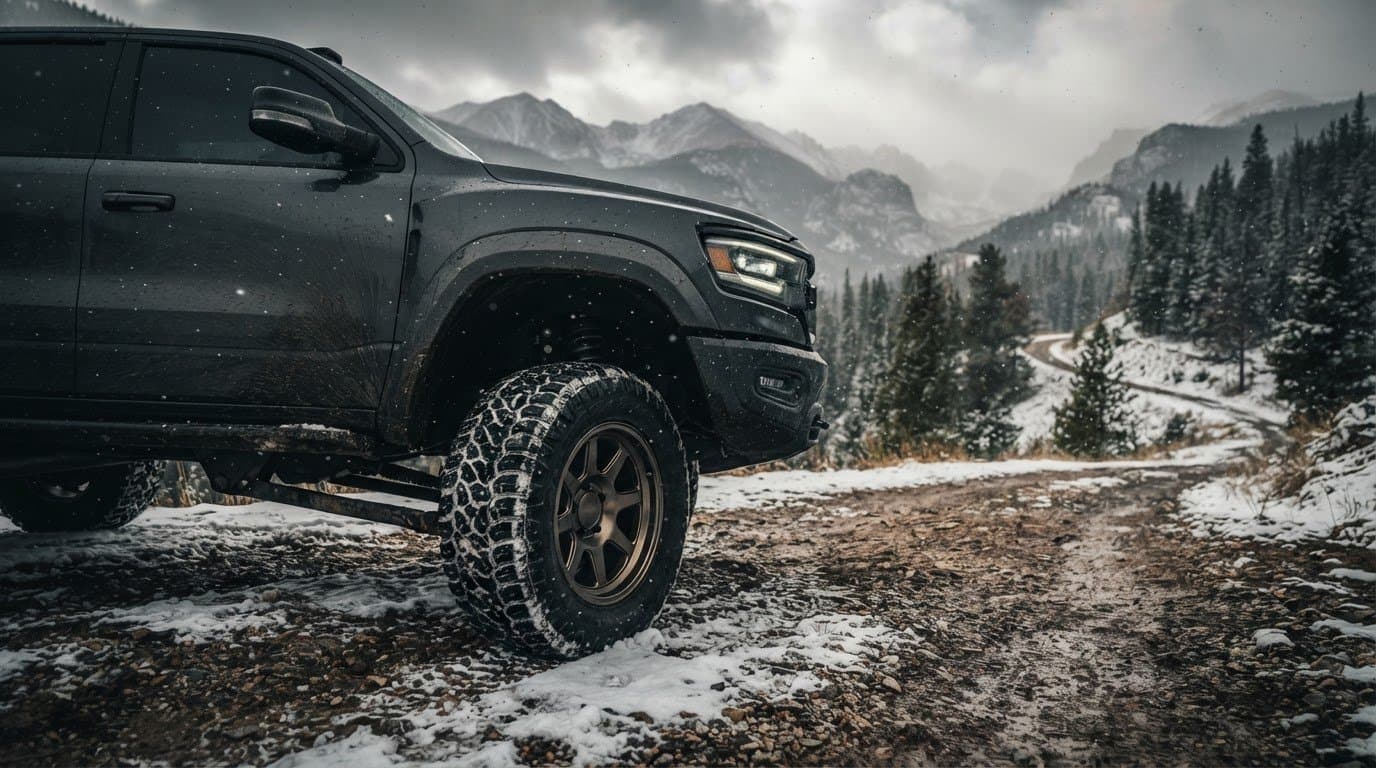
Before leaving pavement, consider the route and your vehicle’s setup. Loose gravel, ruts, and rocky sections place different demands on traction and clearance. A larger tire alone doesn’t guarantee a better result: fitment, available clearance, load, and driving technique all matter. Move steadily over rough ground, and don’t mistake an aggressive look for preparation for the route.
The test tires had a six-ply tread construction. That detail identifies the construction of the tested 35×12.5R17 fitment, not every size in the range. Do not transfer a test tire’s rating or pressure to a different fitment.
Falken also names Outer Apex Sidewall, Heat Diffuser Technology, and 3D Canyon Sipe Technology among the tire’s features. Those design names help identify the model, but choosing a trail tire still means matching its size and load rating to the vehicle. A driver who spends most trips on pavement and occasionally takes maintained dirt roads has different priorities from someone regularly crossing rougher terrain.
Use a simple pre-trail sequence: confirm the tire size and vehicle load, consider the surface and obstacles, then set pressure for the specific vehicle and conditions. After the drive, restore road-use pressure according to the vehicle and tire requirements. The review’s 18 PSI test offers context for how one modified Tundra was tested, not a shortcut around those decisions.
For Denver drivers, the key question is how often your route leaves pavement and which surfaces you encounter. First match the tire’s fitment and load specification to your vehicle, then weigh trail use against daily driving needs. This makes the test details useful without treating one setup as right for everyone.
On-road comfort and pavement manners
The Falken Wildpeak A/T3W is designed for mixed terrain, so assess pavement behavior alongside its trail role. Focus on cabin noise, ride firmness, steering response, and highway stability during ordinary trips. An SUV used mainly for commuting has different comfort priorities from a truck that regularly leaves pavement. Your daily route helps determine which trade-offs matter most.
Start with road noise. All-terrain tread blocks interact with pavement differently from smoother, highway-oriented patterns, which can create audible tread noise. The result depends on road texture, vehicle insulation, speed, and tire condition. For a practical comparison, listen at a steady speed on the same stretch of road, then compare coarse asphalt with smoother pavement.
Ride comfort depends on how the tire and vehicle respond to bumps. A sharp road seam may feel different from a gradual dip, and suspension setup and tire pressure affect what reaches the cabin. On a familiar route, notice impacts over patched pavement, expansion joints, and gravel transitions. These observations give you a clearer sense of comfort than tread appearance alone.
Steering response matters during lane changes, on curves, and at highway speeds. Notice how promptly the vehicle follows steering inputs and whether it feels settled on straight roads. A loaded pickup and an unloaded SUV may feel different on the same tire. Keep the load and driving conditions consistent when comparing impressions, rather than attributing every change to the tread.
- Noise: Compare the tire on smooth asphalt and coarse pavement.
- Ride: Notice impacts over seams, potholes, and uneven road patches.
- Handling: Observe steering feel through curves and routine lane changes.
- Use pattern: Weigh daily commuting against regular trail trips.
Around Denver, one trip may include city streets, highway stretches, and rougher pavement. Evaluate the tire across those surfaces, not just on a short, smooth drive. Consistent inflation and regular wear checks also help maintain predictable handling. Include tire condition in routine vehicle care, since wear can change how the vehicle feels on the road.
There’s a trade-off to consider: tread designed for mixed terrain may feel different from a tire chosen primarily for quiet pavement use. A driver who rarely leaves paved roads may prioritize cabin quiet; someone who visits dirt routes may accept a different sound and feel. The Falken Wildpeak A/T3W should be judged against your own balance of highway comfort and off-road use.
Make the decision with a short checklist: identify your usual roads, assess noise and ride on varied pavement, and note steering behavior under your normal vehicle load. These observations help determine whether this all-terrain tire suits your routine. Don’t rely on tread appearance alone; the Falken Wildpeak A/T3W’s everyday feel depends on the vehicle, road surface, and setup.
Is the Falken Wildpeak A/T3W suitable for my vehicle and driving conditions?
Start by matching the tire’s complete size and ratings to your vehicle, then consider how you drive. A 235/65-17 104H and an LT285/70-17C 116Q are distinct fitments, not interchangeable options. Your vehicle’s specified size, required load capacity, wheel diameter, and intended use determine which fitment makes sense.
Use your door placard or owner’s manual as the reference point. Compare the full size code, including the LT designation where present, rather than matching only wheel diameter. Then compare load index and speed rating with the vehicle’s requirements. For example, 104H and 116Q represent different load and speed categories. Also account for the wheel and available clearance.
Next, map your usual routes. A truck that regularly travels dirt access roads has different priorities from an SUV that stays on pavement. Consider how often you leave paved roads, which surfaces you encounter, and how much highway comfort matters. If winter use is important, check for the Three Peak Mountain Snow Flake symbol on the exact size you’re considering.
Load matters, especially for a work truck or a vehicle carrying equipment. Base your tire decision on the expected vehicle load, not just the vehicle model. A larger-looking fitment doesn’t automatically provide the required capacity or clearance. For example, LT275/70-18E 125S has a different designation from 265/60-18 110H. Match the full specification to both the vehicle and its use.
- Daily pavement: Prioritize the specified fitment and consider your expectations for road noise and ride.
- Mixed driving: Balance highway use with the frequency and roughness of off-pavement routes.
- Winter routes: Look for the Three Peak Mountain Snow Flake symbol on the chosen size.
- Changed setup: Evaluate clearance and load requirements alongside tire dimensions.
Review fitment practically: compare the full size code, load index, and speed rating; check wheel compatibility and clearance; then weigh the tire’s characteristics against your regular routes. A stock vehicle and a modified truck can have different fitment needs, even when both drivers want all-terrain capability.
The Falken Wildpeak A/T3W can suit a vehicle used on pavement, winter roads, and occasional trails when its size and ratings meet the vehicle’s requirements. It may be a poor match for someone prioritizing quiet pavement driving or choosing a size that doesn’t meet fitment needs. For the falken wildpeak at3w, use your route, load, and vehicle specifications to guide the decision.
Platinum Wheels: All-Terrain & Mud-Terrain Tires
Platinum Wheels helps drivers compare all-terrain and mud-terrain tires against their vehicle fitment and driving plans. If the Wildpeak A/T3W is on your shortlist, consider the tire size, load needs, pavement use, and how often your routes leave the road. Wheel & Tire Packages can bring the tire and wheel choice together, while Lift Kits & Leveling Kits may be relevant when planning a changed vehicle setup. TPMS Sensors are another part of the wheel-and-tire decision when replacing or changing components.
Bring your vehicle details and intended use to Platinum Wheels for a free Wheel & Tire Fitment Consultation. Our team can help you focus on fitment and function, not appearance alone. Contact us to discuss all-terrain tire options.
Choose a Setup That Fits What’s Next
Your tire choice should suit the roads you drive now and the plans you’re building toward. Before choosing the Falken Wildpeak A/T3W, think about whether future changes to your truck, wheels, or off-road use could affect your setup. A good fit starts with your vehicle’s requirements and the way you expect to use it.
Platinum Wheels offers All-Terrain & Mud-Terrain Tires, Custom Truck Wheels & Off-Road Rims, and Wheel & Tire Packages. If the Falken Wildpeak A/T3W is on your shortlist, these offerings can help bring tire and wheel selection into one decision, whether you’re replacing tires or planning a broader setup.
Contact Platinum Wheels about tire fitment and take the next step toward a setup suited to your driving plans.
Frequently Asked Questions
What is the Falken Wildpeak A/T3W tire, and what are its key features?
The Falken Wildpeak A/T3W is an all-terrain tire for drivers balancing paved-road use with off-road travel. Falken lists Outer Apex Sidewall, Heat Diffuser Technology, and 3D Canyon Sipe Technology among its features. Supported sizes carry the Three Peak Mountain Snow Flake symbol for severe-snow use. To assess whether it fits your needs, compare its exact size and ratings with your vehicle requirements and typical routes.
What tire sizes are available for the Falken Wildpeak A/T3W?
The tire was offered in 66 sizes, with a review describing wheel fitments from 15 to 20 inches. Examples include 265/60-18 110H, LT325/60-20E 126S, and 285/45-22 114H. Size codes differ in dimensions, load index, and speed rating, so compare the complete code rather than the wheel diameter alone. Your vehicle’s specified size and load needs guide the appropriate fitment.
How much does a Falken Wildpeak A/T3W cost in the United States?
The cost depends on the selected size and its specifications, so there isn’t one price that applies across all 66 fitments. For example, passenger-style and light-truck sizes have different construction and rating details. Compare the full tire designation and what’s included with the purchase when considering options. Avoid choosing by size appearance alone, since load requirements and vehicle compatibility matter as much as the tire’s overall dimensions.
How does the Falken Wildpeak A/T3W perform on wet roads, snow, mud, and rocks?
Falken rates wet braking and winter performance at 4.5 out of 5. The tire’s behavior on mud and rocks depends on the surface, vehicle setup, tire condition, and driving approach. For rocky routes, consider clearance and the vehicle’s load; muddy terrain calls for attention to changing traction. Treat manufacturer ratings as comparison points, then judge them alongside your regular surfaces and intended use.
Is the Falken Wildpeak A/T3W severe-snow rated with the Three-Peak Mountain Snowflake symbol?
Yes, supported sizes carry the Three Peak Mountain Snow Flake symbol for severe-snow use. Since the designation depends on size, inspect the sidewall marking on the exact fitment you’re considering. The symbol identifies the tire’s severe-snow designation, but winter surfaces can still behave differently. Consider whether your regular routes include snow-covered roads, and adapt your driving to conditions.
What is the tread life warranty and expected lifespan of the Wildpeak A/T3W?
Falken offers a treadwear warranty of 55,000 miles. That warranty figure is not a prediction of the lifespan every driver will experience. Wear depends on factors such as inflation, alignment, vehicle load, road surfaces, and driving habits. To track your tires, inspect tread condition regularly and watch for uneven wear across the tread. Those checks can help identify changing wear patterns during ownership.
How noisy and comfortable is the Falken Wildpeak A/T3W on highways?
Highway noise and ride comfort can vary with pavement texture, vehicle insulation, tire condition, and setup. An all-terrain tread may sound different on coarse asphalt than on smooth pavement. For a useful comparison, drive familiar routes at steady speeds and notice both cabin noise and how bumps feel. Your vehicle’s suspension, load, and tire pressure also influence the experience, so consider them alongside the tire.